
Kits & Plans
Important documents organization: a 10-document checklist for one hour at the table
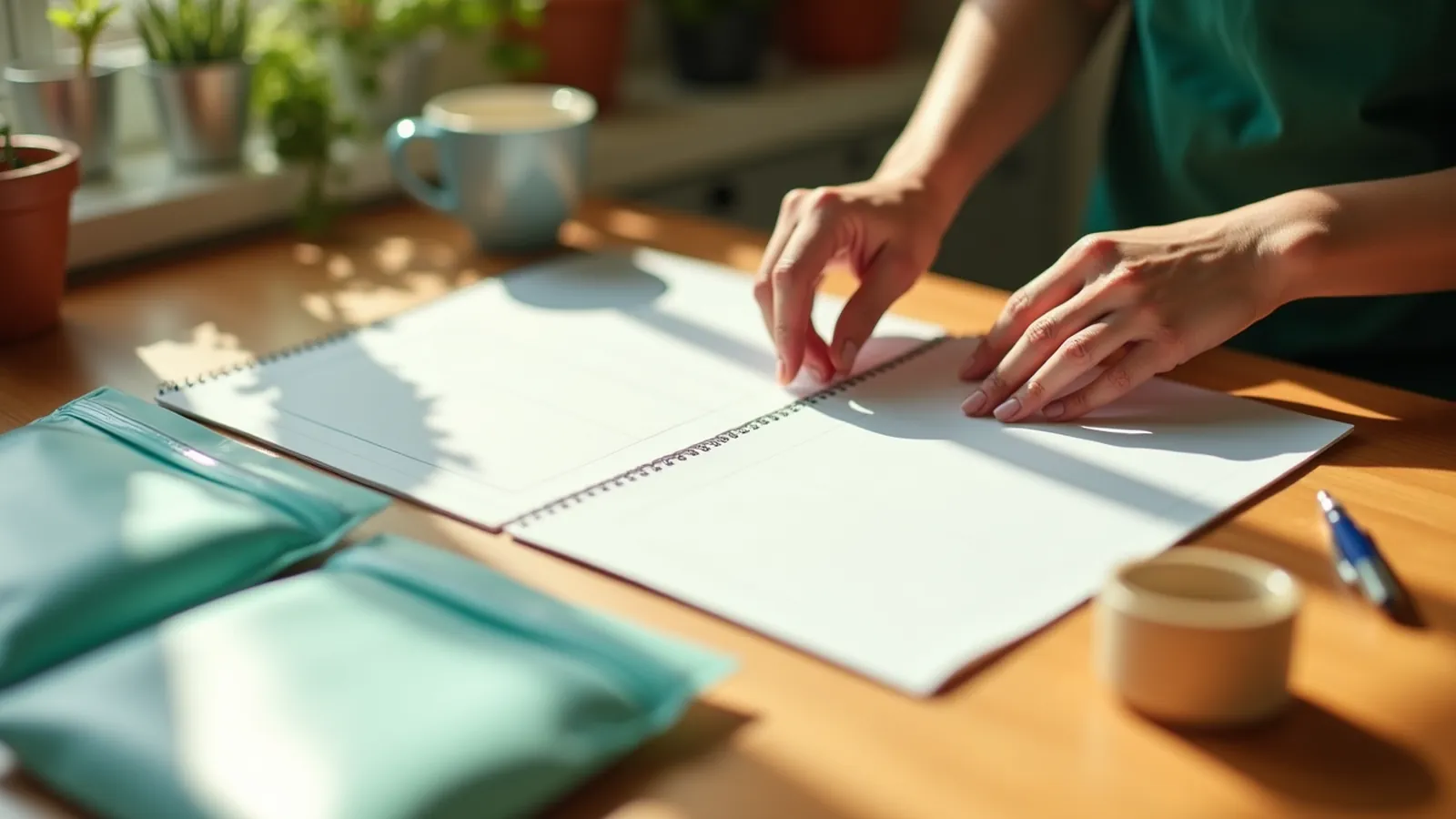
Ten pieces of paper, two labeled waterproof bags and one hour at the kitchen table. Copy the ten, seal both bags, and the folder stops being the thing you keep meaning to start.
On this page (14 sections)
- The 10-document checklist
- Copy or scan? Do both, once
- The two-bag waterproof system
- The one-hour assembly order
- Important documents storage: how to store them at home
- The emergency documents checklist: what to grab in 60 seconds
- No products, no promises: how to check what you read here
- Keeping the folder current
- Doing it on a budget
- Troubleshooting
- When to get help
- Frequently asked questions
- Keep going
- Sources
You know the folder should exist: birth certificates, the insurance declarations page, the dog's rabies certificate, all in something you could pick up with one hand on the way out. Every time you sit down to start, the same two questions stall it, what actually goes in and where does it live so it survives a burst pipe, a fire or a week away from home.
Important documents organization comes down to ten pieces of paper, two labeled waterproof bags and about an hour at the kitchen table. The checklist below is the whole list, so nothing gets missed. The steps after it give you the order to work in, so you are never standing in the hallway wondering what comes next.
Key takeaways
- Ten documents, two sealed bags, about an hour for a household that already has the paperwork in the house somewhere.
- Ready.gov suggests keeping copies of important documents saved electronically or in a waterproof, portable container.
- The American Red Cross survival kit list names copies of a medication list and medical information, proof of address, a deed or lease, passports, birth certificates and insurance policies.
- Originals stay in Bag A at home; paper copies go in Bag B, inside your go-bag, so one fire, flood or lost backpack cannot take everything.
- Missing documents go on the front of the checklist with the date you ordered them. Build the folder with what you have today.
- Refresh it once a year, and rebuild it after a move, a birth, a death or a divorce.
Do this tonight
- Put every document you can find in one unsorted pile on the table.
- Photograph the front and back of each one with your phone.
- Pick the shelf the folder will live on and put the pile there, even before it is organized.
The 10-document checklist
The middle column is the decision most people get stuck on, whether a paper copy is enough or whether you also need a scan. The right-hand column is where the original should end up.
| Document | Copy, scan, or both | Keep the original |
|---|---|---|
| Birth certificates and adoption papers | Both: scan each one, plus one paper copy per person | Home bag; a certified spare off site if you have one |
| Social Security cards | Both | Home bag, not your wallet |
| Passports, green cards, visas and naturalization papers | Scan plus a paper copy of the photo page | Home bag |
| Driver's licenses and state IDs | Scan front and back | Wallet, as usual |
| Marriage certificate, divorce decree, custody orders | Both, plus a copy of any custody order in the go-bag | Home bag |
| Deed, lease, mortgage statement or property tax bill | Scan, plus a paper copy of the lease or deed | Home bag |
| Home or renters, auto, life and health insurance policies | Scan the declarations page and keep a paper copy | Home bag |
| Vehicle titles and registrations | Scan; a registration copy in the glove box | Home bag |
| Will, powers of attorney, advance directives | Scan, plus paper copies for the people named in them | Home bag |
| Medical list: medicines and doses, allergies, immunizations, doctor and pharmacy numbers | Both | Home bag and go-bag |
That list lines up with the published kit lists. Ready.gov suggests keeping copies of insurance policies, identification and bank account records saved electronically or in a waterproof, portable container. The American Red Cross survival kit list names copies of a medication list and medical information, proof of address, a deed or lease to home, passports, birth certificates and insurance policies.
If you have them, add pet vaccination records and your veterinarian's phone number (the pet emergency kit guide covers the rest of the dog's paperwork), a few photos of each room with the serial numbers of large appliances, your last few tax returns, a list of bank and investment accounts, military discharge papers, school records and utility account numbers.
Not sure whether one of yours exists? Mark it missing rather than stopping. A folder with nine documents today beats a perfect list you start next month.
Copy or scan? Do both, once
A scan is no help at a counter in a building with no power, and a paper copy does nothing when an insurer asks for a PDF in the evening. Three formats cover it:
- Paper copy. Hand it across a counter at a school, a shelter or an insurance office. It works with no power and no signal.
- Phone scan. Front and back, straight and readable, one folder, named so a stranger could find it: birth-certificate-firstname-lastname, insurance-home-2026.
- Certified or original. Some offices accept only the original or a certified replacement, and replacement takes time, so order a spare before you need one.
Watch for
A scan that lives only on the phone in your pocket. Send the folder to an account you can open from another device, with a password you would remember without looking it up.
The two-bag waterproof system
One bag protects what you cannot replace. The other protects the day itself.
| Bag | What goes in | Where it lives |
|---|---|---|
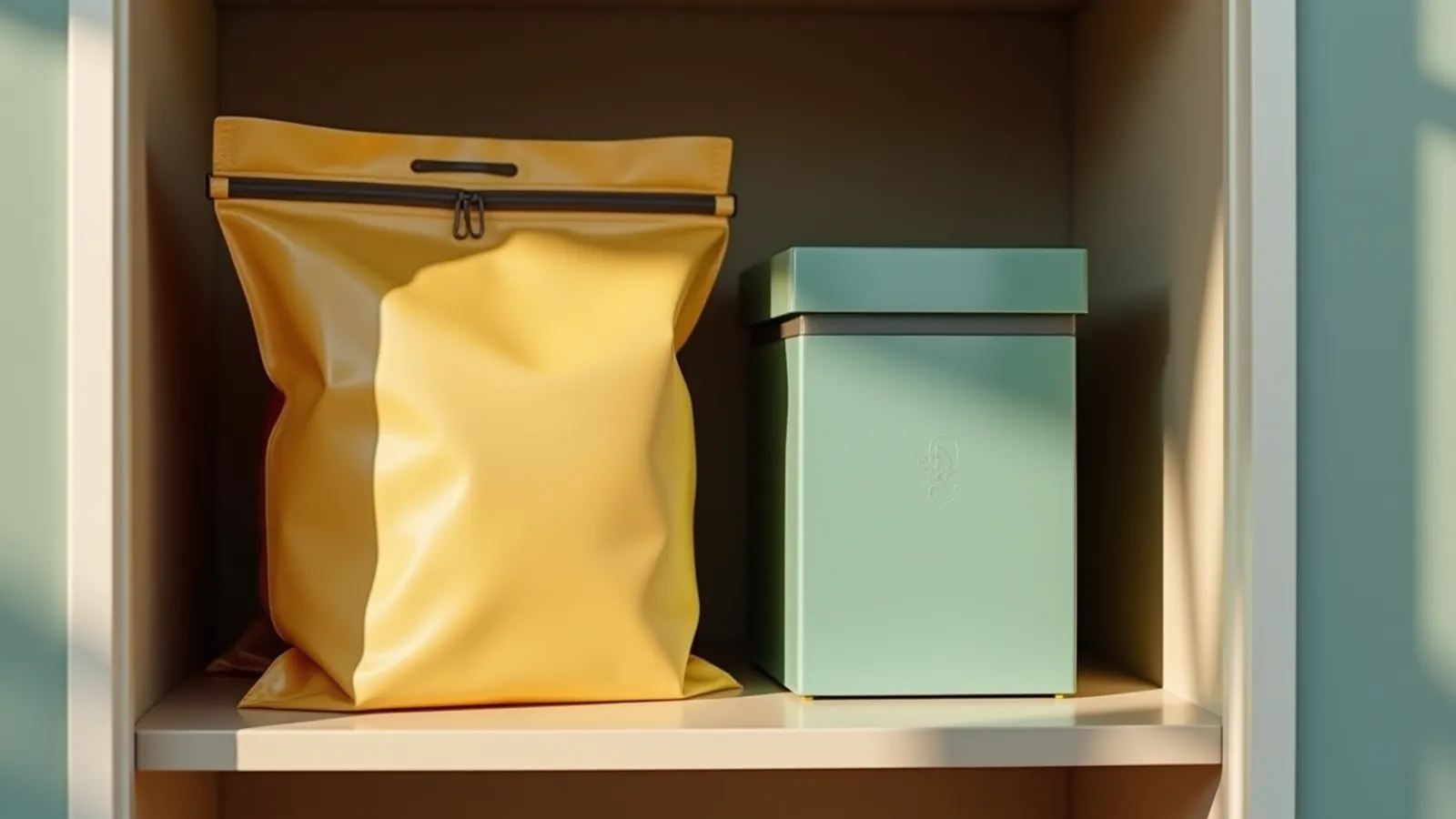
| Bag A: the home bag | Originals and any certified copies of the 10 documents | A sealed pouch inside a lidded box on a closet shelf or in a bedroom drawer |
| Bag B: the go-bag | Paper copies of all 10, the medication list, pet records, a home inventory, a contacts list | Inside your 72-hour kit tote or the bag you would grab on the way out |
| The scan folder | Every document as a PDF | A folder you can open from any device, plus one copy held by someone outside the house |
For that outside copy, seal a set in an envelope and give it to the relative or friend you would call first. Put a note in Bag B saying who has it, so the information does not live only in your head.
Two simple layers do the work: a zipper freezer bag with the air pressed out, inside a rigid, lidded pouch or box. A zipper bag alone tears; a rigid box alone is not watertight in an inch of water. Label both with contents and date, using marker and tape rather than a sticker that peels. If you would rather buy than improvise, these are Amazon search links rather than product picks: waterproof document pouches (Amazon, affiliate link) opens in a new tab and fire-resistant document bags (Amazon, affiliate link) opens in a new tab. A freezer bag inside a lidded box handles the water risk for free.
The one-hour assembly order
Set a timer and work down this list in order. Do not stop to order a missing document; write it on the checklist and keep going. The hour is an estimate for a household that already has the paperwork somewhere, not a promise about your particular drawer.
Make one pile
Gather every document you think you have: the envelope from the closing, the folder from the hospital, the passport in the desk drawer. Do not sort yet.
Done when: everything is in one pile on the table. (5 minutes)
Work down the checklist
Mark each of the ten as have or missing, and note where the missing ones are issued or who might hold them.
Done when: every line is marked. (10 minutes)
Scan with your phone
Front and back, one folder, plain file names. Then send the folder to an account you can open away from home.
Done when: the folder holds every document you have and opens on another device. (20 minutes)
Print one paper set
Home printer, library or copy shop, or straight from the scans. One complete set is enough for the go-bag.
Done when: a full paper set sits next to the originals. (10 minutes)
Seal and label both bags
Originals in Bag A, copies in Bag B. Press the air out of the inner zipper bag, seal the pouch, and label both with marker and tape, including the date.
Done when: both bags are sealed, labeled and dated. (10 minutes)
Show the household
Everyone old enough to answer a question should be able to point to both bags. Practice once in the dark, so nobody is guessing by feel.
Done when: each person can name the spot without looking. (5 minutes)
If half the documents are missing, build the folder with what you have. The missing ones go on the front of the checklist with the date you ordered them.
Important documents storage: how to store them at home
Where the bags live matters as much as what is in them. It comes down to three things: water, heat and reach.
| Spot | Why it works, or does not |
|---|---|
| Hall closet shelf, in a lidded box | Cool, dark and dry, up off the floor, reachable without moving anything |
| Bedroom closet or desk drawer, upstairs | Away from the garage and off the floor, where water and fumes reach first |
| Garage shelf above the mower gas | Fuel fumes and heat, the opposite of cool, dry and dark |
| Attic or shed | Heat swings and damp are hard on paper and on pouch seals |
| Basement floor, in a house that has taken water | Moisture creeps in, even through a sealed bag, over a few seasons |
Extension guidance written for stored emergency supplies makes the same point. Oregon State University Extension says to keep stored supplies in a dark, dry, consistently cool space out of sunlight and away from cleaning supplies, fertilizer and anything with a strong odor, because odors can be absorbed by the container, and it notes a food-safety concern about plastic stored above 95 °F [35 °C]. Virginia Cooperative Extension's emergency water publication says a cool, dark place such as a basement, kept away from gasoline, pesticides, kerosene and other hazardous materials. Paper and pouch seals want the same treatment: no garage shelf above the mower gas, no hot attic in July.
One more rule: if you cannot reach the bag without moving a stack of boxes, it is not in a grab spot yet. Pick a shelf you can touch in the dark.
A household of four keeps Bag A in a lidded plastic box on the top shelf of a hall closet, next to the linen, and Bag B inside the tote with the flashlights. The scan folder sits in an account they can open anywhere, with the password written on paper in the same closet. A sealed set of copies goes to a sister two towns over, and a note in Bag B says so.
The emergency documents checklist: what to grab in 60 seconds
If you have to leave, you want one bag and one grab. Ready.gov suggests a go-bag you can carry if you evacuate on foot or by public transportation. This is what belongs in Bag B, so leaving stays fast:
- Paper copies of all 10 documents
- The medication list with doses and allergies (the 72-hour kit checklist covers medicines in more detail)
- Pet vaccination records and your veterinarian's phone number
- A home inventory: photos of each room and a written list of large purchases, which makes a claim easier to file
- Contacts: family, doctors, vet, insurance agent, landlord or mortgage servicer, school
- A small amount of cash in small bills, since ATMs and card readers may not work during an outage (Ready.gov)
- A note saying who holds the sealed second set
Keep the originals out of this bag. If the go-bag is lost or stolen, the originals are still at home; if the house is lost, the copies in your hand are what you use to start claims. The family emergency plan covers who grabs what and where everyone meets.
No products, no promises: how to check what you read here
If you have clicked through preparedness pages that ended in an expensive generator or a bulk bucket of food your kids would not touch, the suspicion is fair. Here is what this page does and does not do.
- No product picks. The guides here explain what to look for rather than naming a winner, and a review says plainly when something has not been bought or used. How we review lays out the rules.
- Numbers come with a source. Where this site gives water amounts, refrigerator times or canning times, the source sits at the bottom of that page: USDA, the National Center for Home Food Preservation, FEMA and Ready.gov, the CDC or the American Red Cross.
- Canning follows tested methods only. The canning guides use USDA and NCHFP tested recipes, with the processing time and altitude adjustment those recipes call for, and they say plainly what prevents botulism: the tested recipe, the tested method, the full time and the altitude adjustment. Oven canning, open-kettle, inversion, the dishwasher and paraffin seals appear only in a sentence that warns against them.
- Some topics are out of scope, and the page says so. No weapons or self-defense, no foraging for wild plants or mushrooms, no medical treatment or herbal remedies. Keep a first aid kit and take a class is as far as it goes.
- No testimonials, no results to report. Pages are written with AI-assisted drafting and checked against the sources they cite; how we write says so in plain words.
Keeping the folder current
A folder built once and never opened drifts out of date within a year. Set one reminder and hang it on the clock change in spring or fall, since you already notice that one.
- Open both bags and check the paper is dry and readable
- Swap in new insurance cards, the current lease or mortgage statement, renewed passports and licenses, and the dog's new vaccination record
- Re-scan what you replaced, and delete the old scan
- Confirm you can still open the scan folder, including the password and the email address it is tied to
- Update the outside envelope if the person holding it has moved, and re-take the room photos if you have moved furniture
Four events change what documents a household holds: a move, a birth, a death and a divorce. Rebuild the folder in the month after any of them rather than waiting for the yearly check.
Doing it on a budget
The folder itself is close to free. A zipper freezer bag inside a lidded plastic box covers the water risk; your phone camera and a free scanning app make the PDFs; a sealed envelope with a relative covers the off-site copy that a safe deposit box would otherwise hold, and a bank may be closed during an emergency anyway. Certified replacement copies are the one thing worth paying for, and only for the ones actually missing. Write the order date on the checklist so a lost week does not turn into a lost year.
Troubleshooting
- If you cannot find a document
- Start with the office that issued it: vital records for a birth certificate, the Social Security Administration for a card, the State Department for a passport. Write the order date on the checklist and keep building.
- If you rent and have no deed
- Your lease, your renters insurance declarations page and a utility bill together prove who you are and where you live. Ask the landlord for a signed copy.
- If the pouch does not seal properly
- Put the papers in a zipper freezer bag first, press the air out, then into the pouch. Replace a pouch whose seal has creased or gone stiff.
- If the scans are on a phone that died
- Open the folder on a laptop or a borrowed device with the written password, and print a fresh paper set the same day.
When to get help
Call for help if
- Anyone is hurt or in danger during a fire, flood or evacuation: call 911.
- You are replacing documents after a loss: call your insurance agent first, before you start ordering replacements.
- Someone in the household depends on daily medicine or a powered device: build the medication list with their doctor or pharmacist.
Who to ask. In an emergency, call 911. If a carbon monoxide alarm sounds or anyone feels dizzy, sick or confused, get everyone outside into fresh air first, then call 911. Report outages and downed power lines to your utility. For local hazards, shelters and alerts, contact your city or county emergency management office (start at Ready.gov).
Frequently asked questions
What documents should you have in an emergency?
Birth certificates, Social Security cards, passports and immigration papers, photo IDs, marriage, divorce and custody records, a deed or lease, insurance policies, vehicle titles, a will and powers of attorney, and a medical list. The Red Cross kit list also names proof of address, a medication list and insurance policies. Add pet vaccination records and a home inventory.
How should I store important documents at home?
In two sealed bags in a cool, dry, dark place, with the originals at home and copies in your go-bag. Ready.gov suggests copies saved electronically or in a waterproof, portable container, so the scan folder counts as part of the system. Reachable in the dark, off the floor, and away from fuel and fumes is the test.
Should the originals go in a safe deposit box or stay home?
Either works if the copies are somewhere else. A box protects originals from fire and flood but may be closed during an emergency, so the working set at home has to be complete. If you use a box, keep both bags at home and treat the box as a third copy that happens to hold the originals.
How often should I update an important documents folder?
Once a year is enough for most households, hung on the spring or fall clock change. Open both bags, check the paper is dry, swap in new cards and renewed IDs, re-scan what changed, and confirm you can still open the scan folder. Rebuild it after a move, a birth, a death or a divorce.
Sources
The kit and document guidance on this page comes from the federal and Red Cross lists below; the storage-space rules come from university extension publications. Where a step is a household habit rather than a published rule, it is written as general practice.
- Build A Kit, Ready.gov, FEMA (accessed October 29, 2026).
- Financial Preparedness, Ready.gov, FEMA (accessed October 29, 2026).
- Survival Kit Supplies, American Red Cross (accessed October 29, 2026).
- Survival Basics: Water, Oregon State University Extension Service (accessed October 29, 2026).
- Soda bottles for emergency water storage?, Oregon State University Extension Service (accessed October 29, 2026).
- Emergency Water Supply Preparation, Virginia Cooperative Extension (accessed October 29, 2026).
Your next step: put the copy bag in the go-bag
The 72-hour kit checklist shows exactly where Bag B belongs, and what else goes in the tote beside it.