
Kits & Plans
72-hour kit checklist: what a family of four and a dog actually need
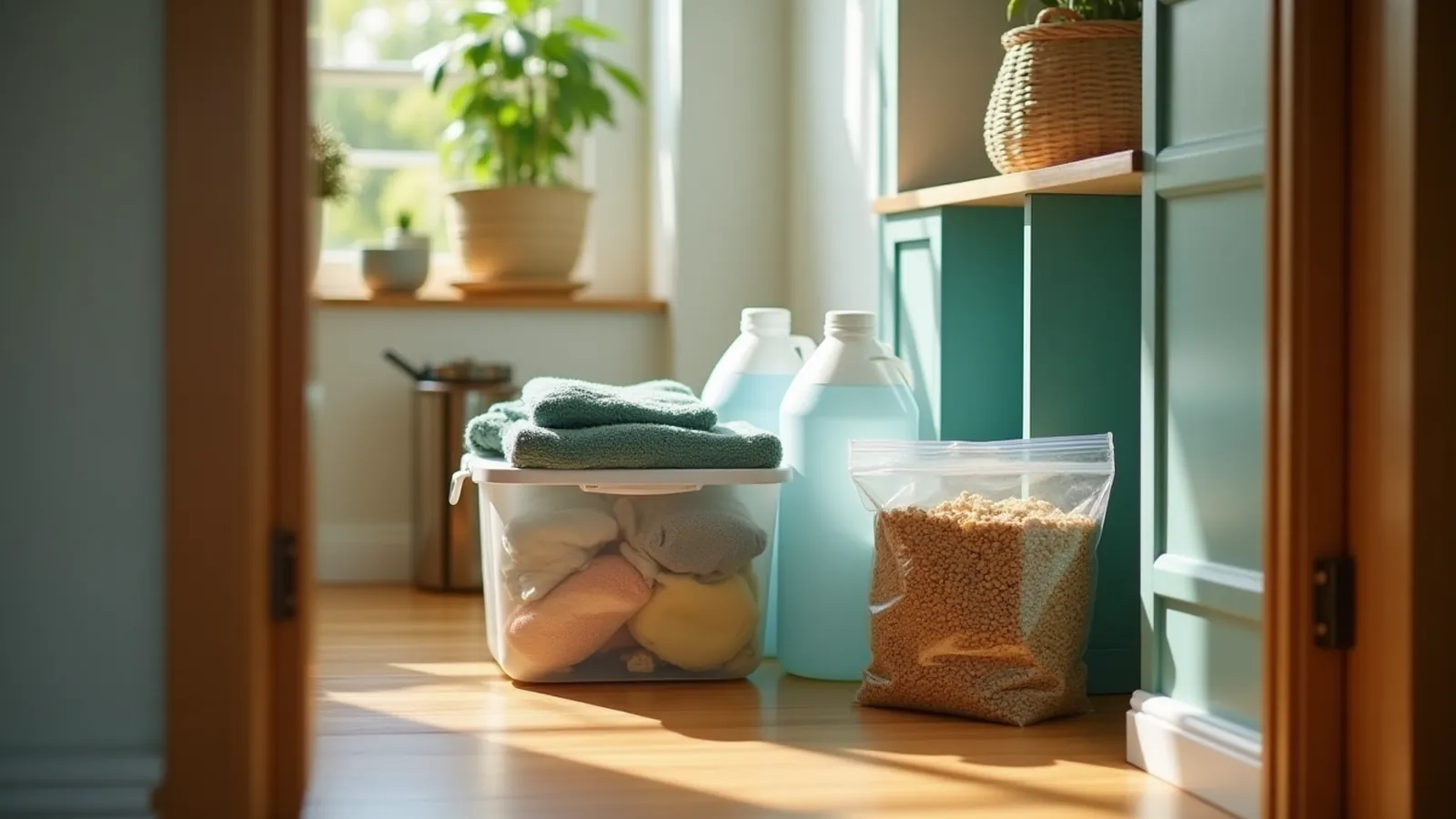
Three days of supplies, sorted into one tote, a stack of water jugs and a small bag for the dog. Start with what you own and build the rest over a few weeks.
On this page (15 sections)
- How to build your 72-hour kit, step by step
- The 72-hour kit checklist: Ready.gov basics and extras
- A closet-size list for a family of four and a dog
- The water weight reality
- Go-bag or stay-at-home kit?
- Medicines and medical needs
- Documents and cash
- Getting the kids involved
- Checking the kit twice a year
- Building the kit on a budget, over a few weeks
- Troubleshooting
- When to get help
- Frequently asked questions
- Keep going
- Sources
A 72-hour kit checklist covers what your household needs to get through three days on its own: water, food, light, a radio, first aid, medicines, documents and a few comforts. Ready.gov says that after an emergency you may need to survive on your own for several days, and it suggests putting the whole kit in one or two easy-to-carry containers, such as plastic bins or a duffel bag.
If you have stood in front of a small hall closet wondering what is actually essential, because every list online seems written for a backpacking trip or a bunker, this page is for you. Being ready does not take special gear or a big budget: the basics go in one tote, the water sits beside it, and the dog gets a small bag of its own. Below are the official list, a worked list for a family of four and a dog, the honest water weight, and a few-weeks plan to fill the gaps. Work through the checklists tonight with what is already in your cupboards.
Key takeaways
- Water: one gallon per person per day (Ready.gov, American Red Cross). For three days, a family of four needs 12 gallons, plus water for the dog.
- Oregon State Extension, citing the CDC, plans 1 gallon a day for most household pets, and notes a gallon of water weighs 8.3 pounds.
- Pack the supplies in airtight plastic bags inside one or two easy-to-carry containers (Ready.gov); the water usually sits beside them.
- The Red Cross basic list includes a 7-day supply of medications; ask your doctor or pharmacist how to build an emergency supply (Ready.gov).
- Keep copies of key documents and some cash in small bills, because ATMs and cards may not work (Ready.gov).
- Build it over time, starting with what you already own (UConn Extension), and check it regularly.
How to build your 72-hour kit, step by step
Pick the container and the spot
Choose one tote or duffel for supplies and a floor spot for water jugs. Ready.gov says to keep the kit in a designated place and make sure every family member knows where it is.
Gather what you already own
UConn Extension suggests looking at the list, gathering items you already have in one spot, crossing them off and starring the most important ones still missing.
Store the water
One gallon per person per day for three days (Ready.gov, American Red Cross). The emergency water storage guide covers containers and rotation.
Add food you will actually eat
NC State Extension suggests foods that need no refrigeration, preparation or cooking and little or no water, chosen from foods your family likes.
Add medicines, documents and cash
These are the items that are hardest to replace in a hurry. See the sections below.
Put a date on it
Write the packing date on the tote and set a reminder to check it (see the maintenance section).
The 72-hour kit checklist: Ready.gov basics and extras
This is Ready.gov's basic disaster supplies list, with a column showing what it means for a family of four and a dog for three days. The amounts in the right-hand column apply the sources' per-person rules; they are not official quantities.
| Item | Why | For 4 people + 1 dog |
|---|---|---|
| Water | Drinking and sanitation (Ready.gov) | 15 gallons: 12 for people, 3 for the dog (Oregon State Extension rule) |
| Non-perishable food | At least a several-day supply (Ready.gov) | 3 days of meals and snacks for everyone, plus dog food |
| Battery or hand-crank radio, NOAA Weather Radio with tone alert | Alerts and news without power (Ready.gov) | 1 |
| Flashlight and extra batteries | Light (Ready.gov) | 1 per person is easier for kids |
| First aid kit | Minor injuries (Ready.gov) | 1 |
| Whistle | To signal for help (Ready.gov) | 1 per person |
| Dust mask | To help filter contaminated air (Ready.gov) | 1 per person |
| Plastic sheeting, scissors, duct tape | To shelter in place (Ready.gov) | 1 set |
| Moist towelettes, garbage bags, plastic ties | Personal sanitation (Ready.gov) | 1 pack each |
| Wrench or pliers | To turn off utilities (Ready.gov) | 1 |
| Manual can opener | For canned food (Ready.gov) | 1 |
| Local maps | If phones and GPS are down (Ready.gov) | 1 |
| Cell phone chargers and a backup battery | Communication (Ready.gov) | 1 cable per phone and a charged battery pack |
Ready.gov's additional items, worth adding based on your needs: soap, hand sanitizer and disinfecting wipes; prescription and non-prescription medicines; glasses and contact lens solution; infant formula, bottles, diapers and wipes; pet food and extra water; cash; important family documents; a sleeping bag or warm blanket for each person; a change of clothes and sturdy shoes; a fire extinguisher; matches in a waterproof container; feminine and personal hygiene items; paper plates, cups and utensils; paper and pencil; and books, games or puzzles for children.
A closet-size list for a family of four and a dog
Here is how the lists above can fit in a hall closet. Work through the checklist below as you pack.
A family of four with a dog has one shelf and the floor of a hall closet. On the shelf: one large lidded tote (the family kit) and a small bag for the dog. On the floor: water jugs. Everything else stays in its normal place.
The family tote
- Three days of no-cook food the kids already eat, plus a manual can opener (Ready.gov, NC State Extension)
- Battery or hand-crank radio, flashlights for each person and spare batteries (Ready.gov)
- First aid kit, whistles, dust masks (Ready.gov)
- Medication list, a supply of prescription medicines as your pharmacist advises, glasses (Ready.gov, American Red Cross)
- Copies of documents in a waterproof bag, and cash in small bills (Ready.gov)
- Moist towelettes, garbage bags and ties, hygiene items (Ready.gov)
- A change of clothes and sturdy shoes per person, emergency blankets (Ready.gov, American Red Cross)
- Paper plates, cups and utensils; paper and pencil; phone chargers and a battery pack (Ready.gov)
- Games, books or puzzles for the kids (Ready.gov)
- A paper list of family and emergency contacts (American Red Cross)
The dog's bag
- Food, bowl, collar with ID, leash and carrier (American Red Cross)
- Any regular medicines and a rabies vaccination certificate (UConn Extension); the pet emergency kit guide has the full list
The water
- 15 gallons on the closet floor or nearby, in containers you can lift (Oregon State Extension)
Search links if you are short of a few pieces: hand-crank emergency radios (Amazon, affiliate link) opens in a new tab, waterproof document pouches (Amazon, affiliate link) opens in a new tab and lidded storage totes (Amazon, affiliate link) opens in a new tab.
The water weight reality
Water is the heaviest part of any 72-hour kit, and it rarely fits in the tote. Oregon State Extension says one gallon of water weighs 8.3 pounds and asks whether your jugs would be too heavy to move if you had to evacuate.
| Household | Gallons for 3 days | Approximate weight |
|---|---|---|
| 1 person | 3 | 25 pounds |
| 2 people | 6 | 50 pounds |
| 4 people | 12 | 100 pounds |
| 4 people + 1 dog | 15 | 125 pounds |
Split the water into jugs one adult can carry. Keep the go-bag water small, a few bottles per person, and the rest at home. The Red Cross suggests a 3-day supply for evacuation and a 2-week supply at home, so the water you store now is also the start of your longer home supply. The guide to water storage containers compares sizes.
Go-bag or stay-at-home kit?
A 72-hour kit can serve both, but they pull in different directions. Ready.gov suggests a "go-bag" you can carry if you evacuate on foot or by public transportation, plus supplies for longer distances if you have a car. The Red Cross gives different amounts for each: 3 days of food and water for evacuation, 2 weeks at home.
| Question | Go-bag | Stay-at-home kit |
|---|---|---|
| How long | 3 days (American Red Cross) | 2 weeks of food and water (American Red Cross) |
| Weight | What each person can carry | No limit, but keep it in one place |
| Water | A few bottles per person | 1 gallon per person per day |
| Extras | Documents, cash, medicines, chargers | Bedding, a cooler, more food |
If you have a car, Ready.gov suggests keeping at least a half tank of gas at all times, because gas stations may be closed or unable to pump during outages. Ready.gov also suggests a kit in the car and, at work, supplies to shelter for at least 24 hours. The power outage kit covers the extras for staying home without power.
Medicines and medical needs
This site does not give medical advice. Ready.gov notes that about half of Americans take a prescription medicine every day and that an emergency can make it hard to refill a prescription or find an open pharmacy. It suggests talking to your doctor or pharmacist about how to create an emergency supply, and keeping a list of your prescription medicines, including how much and how often you take each, and any allergies. The Red Cross basic list includes a 7-day supply of medications and medical items, and copies of your medication list and medical information.
Add hearing aids with extra batteries, glasses, contact lenses and other medical supplies (American Red Cross). For a baby, add formula, bottles, diapers, wipes and diaper rash cream (Ready.gov).
Documents and cash
The Red Cross lists copies of a medication list, proof of address, deed or lease, passports, birth certificates and insurance policies. Ready.gov suggests keeping documents saved electronically or in a waterproof, portable container. It also says to keep a small amount of cash at home in small bills, because ATMs and credit cards may not work during a disaster.
Getting the kids involved
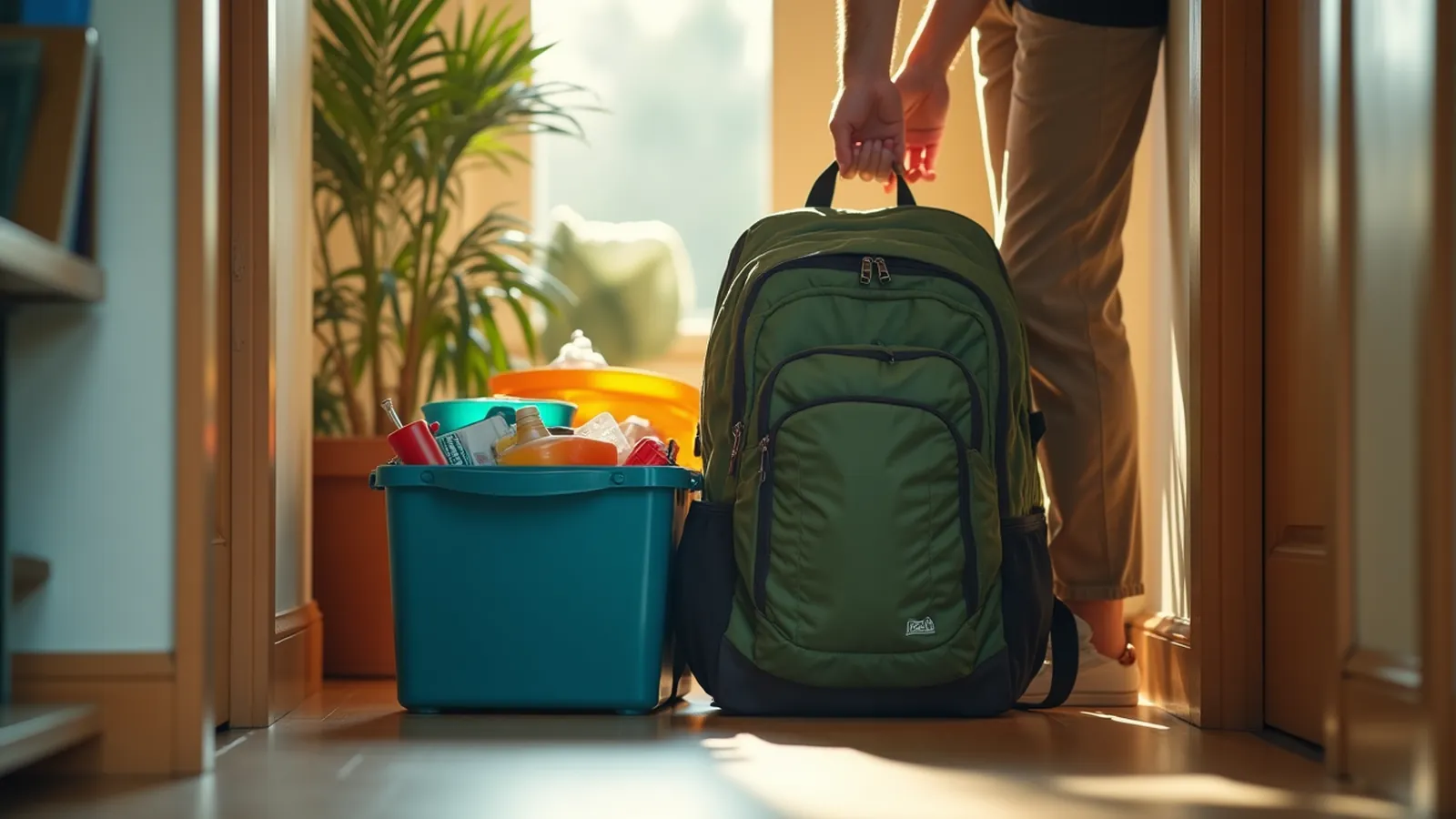
Let each child pack one comfort item and choose a few foods for the tote; NC State Extension notes that comfort foods such as cookies, hard candy and sweetened cereals are worth including. Ready.gov lists books, games and puzzles. Show the children where the kit lives, since Ready.gov says every family member should know. Then practice using it with your family emergency plan.
Checking the kit twice a year
UConn Extension suggests reviewing the kit's contents regularly to replace expired items such as food or batteries, and thinking about how your household's needs have changed in the past six months; it points out that the clock changes in spring and fall make an easy reminder. NC State Extension says to change stored water every six months and to rotate stored food every six months. Ready.gov adds: rethink your needs every year as your family changes.
- Eat and replace food near its date; move it into regular meals (NC State Extension)
- Replace stored water every six months (NC State Extension)
- Test flashlights and the radio; replace expired batteries (UConn Extension)
- Check medicines' dates and refresh the medication list
- Swap in clothes that fit growing kids
Building the kit on a budget, over a few weeks
UConn Extension's low-cost approach is to buy over time: watch for coupons, buy one sale item each shopping trip, and check dollar, discount, warehouse and thrift stores, and clearance or out-of-season items. It also suggests splitting bulk buys with family or friends and asking for kit items as gifts.
| Week | Focus |
|---|---|
| 1 | Gather what you own; pick the tote; start filling water containers |
| 2 | Food and a manual can opener on the regular grocery trip |
| 3 | Radio, flashlights, batteries, first aid kit |
| 4 | Documents copied, cash in small bills, medicines discussed with your pharmacist, the dog's bag |
The emergency food supply list shows how to grow the three-day food supply into two weeks.
Troubleshooting
- If the closet can't hold 15 gallons of water
- Keep the tote in the closet and spread the jugs under beds or in a cool corner, as long as everyone knows where they are.
- If nobody in the family will eat the kit food
- Swap it for shelf-stable foods you already buy, and rotate them into meals before their dates.
- If the tote is too heavy to lift
- Split it into two lighter containers; Ready.gov's guidance allows one or two.
- If you can't get extra prescription medicine
- Ask your pharmacist or doctor what is possible, and keep at least the medication list in the kit (Ready.gov).
When to get help
Call for help if
- Someone in the household depends on daily medicine, oxygen or a powered device: plan the kit with their doctor or pharmacist.
- You would need help evacuating: contact your local emergency management office about the resources available (Ready.gov).
- Anyone is hurt or in danger during an emergency: call 911.
Who to ask. In an emergency, call 911. If a carbon monoxide alarm sounds or anyone feels dizzy, sick or confused, get everyone outside into fresh air first, then call 911. For local hazards, shelters and alerts, contact your city or county emergency management office (start at Ready.gov). For home canning and garden questions, your county Cooperative Extension office can help (see the USDA Cooperative Extension System page), and the National Center for Home Food Preservation publishes tested canning methods. For a pet's health, call your veterinarian.
Frequently asked questions
What should be in a 72-hour kit?
Ready.gov's basic list: water (one gallon per person per day), non-perishable food, a battery or hand-crank radio and NOAA Weather Radio, a flashlight, a first aid kit, extra batteries, a whistle, a dust mask, plastic sheeting and duct tape, sanitation supplies, a wrench or pliers, a manual can opener, local maps and phone chargers. Add medicines, documents, cash, clothes and pet supplies.
How much water do I need for a 72-hour kit?
One gallon per person per day, so 3 gallons per person (Ready.gov, American Red Cross). Oregon State Extension, citing the CDC, adds 1 gallon a day for most household pets. A family of four and a dog would store 15 gallons, about 125 pounds at 8.3 pounds per gallon.
Where should I keep a 72-hour kit?
In one designated place that every family member knows (Ready.gov), easy to reach and dry (UConn Extension), such as a hall closet. Ready.gov also suggests smaller kits for work and the car, because you don't know where you'll be when an emergency happens.
How often should I check my 72-hour kit?
Change stored water and rotate food every six months (NC State Extension), replace expired items such as batteries (UConn Extension), and rethink your needs every year (Ready.gov). The spring and fall clock changes are an easy reminder.
Sources
- Build A Kit, Ready.gov, FEMA (accessed October 28, 2026).
- Survival Kit Supplies, American Red Cross (accessed October 28, 2026).
- Evacuation, Ready.gov, FEMA (accessed October 28, 2026).
- People with Disabilities, Ready.gov, FEMA (accessed October 28, 2026).
- Financial Preparedness, Ready.gov, FEMA (accessed October 28, 2026).
- Low-Cost Emergency Supply Kit: Assemble Your Own Kit for Less, UConn Extension (accessed October 28, 2026).
- Survival Basics: Water, Oregon State University Extension Service (accessed October 28, 2026).
- Evacuation Disaster Kit, NC State Extension (accessed October 28, 2026).
Kit, plan and pets, in order
The Kits and Plans start-here page puts the 72-hour kit, the family emergency plan and the pet kit in the order that helps most.