
Food & Water
Water storage containers: which are food-grade and safe, and what to avoid
Most of the containers in your garage fall into one of three groups: safe, safe for washing water only, or never. Here is how to tell them apart, then how to clean, fill and label the ones you keep.
On this page (10 sections)
- Which household containers are safe for water storage?
- What the recycling codes on water storage containers mean
- Container sizes, weights and handling
- How to clean, fill and label water storage containers
- If you decide to buy containers: what to look for
- Troubleshooting water containers
- When to get help
- Frequently asked questions
- Keep going
- Sources
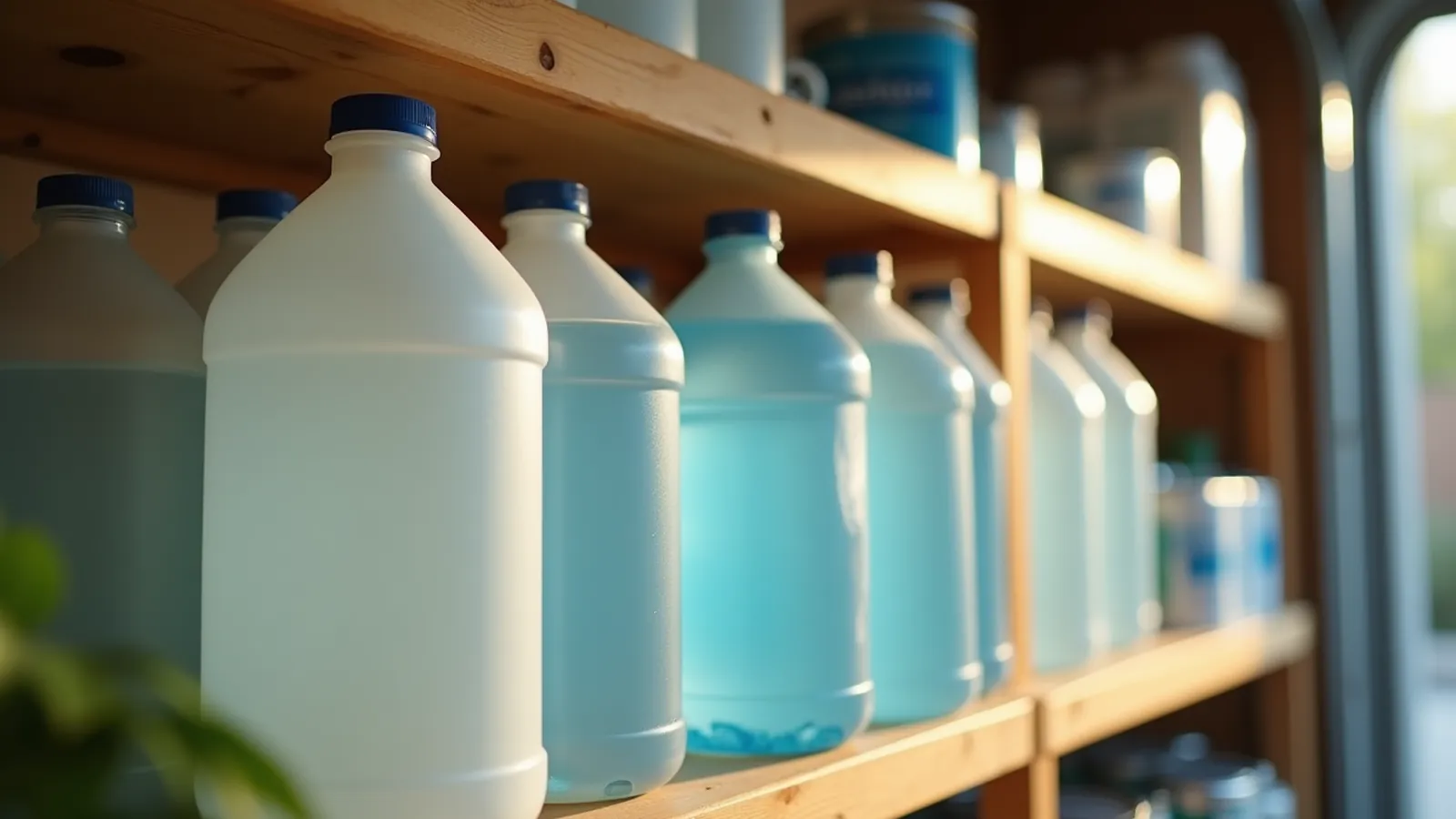
If you are standing in the garage afraid to fill any of those jugs, because you read that the wrong plastic can leach chemicals and the last thing you want is to give your family bad water, here is the short answer on water storage containers: sealed store-bought bottled water is safest, food-grade containers made for drinking water come next, and clean soda bottles are a good free option. Never use anything that held chemicals for drinking water, and skip milk jugs.
That order comes from the CDC, the American Red Cross and Cooperative Extension services, and it means you probably already own some safe containers. Below is a container-by-container guide, what the recycling codes on the bottom actually tell you, sizes and weights from a 2-liter bottle to a 55-gallon barrel, and the CDC's cleaning steps. Nothing here requires buying gear. If you want new containers, the links further down open Amazon search results to compare, not picks.
Key takeaways
- Best: sealed, commercially bottled water, then FDA-approved food-grade water storage containers (CDC).
- Good free option: clean 2-liter soda bottles (Oregon State Extension, UF/IFAS, American Red Cross).
- Avoid milk jugs: milk residue is hard to remove and the plastic breaks down over time.
- Never use containers that held bleach, pesticides or other toxic chemicals for drinking water (CDC), and avoid glass, which can break.
- A recycling code alone does not prove a container is food-grade. Ask the manufacturer if you are not sure (CDC).
- 55 gallons of water weighs about 459 pounds (Colorado State University Extension). Fill a barrel where it will stay.
Sort your containers first
- Pull out every jug and bottle, then sort them into three piles using the table below: keep, washing water only, recycle.
- Check the bottom of each "keep" container for the recycling code and a tight cap.
- Wash and sanitize the keepers before you fill them (steps below).
Which household containers are safe for water storage?
This table sorts the containers most homes already have. The "why" column is what the sources say. If you have already filled a milk jug, it is easy to fix: use that water for plants or cleaning, recycle the jug and refill a safe container. If you don't know what a container held before, pour its water away and recycle it.
| Container | Use for drinking water? | Why |
|---|---|---|
| Sealed store-bought bottled water | Yes, best choice | The CDC calls unopened, commercially bottled water the safest and most reliable emergency source. |
| Containers sold as food-grade water storage (jugs, bricks, barrels) | Yes | The CDC says FDA-approved food-grade containers will not transfer toxic substances into the water. |
| 2-liter soda bottles, cleaned and sanitized | Yes | Oregon State Extension, UF/IFAS and the Red Cross all name them as a good reuse option. |
| Juice bottles | Sources disagree | UF/IFAS lists juice bottles as food-grade; the Red Cross booklet says fruit sugars can't be fully removed. Use soda bottles first. |
| Milk jugs | No | Milk protein is hard to remove and can spoil the water (Red Cross, Oregon State Extension); the plastic breaks down over time (Utah State University Extension) and can develop leaks (Oregon State Extension). |
| Bleach bottles | No (washing water at most) | UF/IFAS says they are not made of food-grade plastic; Utah State Extension says water in them should be used only for laundry or dishes. |
| Containers that held pesticides, fuel or other chemicals | Never | The CDC says never use containers that held toxic liquids or solids. |
| Glass jars and jugs | Avoid | The CDC recommends durable, unbreakable containers (not glass); the Red Cross says glass is heavy and may break, and UF/IFAS says it may crack in the freezer. |
| Cardboard cartons | No | The Red Cross booklet says they leak easily and are not designed for long-term storage of liquids. |
Watch for
Label any washing-only water clearly, or don't store it at all. UF/IFAS warns that water kept in bleach containers for washing could mistakenly be used for drinking.
What the recycling codes on water storage containers mean
The number inside the triangle tells you the type of plastic, not whether that particular container is safe for food. Utah State University Extension gives a useful rule of thumb: if a container originally stored food, it can be safely used for food again. Oregon State Extension says the best option is food-grade, heavy-duty buckets, carboys or drums stamped with a PETE or HDPE code. In plain terms, Utah State describes PETE (#1) as the clear, tough plastic of soda and water bottles, and HDPE (#2) as the somewhat stiff, translucent or colored plastic of milk jugs and laundry bottles.
| Code | Plastic | Where you see it | For water storage |
|---|---|---|---|
| 1, PET or PETE | Polyethylene terephthalate | Soda, juice and bottled water | Good when it held a drink; clean and sanitize first |
| 2, HDPE | High-density polyethylene | Milk jugs, some juice containers, laundry products, many food-grade jugs and drums | Good when sold as food-grade; not milk jugs or laundry and bleach bottles |
| 7, Other | Other resins or blends | 3- and 5-gallon reusable water bottles | Good when made for drinking water |
| 4, LDPE | Low-density polyethylene | Squeeze bottles, bread and frozen food bags | Utah State says probably not the best plastic for long-term storage |
| 5, PP | Polypropylene | Yogurt and margarine tubs, medicine bottles | Food-grade (Utah State), but tubs are made for food, not as water jugs |
If a container you want to buy doesn't say it is food-grade, the CDC suggests contacting the manufacturer. Virginia Tech Extension also recommends food-grade, BPA-free, airtight plastic for home-filled water.
Container sizes, weights and handling
Oregon State Extension notes that a gallon of water weighs 8.3 pounds and asks a useful question: will the jugs be too heavy to carry if you have to leave? Choose sizes you can lift and pour. Weights below are water only, at 8.3 pounds per gallon, rounded.
| Size | Weight when full (water only) | Good for | Watch out for |
|---|---|---|---|
| 1-liter and 2-liter bottles | About 2 and 4 pounds | Grab-and-go kits, small spaces, freezer gaps | Many bottles to rotate |
| 1-gallon jug | About 8 pounds | Easy pouring for kids and older adults | Thin jugs can split; use food-grade ones |
| 5- to 7-gallon jug | About 42 to 58 pounds | The main home supply; two 7-gallon jugs cover one person for 2 weeks (Oregon State Extension) | Heavy to lift; a spigot or pour spout helps |
| Stackable 3- to 5-gallon bricks | About 25 to 42 pounds each | Closets and under beds | Stack only as high as the maker allows |
| 55-gallon barrel | About 459 pounds of water | Large households with floor space | Very heavy when full: place it first, then fill; empty it with a spigot, pump or siphon |
Colorado State University Extension puts 55 gallons of water at 458.7 pounds, and warns that with the barrel and fittings it could approach 500 pounds falling on someone if it isn't supported properly. Set a barrel on a level, sturdy base in its final spot before you fill it. Two weeks of water is 14 gallons per person and per pet (Oregon State Extension), so the emergency water storage chart will tell you how many containers you need.
How to clean, fill and label water storage containers
Wash
Wash the container with soap and water and rinse it completely (CDC). Oregon State Extension uses warm, soapy water and a hot-water rinse.
Sanitize
Mix 1 teaspoon of unscented liquid household chlorine bleach (5% to 9% sodium hypochlorite) in 1 quart (4 cups) of water. Pour it in, cap tightly and shake so it touches every inside surface (CDC).
Wait, empty and dry
Wait at least 30 seconds, pour the solution out and let the container air-dry (CDC). Oregon State Extension says you can also rinse it with clean, purified water instead.
Fill with clean water
Treated city tap water needs nothing added (Oregon State Extension). Untreated well or spring water should be purified first, by boiling or with bleach at the disinfection dose (Oregon State Extension, UF/IFAS). Don't touch the inside of the cap (American Red Cross) or the container lip (Virginia Tech Extension).
Label and date
Write "drinking water" and the storage date on each container (CDC). Set a reminder for 6 months: the CDC says to replace water you store yourself every six months.
Store it well
Keep containers between 50 and 70 °F (10 to 21 °C), out of direct sunlight, and away from gasoline, pesticides and other toxic substances (CDC). Oregon State Extension adds that odors from cleaning supplies and fertilizer can be absorbed by the container and passed to the water.
Tip: use the freezer
Fill gaps in the freezer with food-grade plastic bottles of water and cap them once frozen. Oregon State Extension notes this helps the freezer stay cold in an outage and gives you drinking water as it melts. Use plastic, not glass (UF/IFAS). The fridge and freezer guide explains why a full freezer lasts longer.
Oregon State Extension also says that once a container is opened, you should use the water rather than store it again; UF/IFAS suggests using opened containers within 1 to 2 days.
If you decide to buy containers: what to look for
Buying is optional. If the free soda bottles run out, look for these features rather than a brand:
- The words "food grade" or "for drinking water" on the label or listing; if it isn't stated, ask the maker (CDC).
- A tight-sealing cap and durable, unbreakable plastic (CDC).
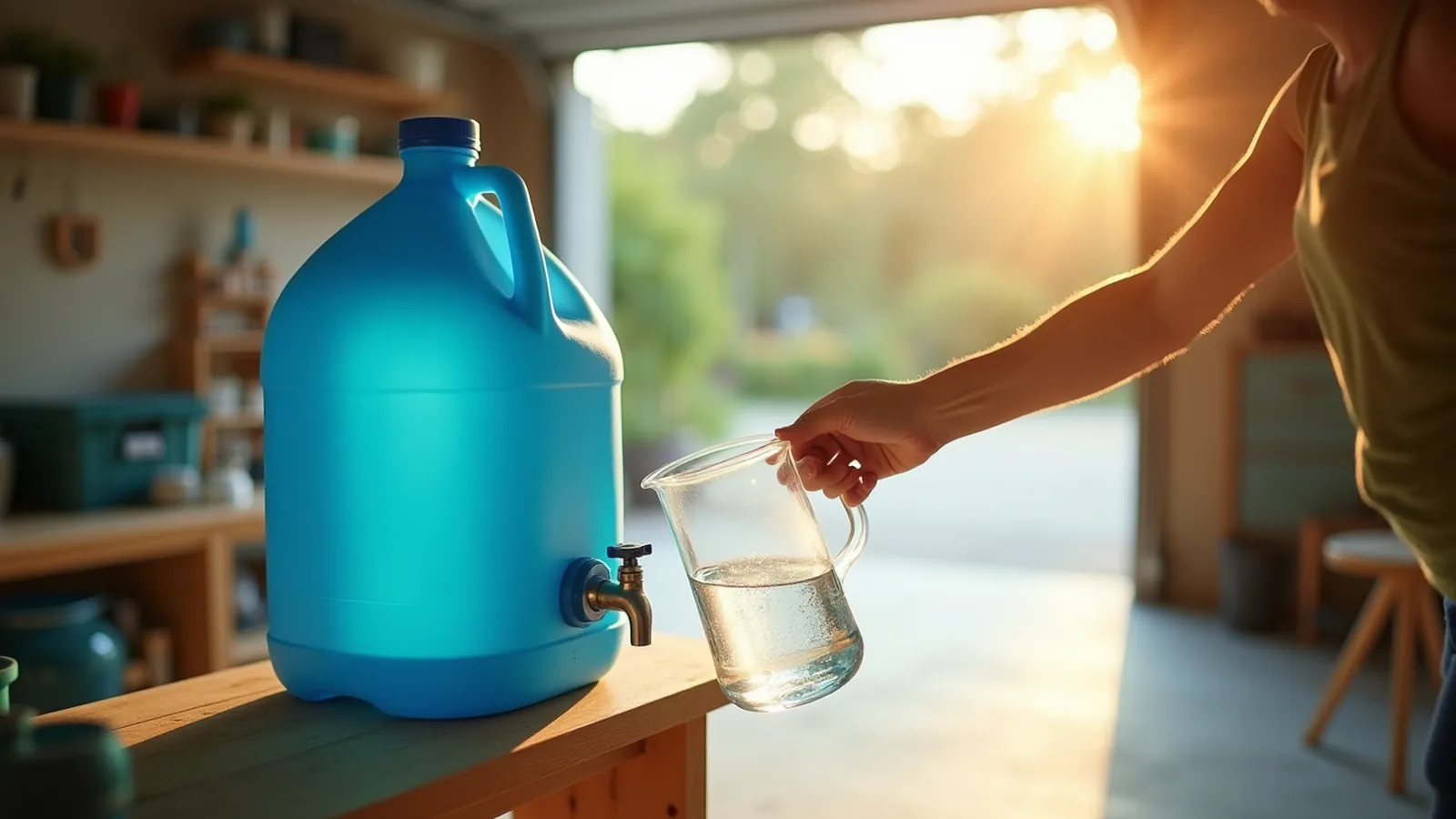
- A narrow neck or opening for pouring (CDC); a spigot is a handy extra. The CDC says never to scoop water out with your hands.
- A size you can lift when full, using the weight table above.
- For barrels: a compatible hand pump or siphon, and a level spot that can take the weight.
To compare options: food-grade water storage containers (Amazon, affiliate link) opens in a new tab, 7-gallon water jugs (Amazon, affiliate link) opens in a new tab, stackable water bricks (Amazon, affiliate link) opens in a new tab and 55-gallon water barrels with a pump (Amazon, affiliate link) opens in a new tab. Check each listing for a food-grade statement before you buy; this site has not tested any of them.
A family of four needs 12 gallons for 3 days at 1 gallon per person per day (CDC). They sort the garage on a Saturday: six soda bottles and two food-grade 5-gallon jugs go in the "keep" pile, three milk jugs and an empty bleach bottle go to recycling, and a pesticide sprayer stays with the garden tools. They wash and sanitize the keepers, fill them from the tap, write "drinking water" and the date on each, and store them on a closet floor away from the cleaning shelf. The soda bottles and jugs hold about 13 gallons, so their first 3 days are covered. For two weeks they will need 56 gallons, so they plan to add one 7-gallon jug every few grocery trips.
Troubleshooting water containers
- If you can't find a code or a food-grade label
- Contact the manufacturer (CDC). If you still can't confirm it is food-grade and never held chemicals, recycle it.
- If a container smells like its old contents after washing
- Utah State Extension notes that containers that held strong-smelling foods keep some scent. Choose another container for drinking water.
- If your only storage space gets hot in summer
- Oregon State Extension notes a food safety concern about plastic containers kept above 95 °F (35 °C). Move water to a cooler room, even if that means several smaller containers.
- If a jug starts to leak
- Retire it and store water somewhere darker and cooler. UF/IFAS says heat and light slowly damage plastic containers and can cause leaks.
- If stored water tastes flat
- Pour it between two clean containers a few times to put air back into it (American Red Cross).
When to get help
Call for help if
- Your water utility or health department issues a boil-water or do-not-drink notice: follow their instructions.
- Stored water smells of fuel or chemicals: don't drink it. Oregon State Extension says boiling and bleach cannot make that water safe.
- Your well may be contaminated after a flood: contact your state or local health department before you fill containers from it.
Who to ask. In an emergency, call 911. If a carbon monoxide alarm sounds or anyone feels dizzy, sick or confused, get everyone outside into fresh air first, then call 911. For local hazards, shelters and alerts, contact your city or county emergency management office (start at Ready.gov). For home canning and garden questions, your county Cooperative Extension office can help (see the USDA Cooperative Extension System page), and the National Center for Home Food Preservation publishes tested canning methods. For a pet's health, call your veterinarian.
Frequently asked questions
What is the best container to store water long-term?
Sealed, commercially bottled water, kept to its date, is the safest choice according to the CDC. For water you bottle yourself, the CDC recommends FDA-approved food-grade water storage containers with tight lids; Oregon State Extension recommends heavy-duty food-grade buckets, carboys or drums stamped with a PETE or HDPE code. Replace self-filled water every six months.
Is it safe to reuse plastic water and soda bottles?
Yes, if they held a drink and you clean and sanitize them first. Oregon State Extension, UF/IFAS and the American Red Cross all name 2-liter soda bottles as a good option. Use a tight original cap, label and date the bottle, and keep it in a cool, dark place out of direct sunlight.
How long can water stay drinkable in a container?
The CDC says to replace water you store yourself every six months and to follow the expiration date on store-bought water. UF/IFAS and Virginia Tech Extension give 6 to 12 months for home-filled containers. Once you open a container, UF/IFAS suggests using it within 1 to 2 days.
Why can't I use milk jugs for water storage?
Milk protein is hard to clean out of the jug and can make stored water spoil, according to the American Red Cross and Oregon State Extension. Utah State Extension adds that milk-jug plastic breaks down over time, and Oregon State Extension says the jugs can develop leaks. Clean soda bottles or food-grade jugs are better choices.
Sources
- How to Create an Emergency Water Supply, Centers for Disease Control and Prevention (accessed October 28, 2026).
- Survival basics: Water (EM 9285), Oregon State University Extension Service (accessed October 28, 2026).
- Soda bottles for emergency water storage?, Oregon State University Extension Service (accessed October 28, 2026).
- Which Plastics Are Safe for Food Storage?, Utah State University Extension (accessed October 28, 2026).
- Preparing and Storing an Emergency Safe Drinking Water Supply, University of Florida IFAS Extension (accessed October 28, 2026).
- Emergency Supplies of Water for Drinking and Food Preparation, Virginia Cooperative Extension, Virginia Tech (accessed October 28, 2026).
- Food and Water in an Emergency, American Red Cross and FEMA (accessed October 28, 2026).
- Rain Barrels and Rainwater Collection, Colorado State University Extension, Pueblo County (accessed October 28, 2026).
Water first, then food
Once your containers are sorted, the Food and Water start-here page walks you through how much to store and the two-week food supply.