
Grow & Preserve
Water bath canning vs pressure canning: acidity decides which one you need
Acid foods go in a boiling-water canner; low-acid foods need a pressure canner. Here is the rule from the National Center for Home Food Preservation, a table of common foods and a short decision flow so you can pick your first recipe.
On this page (14 sections)
- The rule: why acidity decides the canner
- Which foods go in which canner
- Tomatoes and figs: add acid every time
- Does salsa need a water bath or a pressure canner?
- Water bath vs pressure canning, side by side
- Altitude, and dial vs weighted gauges
- Steam canners and electric multicookers
- Methods to avoid
- A decision flow for your first recipe
- Troubleshooting
- When to get help
- Frequently asked questions
- Keep going
- Sources
If every blog tells you something different about your salsa, one rule settles water bath canning vs pressure canning: acidity. Acid foods with a pH of 4.6 or lower, such as fruits, jams, pickles and properly acidified tomatoes, can go in a boiling-water canner, while low-acid foods with a pH above 4.6, including meat, poultry, seafood and all fresh vegetables except most tomatoes, must go in a pressure canner (National Center for Home Food Preservation, NCHFP).
It isn't your fault that you never started; conflicting advice stops a lot of careful people. The fix is that you don't decide the method yourself. You choose a tested recipe, and it tells you the canner, the time and the altitude adjustment. Below are the rule, a food-by-food table, the tomato acid amounts, the salsa rules and a decision flow, so you can pick one recipe and try it.
Key takeaways
- pH 4.6 is the line: at or below it, a boiling-water canner; above it, a pressure canner (NCHFP).
- Low-acid foods need 240 to 250°F (116 to 121°C), reached in a pressure canner at 10 to 15 PSI (NCHFP).
- Tomatoes need added lemon juice or citric acid for both canner types; figs need acid to be canned as an acid food (NCHFP).
- Can salsa only from a tested recipe, keeping its vegetable and acid amounts (NCHFP).
- Above 1,000 feet, adjust time or pressure, and test dial gauges every year (NCHFP).
- Electric multicookers and untested methods such as open-kettle canning are not recommended (NCHFP, MU Extension).
The rule: why acidity decides the canner
The choice of canner is about one germ in particular. NCHFP explains that Clostridium botulinum spores are on most fresh food surfaces and are harmless there. Inside a sealed jar of moist, low-acid food between 40° and 120°F (4 to 49°C), with almost no oxygen, they can grow and make the toxin that causes botulism.
Acid blocks that growth. Low-acid foods have too little acid, and the spores are very hard to destroy at boiling-water temperatures, so NCHFP says low-acid foods should be sterilized at 240° to 250°F, which a pressure canner reaches at 10 to 15 pounds per square inch (PSI). Boiling longer is not a workaround: NCHFP puts the time to safely process low-acid food in boiling water at 7 to 11 hours, and says low-acid foods must be processed in a pressure canner to be free of botulism risks.
Which foods go in which canner
This table follows NCHFP's lists of acid and low-acid foods. Note the last row: NCHFP says most mixtures of low-acid and acid foods are low-acid unless the recipe adds enough lemon juice, citric acid or vinegar.
| Food | Canner | Why |
|---|---|---|
| Fruits such as peaches, pears and apples | Boiling-water canner | Naturally acid |
| Jams, jellies, marmalades, fruit butters | Boiling-water canner | Acid foods |
| Pickles and sauerkraut from tested recipes | Boiling-water canner | Acid foods |
| Tomatoes: whole, crushed or juice | Boiling-water or pressure canner, as the recipe says | Some have a pH slightly above 4.6, so acid is always added |
| Figs | Boiling-water canner, only when acidified | pH slightly above 4.6 |
| Salsa from a tested recipe | Boiling-water canner | The recipe's measured acid |
| Green beans, corn, carrots, potatoes and other vegetables | Pressure canner only | Low-acid |
| Meat, poultry, seafood | Pressure canner only | Low-acid |
| Mixtures such as vegetable soups | Pressure canner, tested recipe | Most mixtures are low-acid |
What to get first on a budget
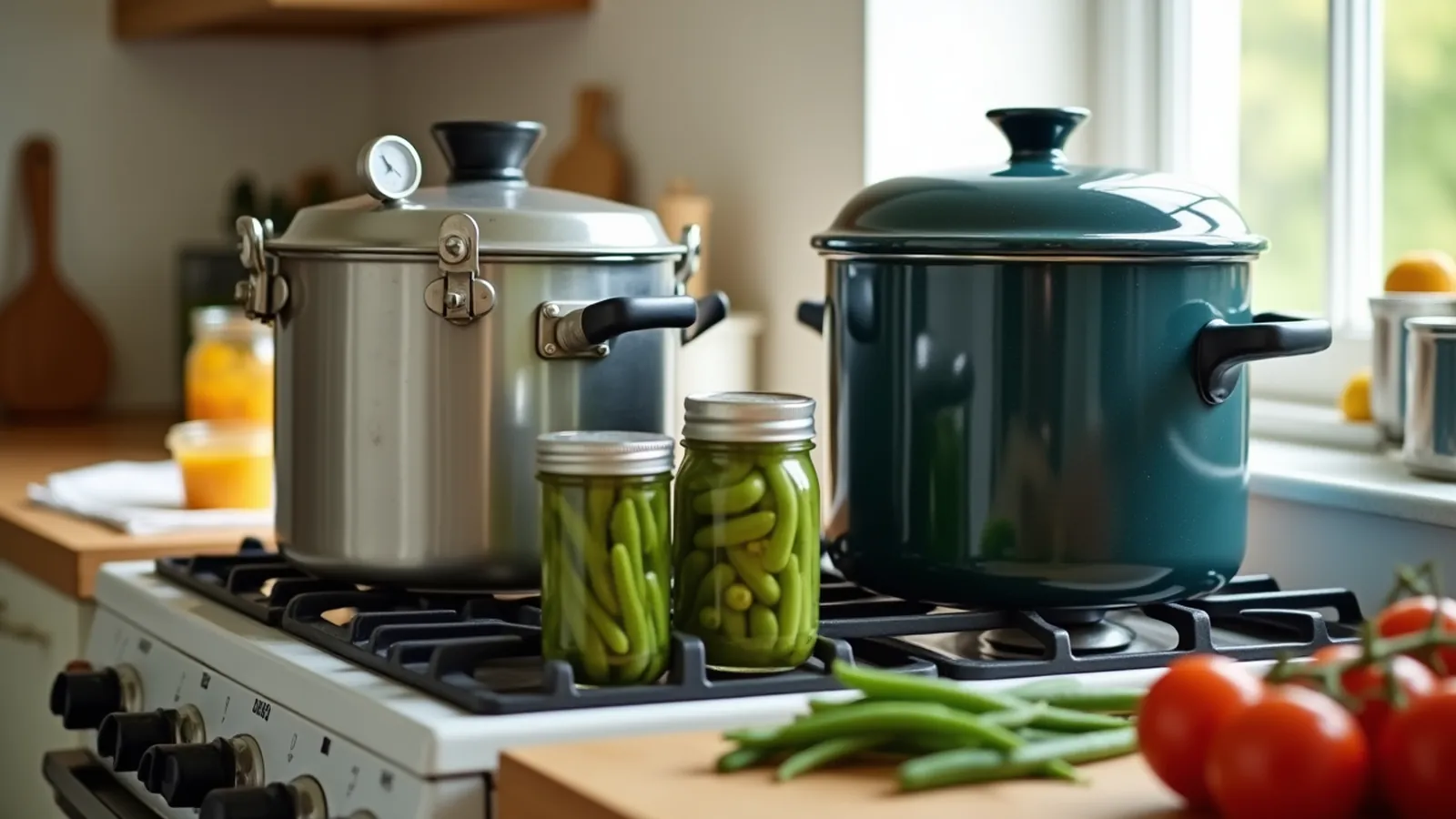
You only need the canner your first recipe calls for. NCHFP notes that a pressure canner can also process acid foods, but recommends boiling-water canners for them because they are faster. If you start with tomatoes, jam, pickles or a tested salsa, a boiling-water canner and standard canning jars are all the canner equipment you need.
Tomatoes and figs: add acid every time
NCHFP says some tomatoes are now known to have a pH slightly above 4.6, and figs do too, so to can them as acid foods they must be acidified with lemon juice or citric acid. Its tomato directions apply to whole, crushed or juiced tomatoes for both pressure and boiling-water processing. Add the acid straight to each jar before filling. You may add a little sugar for taste, but never leave the acid out.
| Type of acid | Per pint | Per quart |
|---|---|---|
| Bottled lemon or lime juice | 1 tablespoon | 2 tablespoons |
| Citric acid | ¼ teaspoon | ½ teaspoon |
| Vinegar, 5% acidity (may change the flavor) | 2 tablespoons | 4 tablespoons |
For figs, use the acid amount in a tested fig recipe rather than this tomato table.
Does salsa need a water bath or a pressure canner?
NCHFP's tested salsas are boiling-water recipes. Its Tomato Salsa with Paste Tomatoes, for example, is processed in a boiling-water canner, and the page says the only change you can safely make is the amount of spices and herbs: don't alter the proportions of vegetables to acid and tomatoes. NCHFP's salsa notes, adapted from Washington State University's tested recipes, say you must add acid to canned salsa because its natural acidity may not be high enough. The rules that matter:
- Use the amounts of each vegetable listed, and don't increase the total peppers. You may swap one pepper type for another.
- Add the listed vinegar or lemon juice: vinegar of at least 5% acidity, and only commercially bottled lemon juice.
- You may swap vinegar for an equal amount of lemon juice, but never lemon juice for vinegar, which makes a less acid, potentially unsafe salsa.
- You may change the spices, such as cilantro and cumin.
- Don't thicken salsa with flour or cornstarch before canning; thicken it after opening.
- Use only high-quality tomatoes, not overripe ones or tomatoes from dead or frost-killed vines.
Your own salsa recipe
NCHFP says not to can salsas that don't follow tested recipes; freeze them or keep them in the refrigerator instead. A family recipe is still worth making. It just belongs in the freezer, not on the pantry shelf.
Water bath vs pressure canning, side by side
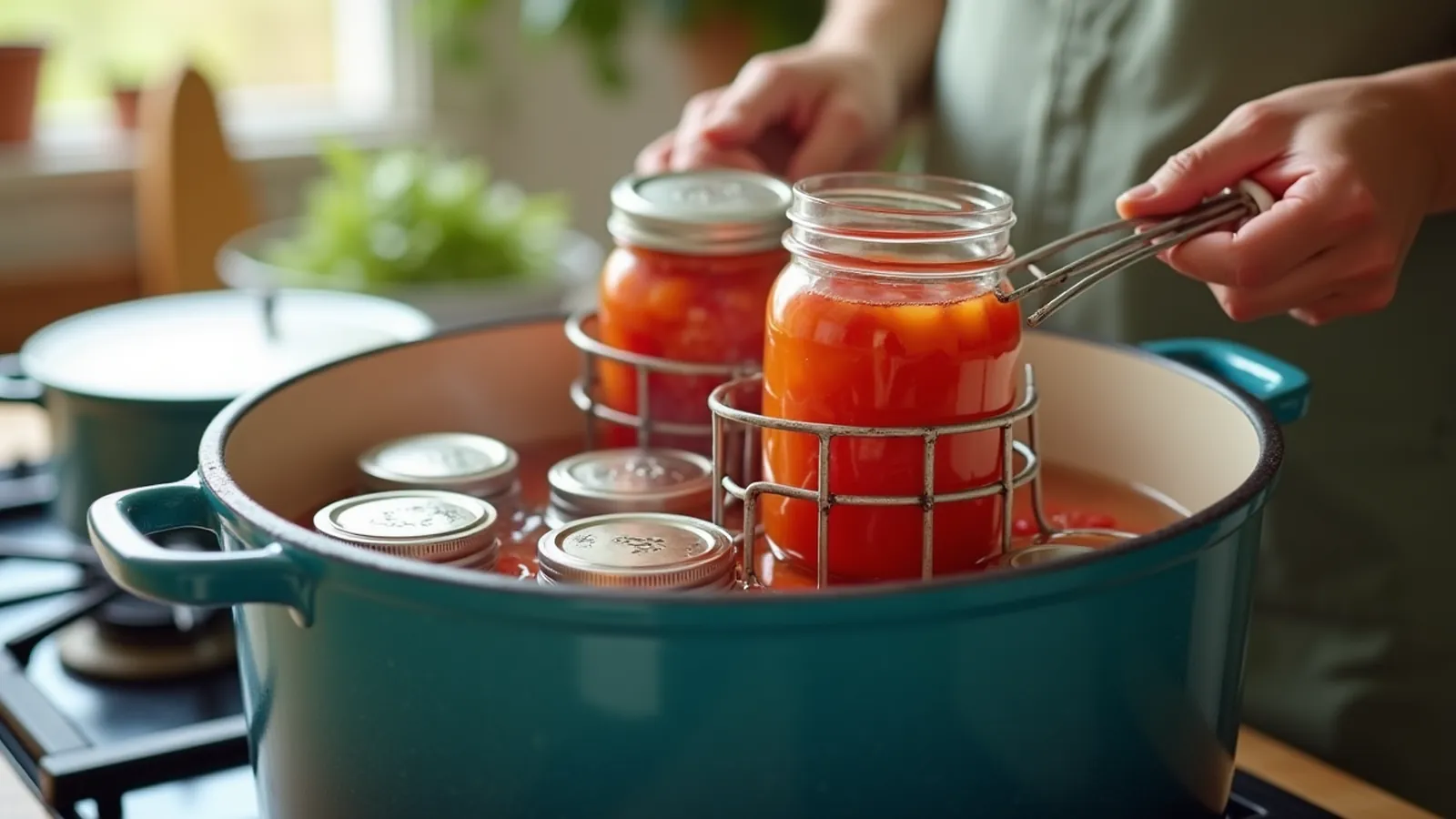
Both methods use the same jars and two-piece lids. The steps differ in how heat is reached and held, following NCHFP's directions for each canner.
| Step | Boiling-water canner | Pressure canner |
|---|---|---|
| Water | At least 1 inch over jar tops; 2 inches for processes over 30 minutes | About 2 to 3 inches deep with jars in, or as the recipe directs |
| Before timing | Bring to a vigorous boil | Vent steam for 10 minutes, then add the weight or close the petcock |
| Start the timer | When the water boils vigorously | When the gauge shows the recommended pressure |
| If heat drops | Return to a vigorous boil; restart timing from the beginning | Return to pressure; restart timing from the beginning |
| After processing | Heat off, lid off, wait 5 minutes before removing jars | Let it depressurize on its own; never force-cool |
| Altitude | Longer processing time | Higher pressure |
| Yearly check | Not needed | Dial gauges tested for accuracy |
NCHFP adds that pressure itself does not kill microorganisms; high temperature held long enough does, and at sea level a canner at 10.5 lbs of gauge pressure reaches 240°F. The pressure canning for beginners guide walks through a first batch of green beans step by step.
Altitude, and dial vs weighted gauges
Water boils at a lower temperature as elevation rises, and NCHFP warns that using sea-level process times at 1,000 feet or more may result in spoilage. Tested recipes list longer times for boiling-water canning and higher pressures for pressure canning. If you don't know your elevation, NCHFP suggests asking your county Extension office.
A weighted gauge rocks or jiggles to hold pressure. NCHFP says it controls pressure precisely and needs no accuracy checks, but it cannot correct precisely for elevation, so above 1,000 feet you run it at 10 PSI instead of 5, or 15 instead of 10. A dial gauge allows smaller steps but needs a check before use each year, because a gauge that reads high causes under-processing. If it is off by up to 2 pounds you can adjust; replace it if it is off by more. Many county Cooperative Extension offices test gauges.
Steam canners and electric multicookers
Atmospheric steam canners surround jars with steam instead of water. NCHFP's update on research done with the University of Wisconsin says they can be used for naturally acid or properly acidified foods with a pH of 4.6 or below, with tested boiling-water recipes, when key controls are met: air vented out first, jars preheated, processing time of 45 minutes or less including any altitude adjustment, the canner never opened to add water, and jars cooled in still air. They are not for low-acid foods.
Electric multicookers are different. NCHFP does not support using USDA canning processes in multicookers with "canning" or "steam canning" buttons, even when the manufacturer gives instructions, because its pressure processes were developed for stovetop pressure canners holding four or more quart jars standing upright.
Methods to avoid
Some old or viral methods look like canning but don't reliably heat every jar. Avoid them:
- Do not use open-kettle canning or the inversion method (hot jars sealed and turned upside down without processing); MU Extension says these give insufficient heat.
- Do not process jars in an oven, microwave or dishwasher. MU Extension says oven heat transfers too slowly, microwaves heat unevenly, and a dishwasher's water is too cool to kill harmful microorganisms.
- Do not seal jams with paraffin wax, which MU Extension says may allow mold to grow.
- Do not add aspirin in place of heat processing, which MU Extension calls extremely dangerous.
- Do not reuse flat lids, which MU Extension says greatly increases the risk of failed seals.
A decision flow for your first recipe
Start from a tested recipe
NCHFP says the vital controls are the canning method and the research-based process times in the USDA Complete Guide to Home Canning, which NCHFP publishes online.
Low-acid food or a mixture?
Vegetables, meat, poultry, seafood or soups go in a pressure canner, using the recipe's process table.
Tomatoes or figs?
For tomatoes, add the acid in the table above; for figs, use the tested fig recipe's acid. Then use the canner the recipe names.
Fruit, jam, a tested pickle or a tested salsa?
Use a boiling-water canner, or an atmospheric steam canner if the process time is 45 minutes or less.
Check your elevation
Above 1,000 feet, use the recipe's longer time or higher pressure.
No tested recipe?
Freeze or refrigerate the food instead. To keep vegetables without canning, see the root cellar and cool storage guide.
A household at 2,500 feet has tomatoes and green beans from a first vegetable garden. The tomatoes become crushed tomatoes: 2 tablespoons of bottled lemon juice in each quart jar, then the boiling-water canner, using the processing time for that elevation in NCHFP's crushed tomato recipe. The green beans are low-acid, so they wait for the pressure canner; with a weighted gauge it runs at 15 PSI because the home is above 1,000 feet. The family's own salsa goes in the freezer.
Troubleshooting
- If your recipe doesn't say which canner to use
- Treat it as untested. Find the same food on NCHFP's site or in the USDA Complete Guide and use that recipe.
- If the water stopped boiling partway through
- Bring it back to a vigorous boil and start the timing over from the beginning (NCHFP).
- If the pressure dropped below the recommended level
- Bring the canner back to pressure and restart the full process time (NCHFP).
- If you only have a multicooker
- Use it for cooking, not canning (NCHFP), and freeze the food until you have a stovetop canner.
When to get help
Call for help if
- You aren't sure a recipe is tested or which canner it needs: ask your county Cooperative Extension office.
- Your dial gauge hasn't been checked this year: many Extension offices test gauges (NCHFP).
- A jar is leaking, bulging or spurts liquid when opened: don't taste it. The pressure canning guide explains how to dispose of a suspect jar safely.
Who to ask. In an emergency, call 911. If a carbon monoxide alarm sounds or anyone feels dizzy, sick or confused, get everyone outside into fresh air first, then call 911. For local hazards, shelters and alerts, contact your city or county emergency management office (start at Ready.gov). For home canning and garden questions, your county Cooperative Extension office can help (see the USDA Cooperative Extension System page), and the National Center for Home Food Preservation publishes tested canning methods. For a pet's health, call your veterinarian.
Frequently asked questions
What is the difference between water bath canning and pressure canning?
A boiling-water canner heats jars in boiling water, which is enough for acid foods with a pH of 4.6 or lower. A pressure canner traps steam to reach 240 to 250°F, the temperature NCHFP says low-acid foods such as vegetables, meat and poultry need. The tested recipe tells you which one to use.
Can I water bath vegetables if I process them longer?
No. NCHFP estimates that safely processing low-acid foods in boiling water would take 7 to 11 hours, and it says low-acid foods must be pressure canned to be free of botulism risks. Use a pressure canner with a tested recipe, or freeze the vegetables instead.
What foods should not be pressure canned?
Any food with a tested pressure process can be pressure canned. Acid foods can be too when the recipe gives a pressure option, as NCHFP's tomato directions do, but boiling water is recommended for them because it is faster. What you should not can at all is a recipe without a tested process, such as a home salsa; freeze or refrigerate it.
Can I use an Instant Pot or other multicooker for canning?
NCHFP does not support using USDA canning processes in electric multicookers, even ones with a "canning" button, because the processes were developed for stovetop pressure canners holding at least four upright quart jars. Use the multicooker for cooking, and can in a stovetop canner.
Sources
- Ensuring Safe Canned Foods, National Center for Home Food Preservation, adapted from the USDA Complete Guide to Home Canning (accessed October 28, 2026).
- How to Use Boiling Water and Pressure Canners, National Center for Home Food Preservation (accessed October 28, 2026).
- Tomato Salsa with Paste Tomatoes, National Center for Home Food Preservation (accessed October 28, 2026).
- Tomato acidification directions, National Center for Home Food Preservation (accessed October 28, 2026).
- Ingredients for Salsa Recipes, National Center for Home Food Preservation (accessed October 28, 2026).
- National Center Burning Issue: Using Atmospheric Steam Canners, National Center for Home Food Preservation (accessed October 28, 2026).
- Canning in Electric Multi-Cookers, National Center for Home Food Preservation (accessed October 28, 2026).
- Preserve It Fresh, Preserve It Safe: 2020, No. 5 (Avoid Dangerous Canning Methods), University of Missouri Extension (accessed October 28, 2026).
Preserve safely, then store and grow
The Food and Water start-here page puts canning, cool storage and a first garden in order, next to water and food storage.