
Grow & Preserve
Root cellar basics: too-warm basement? Keep potatoes, carrots and squash for months anyway
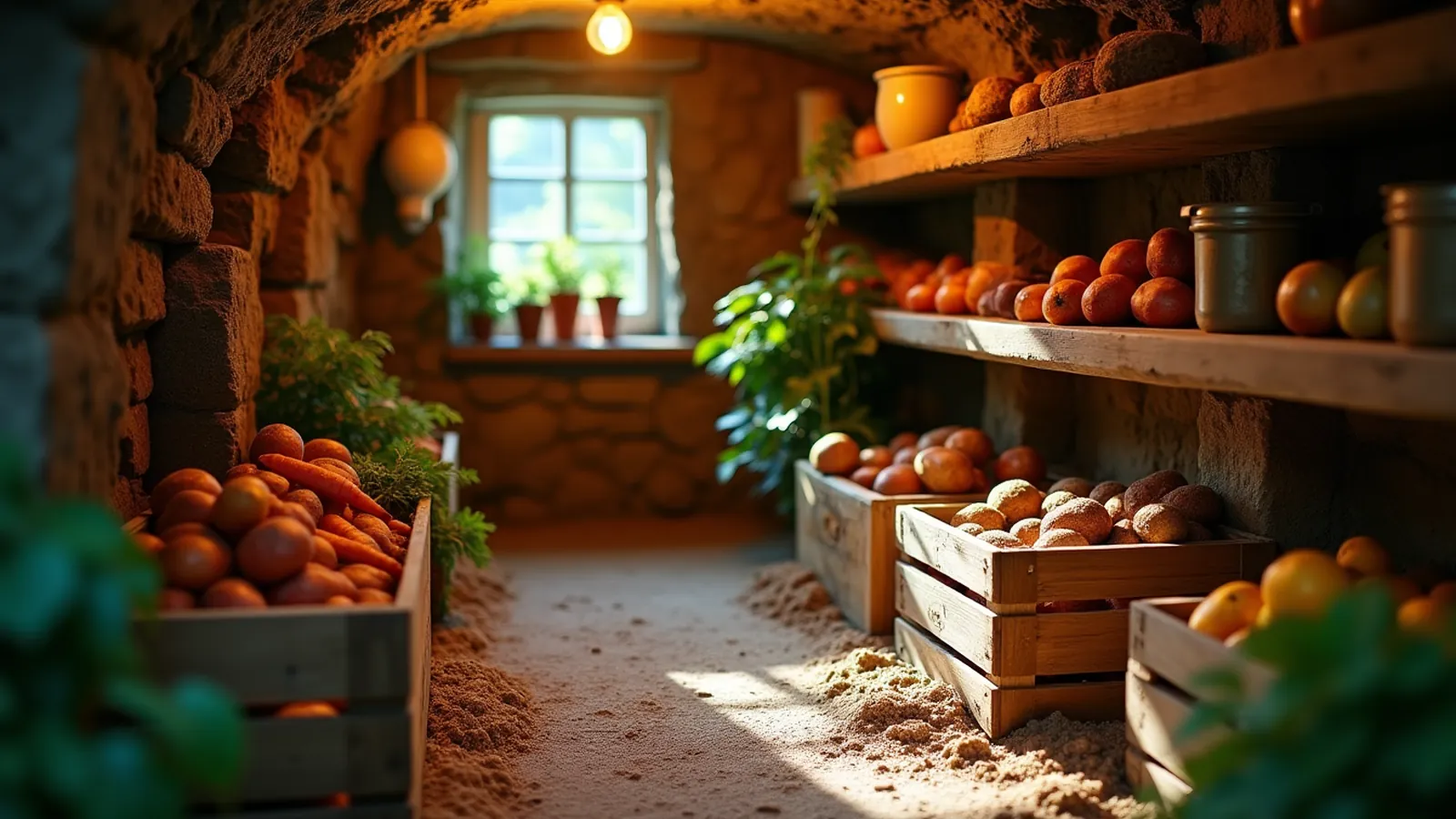
A root cellar is just a cool, humid, ventilated space. Most houses have a corner, a garage spot or a closet that can do part of the job once you know each crop's target.
On this page (11 sections)
If your potatoes sprout by January, your storage spot is too warm, not hopeless: a root cellar works by keeping produce cool, humid and ventilated, and you can copy most of that without digging one. A basement that sits around 65°F all winter is simply too warm for long storage: University of Alaska Fairbanks Extension says the best temperature for most vegetables is 32° to 40°F (0 to 4°C) and warns that potatoes stored above 40°F will begin to sprout.
Cool storage also needs no electricity: Purdue Extension notes you can store many fruits and vegetables at home without refrigeration, which helps when the power goes out and the fridge food clock starts. The fix is to match each crop to the coolest suitable spot you already have, such as a partitioned basement corner, an unheated garage corner kept from freezing, or a cool room, and to give root crops the humidity they need. This guide gives you the targets by crop, how long each keeps, seven cool-storage options for an ordinary house and a weekly check routine.
Key takeaways
- Most vegetables store best at 32 to 40°F with 80 to 95% relative humidity (UAF Extension).
- Onions and garlic want cool and dry; winter squash and pumpkins want 50 to 55°F and dry (MU Extension).
- Every 10°F above the ideal can shorten shelf life by up to 25% (UMN Extension).
- Keep apples and pears away from vegetables; their ethylene makes potatoes sprout early (MU Extension).
- An unheated garage works only if it holds no car, fuel or chemicals and stays above freezing (UConn Extension).
- Check stored produce at least weekly and remove anything rotting or moldy (UConn Extension).
How a root cellar works
Harvested vegetables are still alive. University of Maine Extension explains that produce keeps breathing after harvest, and that low temperatures and high humidity slow that breathing and the water loss that makes roots shrivel. A root cellar manages three things:
- Cold: 32 to 40°F suits most vegetables. UAF notes that warm air rises, so the top of a storage space is warmer than the floor.
- Humidity: 80 to 95% keeps most roots from drying out. A dirt floor helps; on concrete, UAF suggests pans of water, and a full small space holds humidity better than a big empty one.
- Air: ventilation controls temperature and moisture. UAF says to screen vents so rodents can't get in.
You can measure all three cheaply. Purdue Extension suggests one thermometer in the coldest spot and one outdoors, plus a simple humidity gauge (hygrometer) from a hardware store.
Budget note
Nothing here needs construction. The whole setup can be a thermometer, a humidity gauge, a few crates or sturdy boxes, perforated plastic bags and some clean straw or sawdust for packing. Spend on measuring first; the readings tell you which spots are worth using.
Root cellar temperature and humidity by crop
Extension services group produce into four storage conditions (UAF, MU Extension). Pick the group, then find a spot in your house that matches it.
| Group | Target | Crops |
|---|---|---|
| Cold and very moist | 32 to 40°F, 90 to 95% humidity | Beets, carrots, cabbage, parsnips, turnips, rutabagas, kohlrabi, leeks, winter radishes |
| Cold and moist | 32 to 40°F, 80 to 90% | Apples, pears; potatoes at 38 to 40°F |
| Cool and dry | 32 to 35°F, 60 to 70% | Onions, garlic |
| Warm and dry | 50 to 55°F, 60 to 75% | Pumpkins, winter squash |
Sweet potatoes are the exception: MU Extension says not to let them drop below 50°F, and Maine's chart lists 55 to 60°F.
How long crops keep depends on variety, condition and how close you get to the target; MU Extension notes that late-maturing crops store better and that less-than-ideal conditions shorten storage life. The charts below come from four extension services and don't always agree, so each row gives the range.
| Crop | Temperature | Approximate storage life |
|---|---|---|
| Potatoes (late crop) | 38 to 40°F (Purdue lists 40 to 45°F) | 2 to 10 months |
| Carrots, mature, tops removed | 32°F | 4 to 9 months |
| Beets, tops removed | 32°F | 3 to 6 months |
| Cabbage, late | 32 to 38°F | 3 to 6 months |
| Parsnips | 32°F | 2 to 6 months |
| Turnips | 32 to 38°F | 3 to 5 months |
| Onions, dry | 32°F | 1 to 8 months |
| Garlic | 32°F | 6 to 7 months |
| Winter squash | 50 to 60°F | 1 to 6 months |
| Pumpkins | 50 to 55°F | 2 to 3 months |
| Sweet potatoes | 55 to 60°F | 4 to 7 months |
| Apples | 30 to 40°F | 1 to 12 months, by variety |
Why a 65°F basement isn't a root cellar
Warmth speeds up everything a cellar is meant to slow. University of Minnesota Extension says 32°F is the ideal for cold storage but hard to reach in most homes, and that shelf life can shorten by up to 25% for every 10°F increase in temperature. Purdue Extension adds that most basements with a furnace are too warm for long storage, though they work for ripening tomatoes and for short-term storage of potatoes, sweet potatoes and onions.
So a warm basement isn't useless, and sprouting potatoes are a temperature problem, not a mistake on your part. UConn Extension describes a heated, ventilated basement as generally dry at 50 to 60°F and useful for short-term storage of pumpkins, winter squash, potatoes, sweet potatoes and onions. Squash and pumpkins want 50 to 55°F (MU Extension), so the coolest dry corner may suit them. The potatoes are what need to move somewhere colder.
Seven cool-storage options for an ordinary house
A partitioned basement corner
Purdue Extension suggests walling off a north or east side of the basement, preferably one without heating pipes or ducts, with at least one window for cooling, while keeping light out. UAF says most families can manage with an area about 4 by 6 feet.
An unheated garage, breezeway or shed
UConn Extension lists these as options if the space isn't used for your car, lawn equipment or chemicals that can affect stored produce. Check that it stays cool enough (32 to 60°F) without big swings, and protect produce from freezing on the coldest nights.
A cool spare room, pantry or closet
UConn says a pantry, attic or unheated room is useful for short-term storage of potatoes and onions, as long as there is no danger of freezing. A closet on an outside wall is the same idea; measure it before you trust it.
A second refrigerator
Purdue calls a second refrigerator a reliable option, and notes that one in a garage or other unheated area costs little to run in winter. UMN adds that refrigerators are cold and dry, so put produce in perforated plastic bags for moisture.
Perforated bags and box liners
Purdue says the easiest way to stop moisture loss is polyethylene bags or box liners with several ¼- to ⅜-inch holes; if moisture collects inside, punch more holes. This turns a drier spot into a moist one for carrots and beets.
A buried container
Purdue describes sinking a barrel or garbage can into the ground, with straw and plastic bags around the produce, and UConn suggests a 20-gallon trash can with small drainage holes where rodents are a problem. Use only a new, food-grade container: UConn warns never to use drums or cans that held garbage, pesticides or chemicals.
Leave some roots in the ground
UConn says carrots, parsnips and turnips can stay in a well-drained garden bed under clean straw, leaves or similar mulch if rodents aren't an issue, and Purdue notes horseradish can be dug as needed until the soil freezes deeply.
Before you dig or build
Any digging or building, from a buried can to a walled-off room, starts with your local building rules and with having buried utility lines marked before the first shovel goes in. Keep stored food away from fuel, paint, pesticides and other chemicals. Purdue also notes that the unheated storage it describes is practical only where average winter temperatures stay below freezing from mid-November to mid-March.
Getting produce ready to store
Storage can't improve a vegetable; it only slows its decline. Purdue Extension says to store only sound produce, free of cuts, bruises and insect damage, because one bad specimen can damage the whole supply, and to let crops lose their field heat first by harvesting on a cool morning or cooling them overnight.
- Choose late-maturing, good-storing varieties and harvest as late as safely possible (UAF).
- Give potatoes a curing period before cold storage. UAF suggests 7 to 10 days somewhere warm and dark; UMN suggests 50 to 60°F for 14 days.
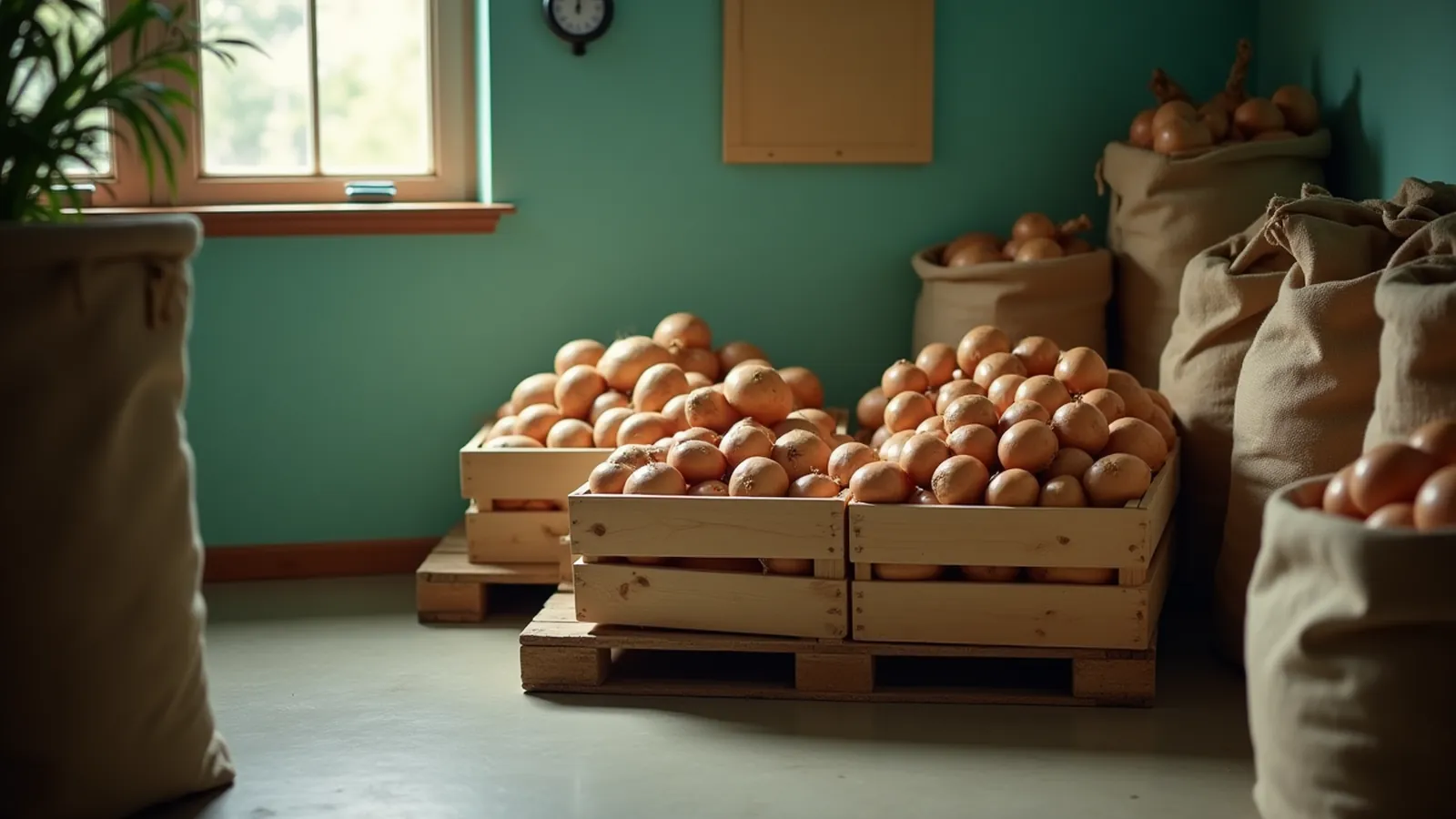
- Give onions a curing period until the skins are papery: 2 to 4 weeks at room temperature (UMN).
- Trim beet and carrot tops, and pack roots in moist sand, sawdust or peat, or in perforated bags (UAF).
- Store fruit apart from vegetables. MU Extension says apples and pears give off ethylene gas, which shortens vegetable storage life, especially making potatoes sprout early.
- Keep strong-smelling cabbage and turnips away from other food, or wrap them in newspaper (MU Extension, UAF).
Your fall storage plan, step by step
Measure your spaces for a week
Put a thermometer in the basement corner, garage and any cool room. Note the lowest and highest readings.
Match crops to spaces
Use the group table: coldest moist spot for potatoes and roots, a cool dry spot for onions and garlic, a 50 to 55°F dry spot for squash.
Set up containers
Purdue suggests smooth-sided crates or boxes, kept off the floor on shelves or slats. Add perforated liners for root crops.
Rodent-proof the space
UConn suggests patching gaps around pipes with steel wool and using containers animals can't chew through, with mesh openings smaller than ¼ inch and secured lids.
Check every week
UConn says to check at least weekly: look for rodent signs, make sure produce is still dry, and remove anything rotten or moldy.
Clean up each year
Purdue suggests emptying and airing containers in the sun at least once a year.
A household's basement holds 65°F all winter. After a week with a thermometer, the attached garage corner farthest from the car reads 36 to 45°F, so the car moves to the driveway side and the potatoes go in a ventilated crate there, on a shelf, under an old blanket on the coldest nights. Carrots go in perforated bags in a spare refrigerator. Onions hang in a mesh bag in an unheated spare room, and the winter squash stays in the dry basement. Apples sit in a separate box well away from the potatoes.
Troubleshooting
- If potatoes are sprouting
- The spot is probably above 40°F (UAF) or near apples or pears (MU Extension). Move them somewhere colder and away from fruit.
- If carrots and beets go limp
- The air is too dry. Use perforated bags or moist packing such as sand or sawdust (Purdue, UAF).
- If squash or onions mold
- They are too damp; UAF says these prefer dry storage. Move them somewhere drier.
- If produce freezes
- Freezing can injure produce, depending on the crop (UMaine). Let it warm slowly without handling it, use it soon, and add insulation or move it before the next cold night.
- If you find mold on stored food
- UConn generally recommends throwing moldy produce out, though small spots can be cut from hard vegetables such as potatoes. Wash everything you use with water and a scrub brush.
When to get help
Call for help if
- You plan to dig, wall off a room or add vents: check your local building department and have buried utilities marked first.
- You aren't sure which storage method suits your climate or crop: ask your county Cooperative Extension office.
- Rodents keep getting in: a licensed pest-control service can help seal the space.
Who to ask. In an emergency, call 911. If a carbon monoxide alarm sounds or anyone feels dizzy, sick or confused, get everyone outside into fresh air first, then call 911. For local hazards, shelters and alerts, contact your city or county emergency management office (start at Ready.gov). For home canning and garden questions, your county Cooperative Extension office can help (see the USDA Cooperative Extension System page), and the National Center for Home Food Preservation publishes tested canning methods. For a pet's health, call your veterinarian.
Frequently asked questions
What exactly is a root cellar?
A cold, dark, damp storage space, often below ground, that keeps fresh produce alive and dormant through winter. UAF Extension describes the goal as controlling temperature, moisture and ventilation; in many homes a walled-off part of a basement or garage with a window for ventilation can serve.
How long will food last in a root cellar?
It depends on the crop and how close you get to its target. Extension charts list roughly 4 to 9 months for mature carrots, 2 to 10 months for late potatoes, 3 to 6 months for beets and late cabbage, and 1 to 8 months for dry onions. Warmer storage shortens all of these (UMN Extension).
How deep must a root cellar be?
There is no single depth; what matters is staying cool and above freezing. UAF Extension notes that frost can reach more than 4 feet deep in Alaska, so insulation has to extend below the frost line there. For an in-ground build, check local frost depth, building rules and buried utilities first.
What is the best way to make a root cellar in a regular house?
Usually the simplest: partition a north or east basement corner away from heating pipes and ducts, with a window for cool air (Purdue Extension), add shelves and crates, and monitor it with a thermometer and humidity gauge. No digging is needed.
Sources
- Vegetable Storage in Root Cellars (HGA-00331), University of Alaska Fairbanks Cooperative Extension Service (accessed October 28, 2026).
- Home Storage of Fruits and Vegetables in Root Cellars, University of Missouri Extension (accessed October 28, 2026).
- Bulletin #4135, Storage Conditions: Fruits and Vegetables, University of Maine Cooperative Extension (accessed October 28, 2026).
- HO-125: Storing Vegetables and Fruits at Home, Purdue University Extension (accessed October 28, 2026).
- Cold Storage: A Sustainable Way to Preserve the Harvest, UConn Extension (accessed October 28, 2026).
- Harvesting and storing home garden vegetables, University of Minnesota Extension (accessed October 28, 2026).
Store, preserve and grow, in order
The Food and Water start-here page puts cool storage next to safe canning, a first garden and your water and food supply.