
Power Outages
Power outage survival kit: a calm checklist, plus power station vs generator
Light, information, phone power and carbon monoxide alarms come first. Then decide, with the table below, whether your household needs a bigger power source at all.
On this page (14 sections)
- Build your power outage survival kit in five steps
- The kit checklist, item by item
- Light: flashlights and headlamps, not candles
- Information: a radio and a backup for your phone
- Power bank, power station or generator: an honest comparison
- Warmth and cooling without power
- Food and water for the outage
- Medical devices and refrigerated medicines
- Batteries, rotation and where to keep the kit
- Troubleshooting
- When to get help
- Frequently asked questions
- Keep going
- Sources
A power outage survival kit is the box you reach for when the lights go out at 2 a.m., so nobody hunts through drawers in the dark. Start with a flashlight for every person, a battery or hand-crank radio, a way to charge phones and battery-powered carbon monoxide (CO) alarms; add a bigger power source only if your household truly needs one.
If the last long outage meant a full fridge, cold kids and no water from the well pump, and you have been going back and forth between a gas generator and a battery power station ever since, this guide is for you. It lists what belongs in the kit and why, then compares power banks, power stations and fuel generators on noise, fuel, carbon monoxide risk and upkeep, using guidance from Ready.gov, the CDC and the American Red Cross, so you can decide once.
Key takeaways
- Have a flashlight for every household member (Ready.gov), and use flashlights, not candles (American Red Cross, CDC).
- Keep a battery-powered or hand-crank radio and a NOAA Weather Radio with tone alert (Ready.gov).
- Make a list of everything you rely on that needs electricity before you buy any power source (Ready.gov).
- Generators run outdoors only, at least 20 feet from windows, doors and vents (CDC), never in a home, garage, basement or crawlspace (American Red Cross).
- Install battery or battery-backup CO alarms on every level of your home (Ready.gov).
Quick verdict
Start with power banks for phones. Add a battery power station only if your list includes small plug-in loads such as a lamp or router. Consider a fuel generator only for larger loads, and only if you can run it outdoors, at least 20 feet from openings (CDC), with CO alarms inside (Ready.gov).
Build your power outage survival kit in five steps
You don't need to buy everything at once. Work through these steps in order.
List what needs power in your home
Ready.gov's first step is an inventory of the items you rely on that need electricity. Write down lights, phones, the fridge, any medical device, and, if your water comes from a well with an electric pump, the pump.
Cover light and information
One flashlight per person (Ready.gov), extra batteries, and a battery or hand-crank radio (Ready.gov, American Red Cross). Put a paper copy of your important phone numbers in the kit (American Red Cross, UConn Extension).
Install CO alarms and check smoke alarms
Battery-backup CO alarms go on every level of the home (Ready.gov). UConn Extension says to replace smoke alarm batteries twice a year and not to borrow them for anything else.
Add phone power
Ready.gov suggests planning batteries and other power sources, such as a portable charger or power bank. Keep them charged.
Decide on bigger power, or none
Use the comparison table below. For a short outage, the first four steps plus a cooler and a food plan may be all you need.
The kit checklist, item by item
Work through the checklist below and tick off what you already own. Store everything together in one or two easy-to-carry containers, such as a plastic bin or a duffel bag, with smaller items in airtight plastic bags (Ready.gov).
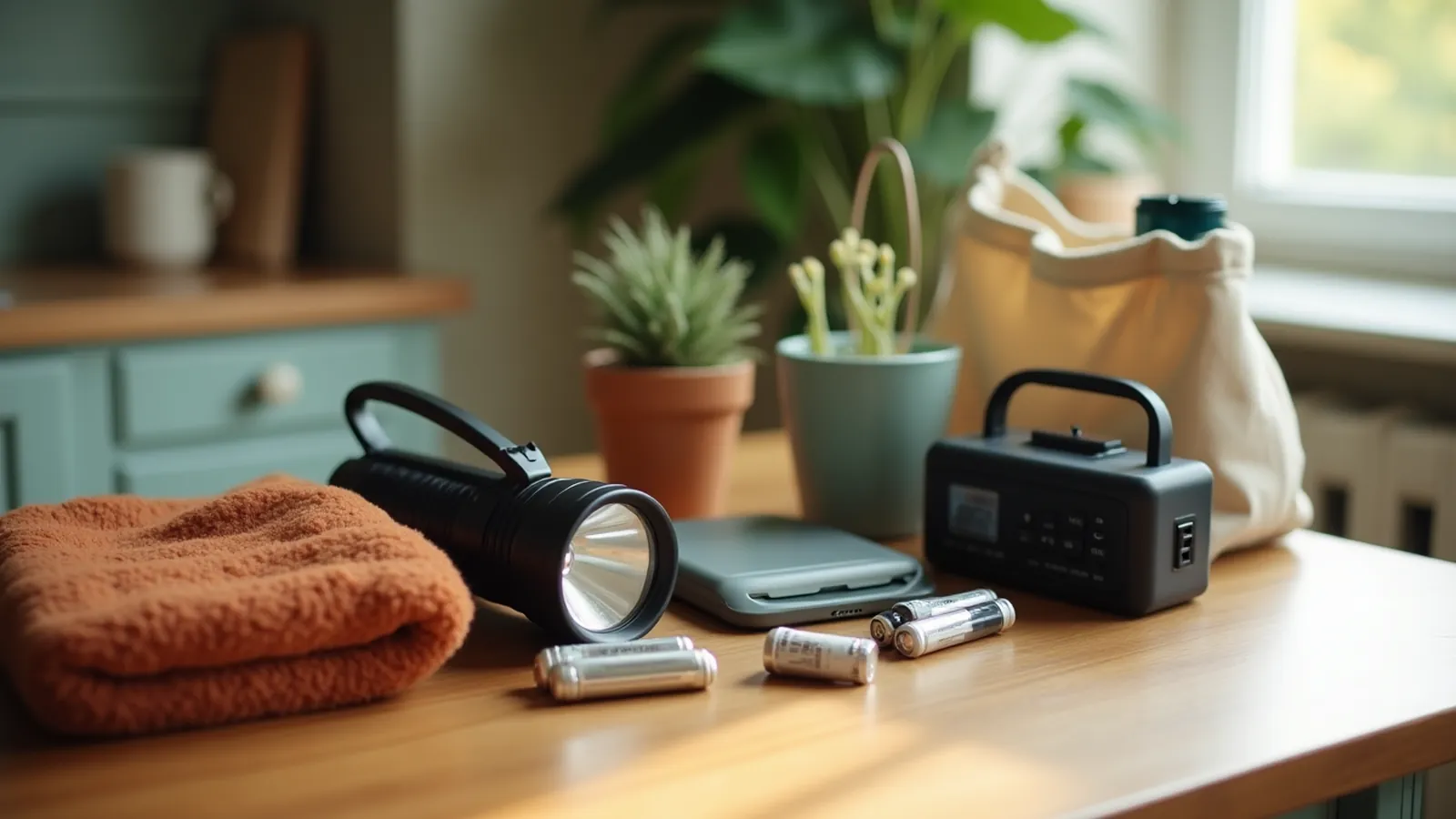
- Flashlight or headlamp for each person, plus spare batteries (Ready.gov).
- Battery or hand-crank radio, ideally a NOAA Weather Radio with tone alert (Ready.gov).
- Charged power bank and charging cables for each phone (Ready.gov, UConn Extension).
- Paper list of phone numbers: family, utility, doctor, pharmacy, a neighbor (American Red Cross).
- Battery or battery-backup CO alarm on every level of the home (Ready.gov).
- A thermometer for the fridge, freezer or cooler, plus coolers and ice (American Red Cross).
- Manual can opener and non-perishable food (Ready.gov).
- Water: one gallon per person per day for several days (Ready.gov).
- Warm layers: blankets, sleeping bags and warm coats (CDC).
- First aid kit and your prescription medicines (Ready.gov).
- Pet food and extra water for your pet (Ready.gov); the pet emergency kit guide covers the rest.
- Surge protectors for electronics, for when the power returns (American Red Cross).
Search links if you are filling gaps: LED headlamps (Amazon, affiliate link) opens in a new tab, hand-crank NOAA weather radios (Amazon, affiliate link) opens in a new tab and battery carbon monoxide alarms (Amazon, affiliate link) opens in a new tab.
Light: flashlights and headlamps, not candles
The American Red Cross says to use flashlights, not candles, during an outage. The CDC recommends battery-powered flashlights and lanterns rather than candles, gas lanterns or torches to lower the risk of fire.
If you do light a candle, the CDC says to keep it away from anything that can catch fire and to stay near it. Put a flashlight by each bed so children can find light in the dark.
Information: a radio and a backup for your phone
Cell service and internet can drop during a long outage. The American Red Cross suggests communication devices that work without home power: a crank or battery radio, a corded (non-cordless) home phone if you have a landline, and chargers or batteries for phones.
Ready.gov's basic kit lists a NOAA Weather Radio with tone alert, so warnings can reach you with the internet down. Sign up for local alerts too, so warnings reach your phone by call or text (American Red Cross).
Power bank, power station or generator: an honest comparison
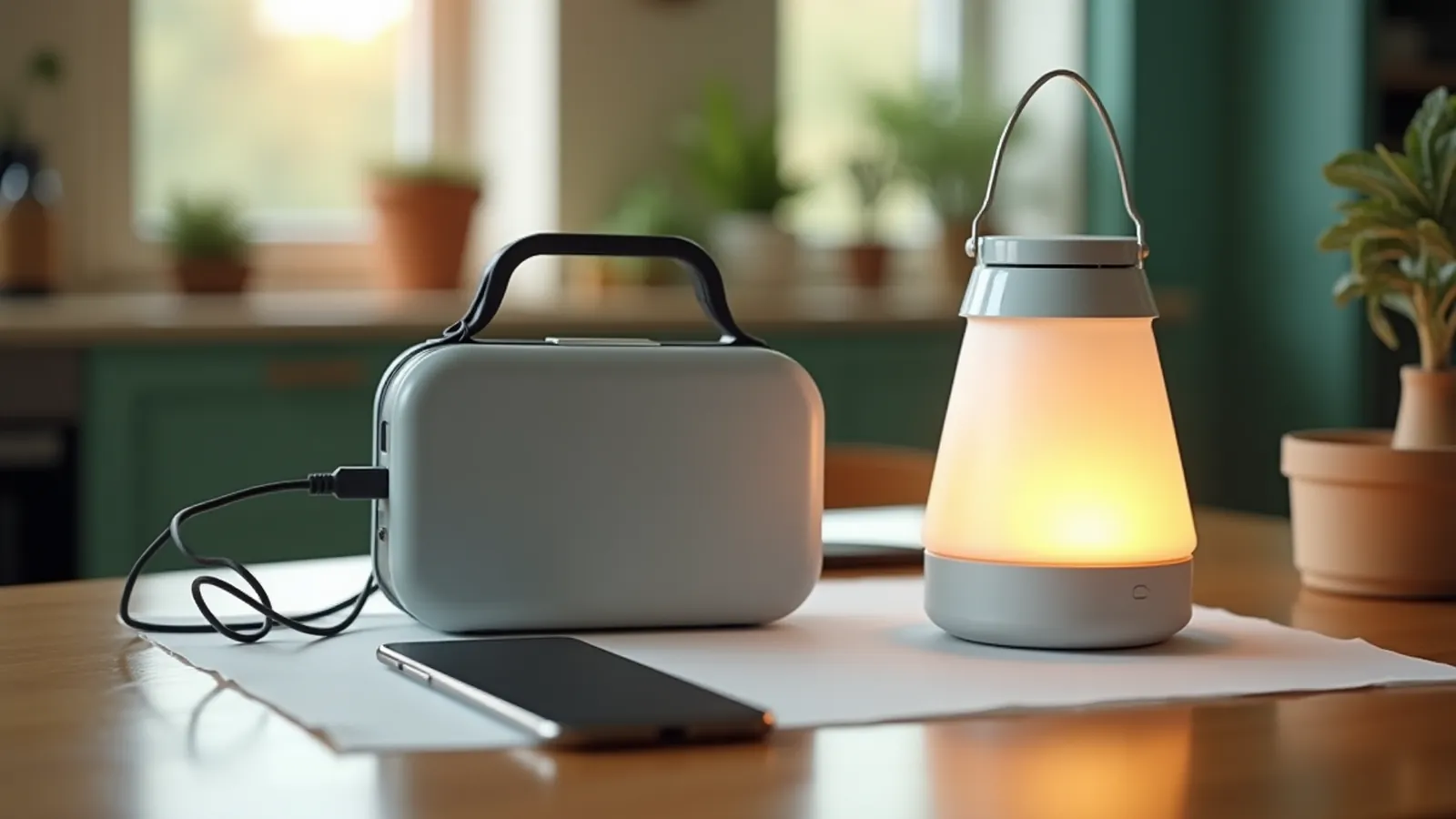
Start from your step 1 list, not from the product. The table compares the three options on the points that matter in a small home or a rental; it gives no prices because they vary widely by size and model. The CDC explains that carbon monoxide comes from combustion fumes, such as those from small gasoline engines, generators, stoves and lanterns; a battery unit burns no fuel, which is why the rows differ.
| Question | Power bank | Battery power station | Portable fuel generator |
|---|---|---|---|
| What it suits | Phones, tablets and laptops (UConn Extension) | Depends on its rated output: compare it with the label watts on your list | Depends on its size: choose one that produces more than you need (American Red Cross) |
| Where it runs | Wherever you charge your phone | Follow the maker's instructions; it burns no fuel | Outdoors only, at least 20 feet from windows, doors and vents (CDC) |
| Carbon monoxide | None | None from the unit; keep CO alarms anyway for other fuel-burning appliances | Engine exhaust contains CO; opening doors, windows or using fans will not prevent CO buildup indoors (American Red Cross) |
| Noise | No engine | No engine | Engines create noise and vibration; keep the generator away from gathering spaces (Purdue INPREPared) |
| Fuel and storage | Recharge from the wall when power is on | Recharge from the wall (or as the maker allows) between outages | Store fuel in an approved safety can, outside living areas; local laws may limit how much you keep, so ask your fire department (American Red Cross) |
| Upkeep and handling | Recharge after use | Follow the maker's charging instructions | Let it cool before refueling; keep it dry and don't run it in rain (American Red Cross) |
| Connecting to the house | Not applicable | Plug devices directly into it | Plug appliances in directly or with a heavy-duty outdoor-rated cord; house wiring only through a transfer switch installed by an electrician (American Red Cross) |
How to size either one. The American Red Cross method for generators works as a reading exercise for any power source: add up the watts on the labels of the appliances and lights you want to run, and choose a unit that produces more than you need, because some machines draw up to 3 times as much power when starting up. The Red Cross says to check the back and sides of each appliance for the label.
If you rent or have a well. If your well pump is wired into the house rather than plugged in, the only safe way to run it from a generator is a transfer switch installed by a licensed electrician (American Red Cross, UConn Extension); in a rental, that is the landlord's decision. A plug-in battery unit or a generator with extension cords can still run plug-in items. Searching for portable power stations (Amazon, affiliate link) opens in a new tab by watt-hours and output watts lets you compare against your list.
Watch for: generators and carbon monoxide
Never use a generator, grill, camp stove or other gasoline, propane or charcoal-burning device inside a home, garage, basement, crawlspace or any partially enclosed area (American Red Cross), even with the doors open (CDC). Keep generators outdoors, at least 20 feet from windows, doors and vents (CDC), and use battery-powered or battery-backup CO alarms inside (CDC, Ready.gov). If a CO alarm sounds or anyone feels sick, dizzy or weak, get to fresh air right away and call for help from there (American Red Cross). Never plug a generator into a wall outlet: this "backfeeding" puts utility workers, your neighbors and your household at risk of electrocution (American Red Cross).
A family of four with a dog, in a small rental, lists its needs for a 36-hour winter outage: two phones, a lamp in the living room and the internet router. Nothing on the list is large, so it skips the generator question entirely. It buys power banks for the phones first, packs the dog's food and water with the kit, then compares the label watts of the lamp and router with the output of a small battery power station. The fridge stays shut and the food plan follows the fridge and freezer time limits.
Warmth and cooling without power
For cold weather, the CDC suggests extra blankets, sleeping bags and warm winter coats as a heat source. Before a hot-weather storm, UConn Extension suggests freezing jugs of water.
Never use a gas stove or oven to heat your home (Ready.gov, CDC). In extreme heat, the CDC warns that fans alone won't prevent heat-related illness; go to an air-conditioned place. The American Red Cross notes that communities often open warming or cooling centers and charging stations.
Food and water for the outage
The American Red Cross suggests nonperishable food and water for at least two weeks at home. Keep the fridge and freezer shut: Ready.gov says a fridge keeps food cold for about 4 hours and a full freezer for about 48 hours. The emergency food supply list covers no-cook meals, and the emergency water storage guide shows how much water to keep. If your home is on a well, store that water before the season's storms, because the pump stops with the power.
Medical devices and refrigerated medicines
This site does not give medical advice; plan this part with your provider. Ready.gov says to talk to your medical provider about a power outage plan for powered medical devices and refrigerated medicines, and to find out how long each medication can be stored at higher temperatures. Ready.gov also suggests asking your power company to put you on a list for priority power restoration if you use powered medical equipment at home. The American Red Cross says to evacuate if you have medical devices that need power.
Batteries, rotation and where to keep the kit
Keep the kit in one designated place and make sure everyone knows where it is (Ready.gov). A hall closet beats a basement you would have to reach in the dark. Ready.gov says to replace expired items as needed and to rethink your needs every year as your family changes.
- Test every flashlight and the radio regularly; one easy reminder is the smoke alarm battery change, which UConn Extension says to do twice a year.
- Recharge power banks and any power station after each outage.
- Swap out expired batteries and food (Ready.gov).
- Keep the car's gas tank at least half full (American Red Cross).
Troubleshooting
- If the radio picks up nothing
- Move it near a window and try each weather channel, and check before the next storm which station covers your area.
- If a neighbor's generator exhaust drifts toward your windows
- Close those windows, check your CO alarm, and ask them to move it at least 20 feet from openings (CDC).
- If you are tempted to bring the generator into the garage to keep it dry
- Don't. Use a dry surface outdoors under an open, canopy-like cover (American Red Cross).
When to get help
Call for help if
- A CO alarm sounds or anyone has a headache, dizziness, weakness, nausea or confusion near a fuel-burning device: get to fresh air right away (American Red Cross), then call 911 (CDC).
- Someone depends on powered medical equipment and the outage will outlast its battery: call the provider, or 911 in an emergency.
- You see a fallen power line: stay at least 35 feet away and call 911 (American Red Cross).
- You want a generator connected to your home: hire a licensed electrician (UConn Extension).
Who to ask. In an emergency, call 911. If a carbon monoxide alarm sounds or anyone feels dizzy, sick or confused, get everyone outside into fresh air first, then call 911. For local hazards, shelters and alerts, contact your city or county emergency management office (start at Ready.gov). For home canning and garden questions, your county Cooperative Extension office can help (see the USDA Cooperative Extension System page), and the National Center for Home Food Preservation publishes tested canning methods. For a pet's health, call your veterinarian.
Frequently asked questions
What should be in a power outage survival kit?
A flashlight per person and spare batteries, a battery or hand-crank radio, charged power banks, a paper list of phone numbers, battery-backup carbon monoxide alarms, a manual can opener and no-cook food, water, warm layers, a first aid kit and any regular medicines (Ready.gov, American Red Cross). Add a power station or generator only if your list of electrical needs calls for it.
Is a power station or a generator better for an outage?
It depends on your list. A battery power station burns no fuel, and what it can run depends on its rated output, so compare that with the label watts of what you need. A fuel generator must stay outdoors, at least 20 feet from windows, doors and vents (CDC), and needs safe fuel storage (American Red Cross).
Can I run a generator in my garage with the door open?
No. The CDC says never to run a generator inside a basement, garage or other enclosed structure, even if the doors or windows are open, and the American Red Cross says opening doors and windows or using fans will not prevent carbon monoxide buildup. Keep it outdoors and at least 20 feet from openings.
How much should a power outage kit cost?
You can spread the cost by building it in order. Gather what you already own first, then add a flashlight per person, batteries, a radio and CO alarms. A power bank comes next. Leave a power station or generator until your list of electrical needs shows you need one, and buy it once, sized to that list.
Sources
- Power Outages, Ready.gov, FEMA (accessed October 28, 2026).
- Build A Kit, Ready.gov, FEMA (accessed October 28, 2026).
- People with Disabilities, Ready.gov, FEMA (accessed October 28, 2026).
- What to Do to Protect Yourself During a Power Outage, Centers for Disease Control and Prevention (accessed October 28, 2026).
- Power Outage Safety, American Red Cross (accessed October 28, 2026).
- Generator Safety, American Red Cross (accessed October 28, 2026).
- Power Outages: Be Prepared for When Power Goes Out, UConn Extension (accessed October 28, 2026).
- Portable Generators are Great Tools, but Use them Safely!, Purdue University INPREPared program (accessed October 28, 2026).
The whole outage, in order
Before, during and after a power outage: food safety, light, water, staying warm or cool, and generator safety.