
Kits & Plans
Pet emergency kit: a grab-bag checklist for dogs and cats, and where to go with them
Food, water, medicine, records, ID, a leash and a carrier, packed in one bag by the door, plus a list of places that will take your pet if you have to leave.
On this page (13 sections)
- Build a pet emergency kit, step by step
- The pet emergency kit checklist
- How much food, water and medicine to pack
- Dogs and cats need slightly different kits
- Pet-friendly shelters, hotels and evacuation
- The rescue alert sticker
- A storm-night evacuation with a dog
- After the emergency
- Troubleshooting
- When to get help
- Frequently asked questions
- Keep going
- Sources
If the last storm left you hunting for the dog's leash in the dark, with no spare food and no copy of his vaccination records, a pet emergency kit fixes that. It is a small grab bag kept by the door with food, water, medicine, records, ID, a leash or carrier and a photo of you with your pet, stored next to the family kit.
Ready.gov puts it plainly: if local officials ask you to evacuate, your pet should evacuate too, and pets left behind may end up lost, injured or worse. The checklist below draws on Ready.gov, the CDC, the ASPCA, the American Veterinary Medical Association (AVMA) and the American Red Cross. Where they suggest different amounts, you'll see the range. Questions about your pet's health or medicines go to your veterinarian.
Key takeaways
- Pack food for several days (Ready.gov); the AVMA suggests 3 to 7 days and the ASPCA 7 to 10 days.
- Water: the AVMA suggests at least a 7-day supply; Oregon State Extension, citing the CDC, plans 1 gallon a day for most household pets.
- Keep copies of medical and vaccination records in a waterproof container (American Red Cross, AVMA); many pet shelters require proof of current vaccinations (American Red Cross).
- Collar with ID tag and a registered microchip with current contact details (CDC), plus a photo of you with your pet (Ready.gov).
- Many public shelters and hotels do not allow pets (Ready.gov): list pet-friendly places along your routes now.
- Keep the leash and carrier near the exit (CDC), and never leave a pet chained outdoors (CDC).
Build a pet emergency kit, step by step
Check ID first
Make sure your pet wears a collar and tag with up-to-date contact information, and that the microchip is registered with the manufacturer and your details are current (CDC). The ASPCA suggests the tag include your pet's name, your phone number and any urgent medical needs.
Pack the grab bag
Use the checklist below. The AVMA suggests an easy-to-carry, waterproof container stored close to an exit.
Copy the records
Ask your veterinarian for help putting together your pet's veterinary records (CDC), and keep copies in the bag and on your phone (Ready.gov).
Make a list of places to go
Pet-friendly hotels, boarding facilities, friends and relatives outside your area (ASPCA). See the shelter section below.
Choose a buddy
Ready.gov suggests a buddy system with neighbors, friends or relatives who can care for or evacuate your pets if you are not home.
Practice with the carrier
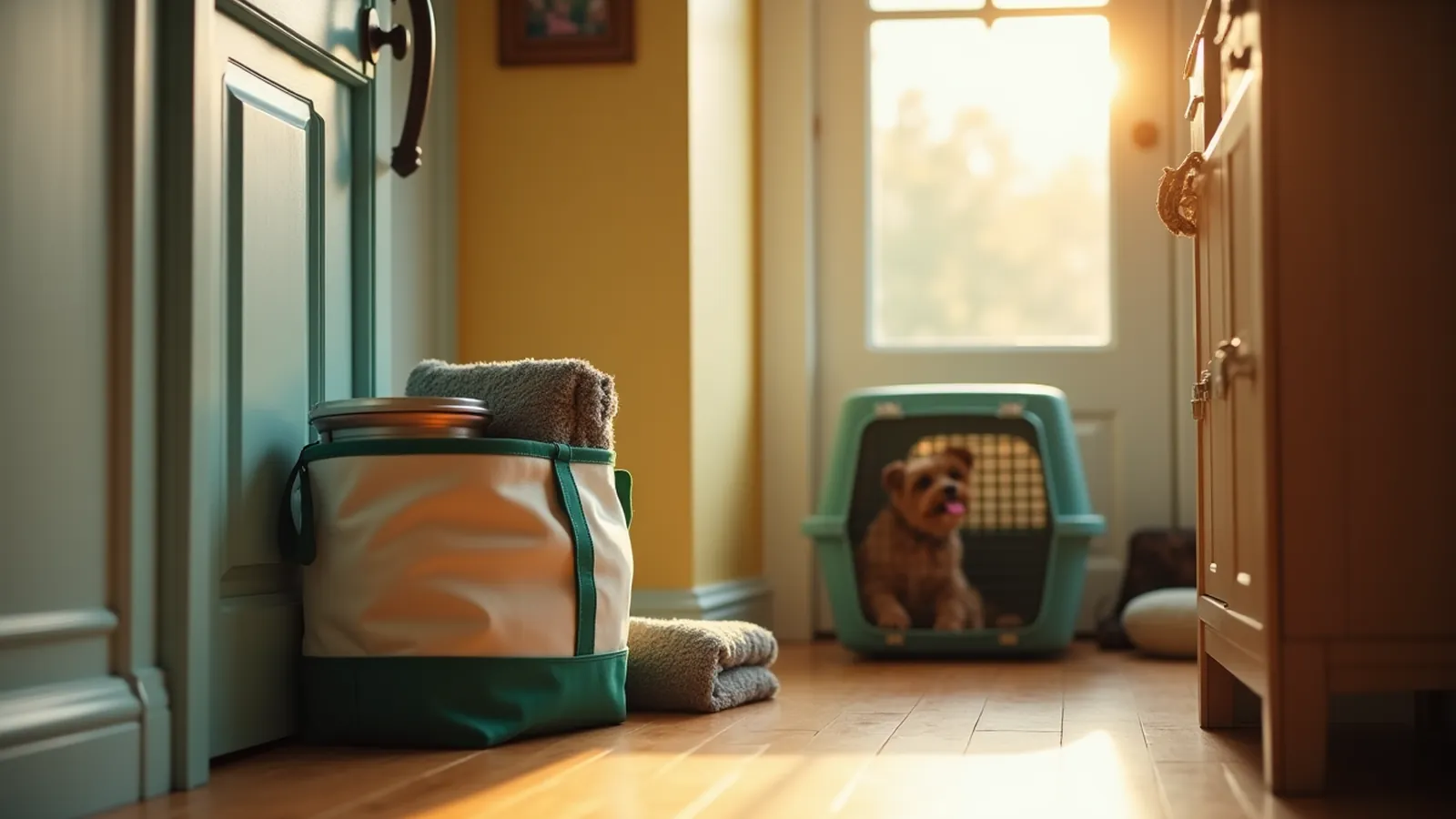
Leave the carrier out and open, with treats and a familiar blanket inside (Ready.gov), so it isn't a fight on the day.
Put the sticker on the door
A rescue alert sticker tells rescue workers that pets are inside (ASPCA). Details below.
The pet emergency kit checklist
Work through the checklist below and pack one bag per pet if you can. Ready.gov suggests two kits: a larger one for sheltering at home and a lightweight version for evacuating. This list is the lightweight grab bag.
- Food in an airtight, waterproof container, and a manual can opener if your pet eats canned food (Ready.gov, American Red Cross)
- Water and a bowl; collapsible feeding and water bowls pack small (AVMA)
- Medicines: an extra supply in a waterproof container (Ready.gov), with medication instructions (AVMA)
- Records: vaccination records, medical records, proof of ownership and the microchip number (AVMA)
- Collar with ID tag, harness or leash, plus a backup leash, collar and tag (Ready.gov)
- Crate or sturdy carrier, ideally one per pet, labeled with your pet's name and your contact information (Ready.gov, CDC)
- A photo of you with your pet to document ownership if you are separated (Ready.gov)
- Sanitation: litter and litter box, newspapers, paper towels, plastic trash bags and household chlorine bleach (Ready.gov); dog poop bags (AVMA)
- First aid kit: ask your veterinarian what is most appropriate for your pet (Ready.gov)
- Care notes: feeding schedule, medical conditions, behavior problems, and your vet's name and number (American Red Cross)
- Comfort items: favorite toys, treats or bedding to reduce stress (Ready.gov)
- Flashlight and extra batteries (AVMA)
Search links if you are missing a piece: collapsible pet bowls (Amazon, affiliate link) opens in a new tab and waterproof document pouches (Amazon, affiliate link) opens in a new tab for the records.
How much food, water and medicine to pack
The sources agree on what to pack but differ on how much. Use the range, and lean toward the larger amount if you live where evacuations can last.
| Supply | Ready.gov | AVMA | ASPCA |
|---|---|---|---|
| Food | Several days' supply | 3 to 7 days | 7 to 10 days; rotate every two months |
| Water | Several days' supply | At least 7 days | At least 7 days per person and pet; replace every two months |
| Medicine | An extra supply of regular medicines | Two-week supply | Two-week supply |
For a daily water figure, Oregon State Extension, citing the CDC, plans 1 gallon of water a day for most common household pets, so a dog's three days is about 3 gallons. Food and medicines expire: the AVMA notes they must be rotated and replaced, and Ready.gov suggests reviewing your kits regularly so food and medicines stay fresh. Ask your vet how to get the extra medicine your pet needs; this site does not give veterinary advice.
Dogs and cats need slightly different kits
| Item | Dogs | Cats |
|---|---|---|
| Extras (ASPCA) | Extra leash, toys and chew toys, a week's worth of cage liner | Pillowcase, toys, scoopable litter |
| Sanitation | Poop bags (AVMA) | Litter and a pan; disposable trays such as aluminum roasting pans work (ASPCA) |
| Transport | Leash and harness; carrier or crate | Sturdy carrier; a pillowcase or box can get a cat out quickly in a pinch (CDC) |
| Practice | Car rides so travel is familiar (CDC) | Know where your cat hides, and practice catching and removing it from hiding spots (CDC) |
The Red Cross suggests including your pets in evacuation drills so they get used to entering and traveling in their carriers calmly. Ready.gov's carrier tips work for both: leave the carrier where your pet often goes, leave it open, and feed treats near or inside it.
Pet-friendly shelters, hotels and evacuation
Shelter rules vary, so check ahead rather than on the day. Ready.gov says most public shelters allow only service animals. The CDC notes that many evacuation centers, such as Red Cross evacuation centers, do not accept pets. The Red Cross itself says its shelter workers will do all they can to accommodate household pets, but pets may need to be housed in a different location with support from animal welfare groups; service animals are always welcome. The CDC also says owners of dogs, cats and ferrets should provide proof of rabies vaccination when entering a shelter.
- Call your local emergency management office and ask if it offers accommodations for owners and their pets (CDC).
- List hotels and motels along your evacuation route that accept pets, call ahead, and ask whether no-pet policies could be waived in an emergency (American Red Cross).
- Ask your veterinarian for a list of boarding kennels and your local animal shelter whether it offers emergency shelter or foster care (ASPCA).
- Ask friends and relatives outside your immediate area if they would take your pet (ASPCA).
- Note an alternate vet and boarding facility 30 to 90 miles away (AVMA).
Put the list in your pet's bag and your family emergency plan. If you live near a flood zone, the ASPCA advises evacuating early; Ready.gov says to bring pets indoors at the first sign or warning of a storm, so they are easy to find when it is time to go.
Watch for: never leave pets behind
If it isn't safe for you to stay, it isn't safe for your pets (American Red Cross, ASPCA). The CDC says pets left behind are likely to be injured or lost, even if you try to create a safe place for them, and to never leave a pet chained outdoors.
The rescue alert sticker
The ASPCA recommends a rescue alert sticker on or near your front door so rescue workers know pets are inside. It should list the types and number of pets in your home and your veterinarian's name and number. If you evacuate with your pets and time allows, write "EVACUATED" across it so rescuers don't waste time searching. The ASPCA offers a free sticker through an online form (it asks you to allow 6 to 8 weeks for delivery), and pet supply stores may sell similar ones.
A storm-night evacuation with a dog
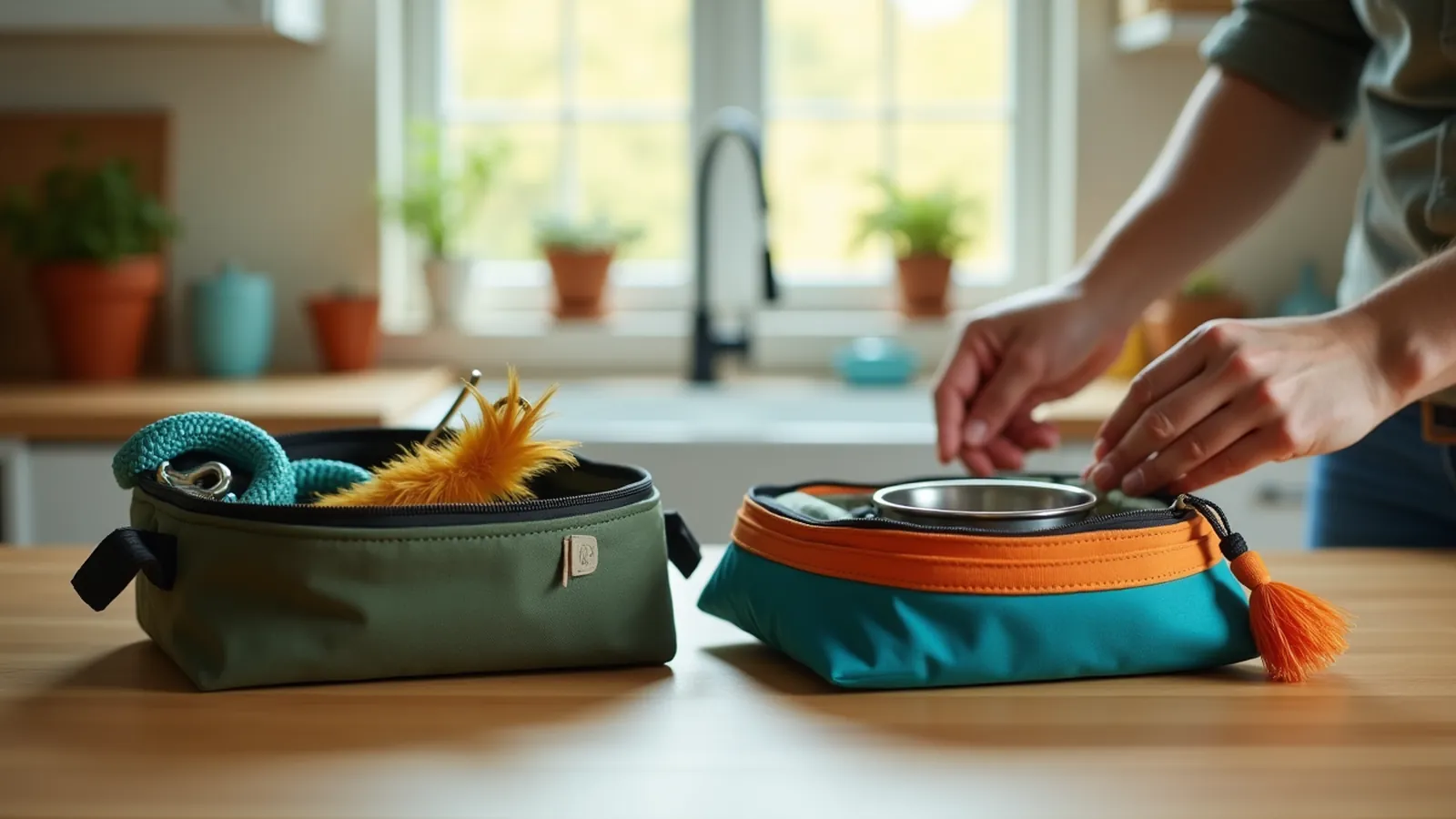
A flood warning comes in on the phone after dark. The family brings the dog inside at the first warning. The grab bag hangs by the back door with the leash clipped to it: three days of kibble in a sealed container, water, the dog's medicine, a folder with vaccination records and a photo of the kids with him. The pre-made list shows a pet-friendly motel 40 miles inland, and a quick call confirms a room. Someone writes "EVACUATED" on the door sticker on the way out. The family kit and the 72-hour kit checklist cover everyone else.
After the emergency
The CDC and AVMA note that familiar scents and landmarks may change after a disaster, which can confuse pets, so keep them on a leash or in a carrier when outside. Check your home for sharp objects, spilled chemicals and exposed wiring (CDC), and survey outside for hazards too (AVMA). Pets' behavior may change; contact your veterinarian if you notice signs of stress, discomfort or illness (CDC). If your pet is lost and microchipped, call the microchip company (CDC).
Troubleshooting
- If your pet panics at the sight of the carrier
- Leave it out and open with a familiar blanket and treats inside (Ready.gov), and practice car rides (CDC).
- If you can't find a pet-friendly hotel on your route
- Widen the search: the AVMA suggests listing hotels that allow pets within a 90-mile radius, plus a boarding facility 30 to 90 miles away.
- If you are at work when an evacuation order comes
- That is what the buddy is for: a nearby caregiver with a set of keys (ASPCA) who can care for or evacuate your pets (Ready.gov). Show them where the kit is.
- If the microchip details are out of date
- Update your contact information with the microchip company now (CDC).
- If the kit food expired
- Feed it before its date and replace it; the ASPCA suggests rotating kit food every two months.
When to get help
Call for help if
- Your pet is injured, ill or acting very differently after an emergency: call your veterinarian (CDC, AVMA).
- Your pet needs medicine you can't get an extra supply of: ask your veterinarian.
- You need emergency shelter for your animals: contact your local emergency management office or animal shelter (CDC, Ready.gov).
- A person is bitten by an animal during an emergency: report it to medical personnel right away (CDC).
Who to ask. In an emergency, call 911. If a carbon monoxide alarm sounds or anyone feels dizzy, sick or confused, get everyone outside into fresh air first, then call 911. For local hazards, shelters and alerts, contact your city or county emergency management office (start at Ready.gov). For home canning and garden questions, your county Cooperative Extension office can help (see the USDA Cooperative Extension System page), and the National Center for Home Food Preservation publishes tested canning methods. For a pet's health, call your veterinarian.
Frequently asked questions
What should be in a pet emergency kit?
Food and water for several days or more, bowls, an extra supply of medicine, copies of vaccination and medical records, a collar with ID and a backup leash, a carrier, a photo of you with your pet, litter or poop bags, a pet first aid kit, care notes and a comfort item (Ready.gov, AVMA, American Red Cross).
How much food should I keep for my dog in an emergency?
Ready.gov says several days. The AVMA suggests 3 to 7 days of food and the ASPCA 7 to 10 days, rotated every two months. Keep it in an airtight, waterproof container (Ready.gov), and ask your vet about any special diet.
Can I bring my pet to an emergency shelter?
Sometimes. Ready.gov says most public shelters allow only service animals, and the CDC notes many evacuation centers don't accept pets. The Red Cross says its shelters try to accommodate pets, sometimes in a separate location. Check with your local emergency management office before you need it, and line up hotels, friends or boarding as backups.
What is a pet rescue alert sticker?
A sticker on or near your front door that tells rescue workers how many and what kinds of pets are inside, with your vet's name and number. The ASPCA offers one free; if you evacuate with your pets, write "EVACUATED" across it.
Sources
- Prepare Your Pets for Disasters, Ready.gov, FEMA (accessed October 28, 2026).
- Evacuation, Ready.gov, FEMA (accessed October 28, 2026).
- Be Prepared: Pet Safety in Emergencies, Centers for Disease Control and Prevention (accessed October 28, 2026).
- Pets in Evacuation Centers, Centers for Disease Control and Prevention (accessed October 28, 2026).
- Disaster Preparedness, ASPCA (accessed October 28, 2026).
- Pets and disasters, American Veterinary Medical Association (accessed October 28, 2026).
- Pet Disaster Preparedness, American Red Cross (accessed October 28, 2026).
- Survival Basics: Water, Oregon State University Extension Service (accessed October 28, 2026).
Pets, kit and plan, in order
The Kits and Plans start-here page puts the pet kit, the 72-hour kit and the family emergency plan in the order that helps most.