
Food & Water
How to disinfect water with bleach: a dose chart that reads your label
You want to disinfect tap water so it keeps, and every forum hands you a different number: 8 drops a gallon, 16, 2. The number is not a matter of opinion. It depends on the strength printed on your bleach bottle and on which job you are doing.
On this page (13 sections)
- Why the numbers disagree: three jobs, three doses
- How much bleach to disinfect water: read the dose off your label
- The five-step mix-and-wait routine
- What disinfected water is for, and what bleach cannot fix
- When boiling is the better tool
- The shelf card: copy it out by hand
- Storing water you have already treated
- Troubleshooting a batch that does not feel right
- What this costs, and what you do not need
- When to get help
- Frequently asked questions
- Next in the manual
- Sources
One thread tells you 8 drops of bleach per gallon to disinfect water. Another says 16. A third swears by 2, and a comment under it says bleach is poison and you should buy a filter instead. All three numbers are real. They answer three different questions, and a forum post almost never says which one it is answering. When the water is going into your kids' cups, "probably fine" is not a number you can live with, so here is the whole thing laid out on one page: which figure belongs to which job, a dose chart you read straight off the sodium hypochlorite percentage on your own bottle, and a five-step routine with a 30-minute wait you can actually time.
The doses below come from the U.S. Environmental Protection Agency's emergency disinfection instructions, and the storage steps from a Virginia Cooperative Extension publication on emergency water supply; both are linked at the bottom so you can open the originals and check them against whatever a forum told you. There is nothing to buy here and no product is recommended. Plain bleach, a clean dropper and an index card are the whole kit.
Key takeaways
- Use only regular, unscented chlorine bleach labeled for disinfection and sanitizing, with 6% or 8.25% sodium hypochlorite (EPA).
- Per gallon of clear water: 8 drops of 6% bleach, or 6 drops of 8.25% bleach (EPA).
- Cloudy, colored or very cold water gets double that dose, and cloudy water is settled and filtered first (EPA).
- Stir, then wait 30 minutes. A slight chlorine odor means it worked; with no odor, repeat the dose and wait 15 more minutes (EPA).
- The "16 drops" you have read is the doubled dose for a gallon, not a competing recipe.
- Disinfection kills microbes. It does not remove heavy metals, salts or most other chemicals (EPA).
The one-line answer
For a gallon of clear water, 8 drops of 6% bleach or 6 drops of 8.25% bleach. Double it if the water is cloudy, colored or very cold. Stir and wait 30 minutes. Everything else on this page is the detail that makes that line safe to follow with your own bottle in your own kitchen.
Why the numbers disagree: three jobs, three doses
The confusion is not really about bleach. It is about which job the writer had in mind when they typed their number.
- Disinfecting water you are about to drink or cook with. This is the EPA's job, and its dose is 8 drops of 6% bleach or 6 drops of 8.25% bleach per gallon.
- Disinfecting water that is cloudy, colored or very cold. Same job, doubled dose, so 16 drops of 6% bleach in a gallon. That is where the "16" you keep seeing comes from.
- Storing water that is already clean. Virginia Cooperative Extension's long-term storage instructions have you wash the container, rinse it with a dilute bleach solution, then add two drops of chlorine bleach per gallon before sealing. Two drops is a storage step for water you are not worried about. It is not the dose for water you are.
- Boiling instead. A rolling boil held at least one minute, or three minutes above 5,000 feet (1,000 meters), is the EPA's first suggestion when you have a heat source (EPA). No drops to count at all.
So a rule worth keeping: any bleach ratio quoted without the percentage on the bottle and the job it is for is not usable yet. Copy the strength off your own label before you trust anybody's number, including the ones here.
How much bleach to disinfect water: read the dose off your label
Turn the bottle around and find the active ingredient line. Bleach sold for household disinfection is usually 6% or 8.25% sodium hypochlorite, and the EPA's table has a column for each. Find your percentage, then read across to your volume.
| Volume of water | 6% bleach | 8.25% bleach |
|---|---|---|
| 1 quart or liter | 2 drops | 2 drops |
| 1 gallon | 8 drops | 6 drops |
| 2 gallons | 16 drops (1/4 teaspoon) | 12 drops (1/8 teaspoon) |
| 4 gallons | 1/3 teaspoon | 1/4 teaspoon |
| 8 gallons | 2/3 teaspoon | 1/2 teaspoon |
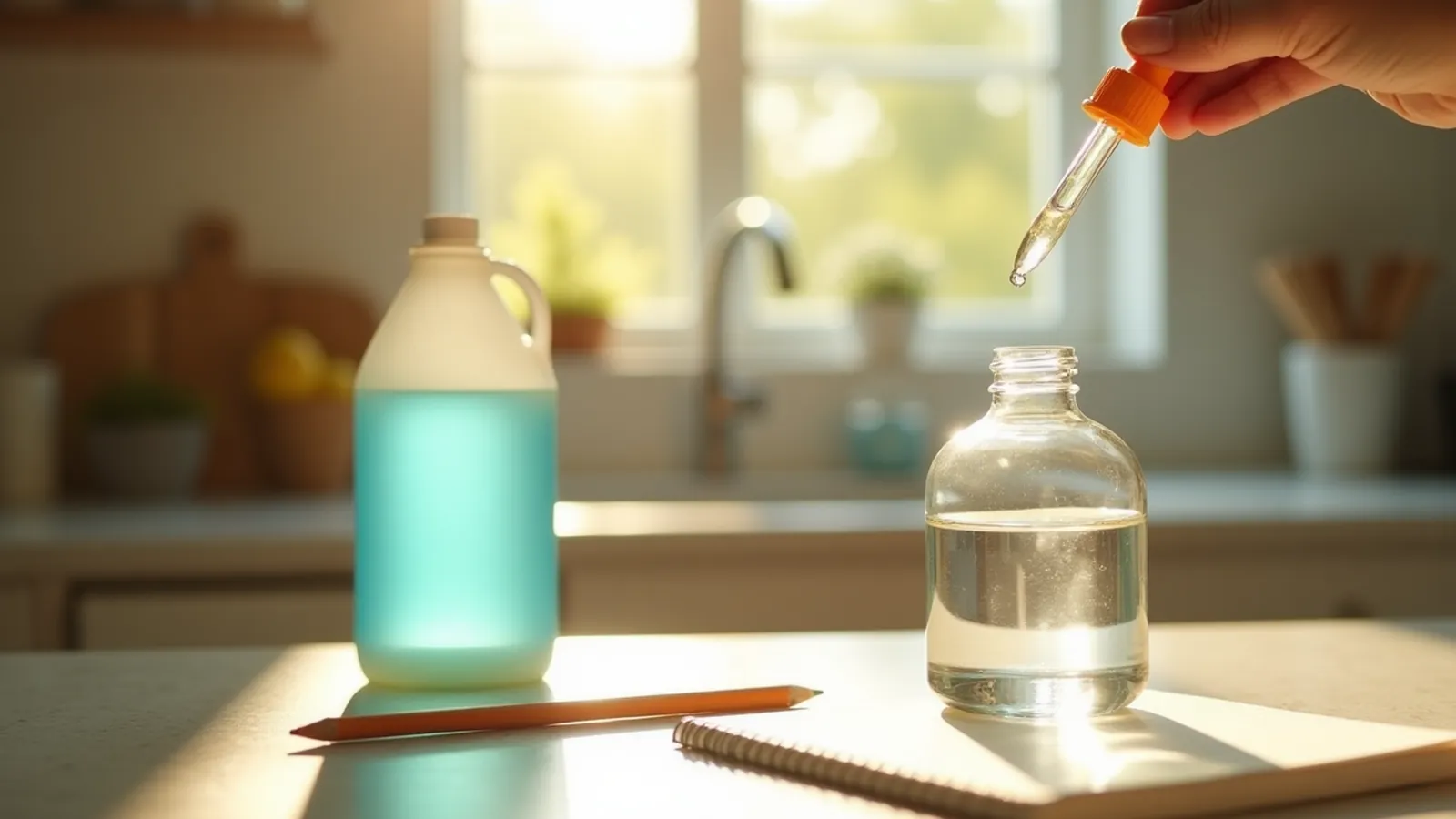
Two practical notes on measuring. Drops come from a clean dropper, which the EPA suggests taking from the medicine cabinet or your emergency kit, not from a careless tip of the bottle over the sink, because the entire method depends on the count. And once you are past a gallon, the EPA switches to teaspoons, which is far easier to measure into a bucket than counting out 32 drops.
Bleach dilution when the water is not clear
Cloudy, colored or very cold water takes twice the dose. Cloudy water is also settled first and poured through a clean cloth, paper towel or coffee filter (EPA). Filtering before you dose keeps grit out of the jug you will be pouring from, and it means you are treating the water rather than the silt in it. Double the bleach after filtering, not before.
The five-step mix-and-wait routine
This is the sequence that turns a table into water you can use. Do it in daylight if you can, and write the time on the jug so nobody has to remember.
Check that the bottle qualifies
Regular, unscented chlorine bleach, labeled as suitable for disinfection and sanitization, listing 6% or 8.25% sodium hypochlorite. Scented bleach, color-safe bleach and bleach with added cleaners are out, and the bleach should be fresh or stored at room temperature for less than a year (EPA).
Done when: the label names a sodium hypochlorite percentage and nothing else is in the bottle.
Settle and filter if it is cloudy
Let the water sit, then pour it through a clean cloth, paper towel or coffee filter (EPA). Skip this step for water that is already clear.
Done when: the water in the jug is reasonably clear.
Measure the dose for that container
Count drops from a clean dropper for a quart or a gallon, or measure teaspoons for larger volumes, using the row for your bleach strength. Double it if the water is cloudy, colored or very cold (EPA).
Done when: the drops or teaspoons are in and you could say the number out loud.
Stir and wait 30 minutes
Stir it, then let it stand half an hour. The water should have a slight chlorine odor, which is how you know the dose took (EPA). Set a timer rather than estimating.
Done when: 30 minutes have passed and the jug smells faintly of chlorine.
No odor? Repeat once, then label it
If there is no chlorine odor at all, repeat the same dose and let it stand another 15 minutes (EPA). Then write the date and "treated water" on the container so it does not get mistaken for tap water.
Done when: the jug is treated, timed and labeled.
If the chlorine taste is too strong afterward, the EPA's fix is to pour the water from one clean container to another and let it stand a few hours before drinking. That is a taste step, not a safety step, and it does not undo the treatment.
What disinfected water is for, and what bleach cannot fix
The EPA's instruction is unusually direct: only use water that has been properly disinfected for drinking, cooking, making any prepared drink, washing dishes and brushing teeth. Those five jobs are the reason to keep bleach and a dropper in the cupboard at all. Everything else in the house, from laundry to flushing, is a different conversation.
What bleach does not do matters just as much. Boiling and disinfection kill most disease-causing microorganisms, but they will not destroy other contaminants such as heavy metals, salts and most other chemicals (EPA). So if the water smells of fuel, sits in a flooded area where chemicals could have spilled, or your utility has said not to use it for anything, disinfection is the wrong tool. Find another source and call the number on your notice.
Bleach that does not belong in drinking water
Scented bleach, color-safe bleach and bleach with added cleaners are excluded by the EPA for disinfecting water. Never mix bleach with other cleaners, and never treat a "do not use" order as something a few drops can solve. Water from toilet tanks, toilet bowls or a swimming pool is never a drinking or cooking source, though water caught in a tub or sink is fine for washing and for pets (Virginia Cooperative Extension).
When boiling is the better tool
If you can boil, boil. The EPA describes boiling as sufficient to kill pathogenic bacteria, viruses and protozoa, and the method is short: settle and filter cloudy water, bring it to a rolling boil for at least one minute, three minutes above 5,000 feet (1,000 meters), then let it cool naturally and store it in clean containers with covers. If the flat taste bothers anyone, add a pinch of salt per quart or liter, or pour the water between two clean containers several times.
Bleach is the backup for the hours when you cannot boil: no power, no safe place outdoors for a stove, or fuel you would rather save. If you do set up a camp stove or grill, it goes outdoors only, never in the kitchen, never in the garage even with the door open, never in a basement or crawl space, and at least 20 feet from doors, windows and vents, with a battery carbon monoxide alarm inside the house (CDC). If that alarm sounds, get everyone outside first and call 911 from outdoors.
The shelf card: copy it out by hand
This is the part that ends the argument in your own kitchen. Take an index card and a marker and write it out from the numbers you just read for the bottle you actually own, because a card for 6% sitting next to a bottle of 8.25% is the exact mistake this page is meant to prevent.
Front of the card:
- Regular unscented bleach only, 6% or 8.25% sodium hypochlorite.
- 1 quart or liter: 2 drops.
- 1 gallon, clear: 8 drops of 6%, or 6 drops of 8.25%.
- 1 gallon, cloudy, colored or very cold: 16 drops of 6%, or 12 drops of 8.25%.
- 2 gallons: 1/4 teaspoon of 6%, or 1/8 teaspoon of 8.25%.
- Stir, wait 30 minutes, check for a slight chlorine odor.
- No odor: repeat the dose, wait 15 more minutes.
- Bleach older than a year, or stored somewhere warm: replace it.
Back of the card:
- The date this bottle was opened.
- The water utility or county health department phone number.
- Where the dropper lives.
Tape the card inside the cupboard door where the bleach sits, so the instructions and the bottle are in the same place and nobody has to hold a number in their head during a bad evening. Rewrite it whenever the bottle changes, and keep the card itself as the checklist you work from, rather than trusting a screenshot of somebody else's table.
Storing water you have already treated
Disinfected water still needs a clean container. Virginia Cooperative Extension's method for containers you fill at home: clean each one with hot water and dish detergent, rinse it with a dilute bleach solution (1 tablespoon of unscented bleach per gallon of water), fill it, add two drops of chlorine bleach per gallon, and close it tightly without touching the inside of the cap or the lip. Store it in a cool, dark place away from gasoline, pesticides, kerosene and other strong chemicals, and plan on 6 to 12 months for water in home-filled food-grade, BPA-free, airtight containers. Unopened store-bought bottled water is good until the date on the label, usually one or two years.
Two more points from the same publication change how a household plans. Water sitting in your plumbing is safe only for a limited time, a few days by most experts' agreement, and after that it needs purifying before you drink or cook with it. And water in a tub or sink is for washing and pets rather than for drinking, unless you treat it first. How much to keep and what to keep it in is covered in emergency water storage and in how to choose water storage containers.
Troubleshooting a batch that does not feel right
- If you lost count of the drops
- Tip it out and start a fresh, measured gallon. Re-dosing a batch you are unsure about only adds doubt on top of doubt.
- If there is still no chlorine odor after the second dose
- Do not keep adding bleach. Switch to bottled or boiled water for drinking, and ask your utility or county health department before using that source again.
- If the chlorine smell is overpowering
- Pour the water between two clean containers and let it stand a few hours before drinking (EPA). That is the taste fix, and the water is still treated.
- If the only bleach you have is scented, splashless or color-safe
- It is not for water (EPA). Boil, or use bottled water, until you can buy a plain bottle.
- If the label does not state a percentage
- Treat the strength as unknown rather than guessing, and use boiling or bottled water instead.
- If you are drawing water from the pipes or the water heater
- Purify it before drinking or cooking, because water in the plumbing is only safe for a limited time (Virginia Cooperative Extension).
What this costs, and what you do not need
An illustrative household budget: one bottle of regular unscented bleach, a clean dropper and an index card. A few dollars, with the bleach replaced once a year as it ages out. That is the entire purchase, and this page recommends no product at all. Nothing in this method needs a filter pitcher, a generator or a bulk food bucket, and none of it stops working because you bought the cheap bottle.
If you later want a filter for taste, or a larger stored supply than jugs can hold, those are separate decisions from disinfection. The food and water section puts them in order after the basics. If the worry is the power going out at the same time, the power outage kit guide covers light, heat and cooking outdoors safely, the boil water advisory guide covers the notice that usually starts all of this, and what to do during a power outage walks through the fridge and the heat.
Where these numbers come from
Every dose and every wait on this page is taken from the EPA or Virginia Cooperative Extension and linked in the Sources list, so you can open the original and compare it with the ratio a forum gave you. The canning guides on this site follow the same rule: tested USDA and National Center for Home Food Preservation methods, the source named for each processing time, and product talk kept out of the how-to pages.
When to get help
Call for help if
- Someone has swallowed water dosed with far more bleach than the chart calls for, or has burning in the mouth or throat, nausea or trouble breathing: call your poison control center or a health care provider, and 911 if it is serious.
- A carbon monoxide alarm sounds while you are boiling water on a camp stove or grill: get everyone outside first, then call 911 from outdoors.
- The water smells of fuel or chemicals, or your notice says not to use it for anything: call the utility or your local emergency management office before using a drop.
- Your well was flooded or the casing was damaged: ask your county health department about testing before drinking the water untreated.
Who to ask. In an emergency, call 911. If a carbon monoxide alarm sounds or anyone feels dizzy, sick or confused, get everyone outside into fresh air first, then call 911. Report outages and downed power lines to your utility. For local hazards, shelters and alerts, contact your city or county emergency management office (start at Ready.gov).
Frequently asked questions
How much bleach do I add to disinfect water?
Per gallon of clear water, 8 drops of 6% bleach or 6 drops of 8.25% bleach, then stir and wait 30 minutes (EPA). Double the dose if the water is cloudy, colored or very cold, and settle and filter cloudy water first. The percentage on the bottle decides which column you use, so check the label every time you buy.
How much bleach and water do I need for a 2-gallon container?
For 2 gallons, the EPA lists 16 drops (1/4 teaspoon) of 6% bleach or 12 drops (1/8 teaspoon) of 8.25% bleach. For 4 gallons it is 1/3 teaspoon of 6% or 1/4 teaspoon of 8.25%, and for 8 gallons, 2/3 teaspoon or 1/2 teaspoon. Stir and wait 30 minutes, then check for a slight chlorine odor.
Can I disinfect drinking water with bleach if I cannot boil?
Yes, that is exactly what the EPA's bleach instructions are for. Use only regular, unscented bleach labeled for disinfection with 6% or 8.25% sodium hypochlorite, measure the drops, stir, and wait 30 minutes. Remember that disinfection kills microbes but will not remove heavy metals, salts or most other chemicals (EPA).
Is 2 drops per gallon a bleach dilution I can use for drinking water?
Two drops per gallon is Virginia Cooperative Extension's storage step for clean water in home-filled containers, added just before sealing. It is not the EPA's dose for water you are unsure about, which is higher. Mixing the two up is the most common bleach mistake there is, so keep the storage card and the disinfection card separate and clearly labeled.
How long after adding bleach can we drink the water?
Wait 30 minutes, then check for a slight chlorine odor (EPA). If there is no odor, repeat the same dose and let it stand another 15 minutes. If the chlorine taste is too strong, pour the water between two clean containers and let it stand a few hours before drinking.
Does bleach make any water safe to drink?
No. Disinfection is a microbe step only; it will not destroy heavy metals, salts and most other chemicals (EPA). Skip any water that smells of fuel or could have picked up chemicals, and never use water from a toilet tank, a toilet bowl or a swimming pool for drinking or cooking (Virginia Cooperative Extension).
Sources
- Emergency Disinfection of Drinking Water, U.S. Environmental Protection Agency (accessed October 29, 2026).
- Emergency Water Supply and Storage (BSE-209), Virginia Cooperative Extension (accessed October 29, 2026).
- Carbon Monoxide (CO) Poisoning Basics, Centers for Disease Control and Prevention (accessed October 29, 2026).
- Water, Ready.gov, FEMA (accessed October 29, 2026).
Water you can trust, in one place
The Food and Water section puts storing, disinfecting and rotating water in order, with the boil-water and power-outage guides right beside it.