
Food & Water
Does a power outage affect water? A calm 3-day plan
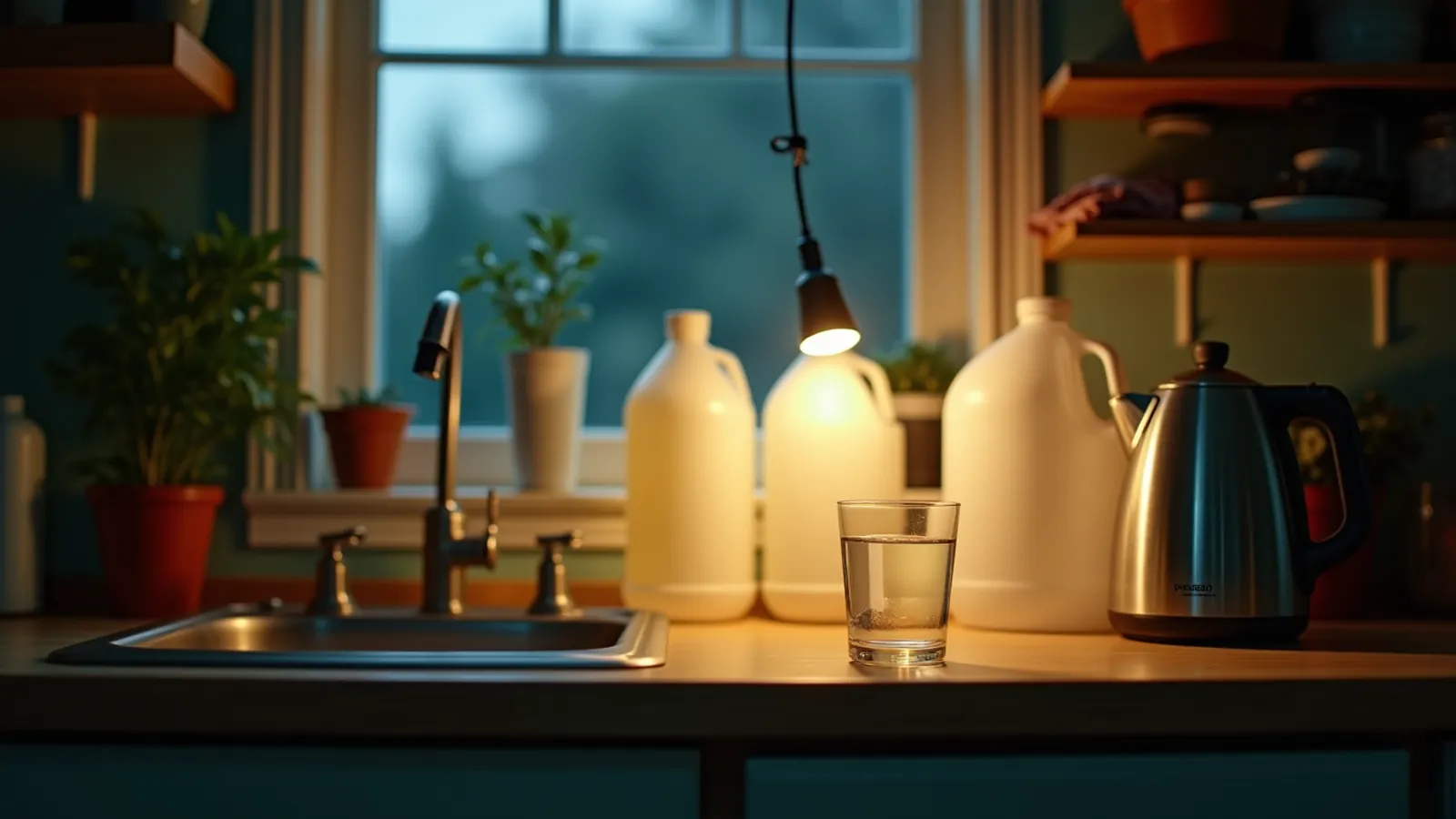
Does a power outage affect water? If your house runs on a well with an electric pump, yes — the dry tap arrives in the same minute as the dark house. Here is a three-day plan that fixes that without a generator or a cart full of gadgets.
On this page (13 sections)
- Does a power outage affect water? It depends on your source
- The three-day power outage water plan
- Which containers you already own are safe to reuse
- Where 12 gallons fit in a small house
- What three days of water costs a family of four
- Why fill the bathtub with water during a power outage
- Can you use water during a power outage?
- How to treat water when the power is out
- Low water pressure after a power outage
- When to get help
- Frequently asked questions
- Next in the manual
- Sources
Does a power outage affect water? If your house runs on a well with an electric pump, yes — the tap goes dry in the same minute the lights go out, and the winter you spent with no backup water is why every weather alert now stings a little. That part is fixable this week, without a generator and without a cart full of gadgets.
What follows is a three-day power outage water plan: the gallon target, which containers you already own are safe to refill and which to retire, where 12 gallons can live in a small house, and roughly what each option costs a family of four. It also answers the questions that arrive mid-outage — why people fill the bathtub, whether the tap is still usable, and what low pressure afterward means. Every number is traced to a source in the list at the bottom, so you can read the original yourself.
Key takeaways
- On a private well with an electric pump, water stops when the power does. On a public system the tap often keeps running, so follow your utility's notice.
- Ready.gov advises at least one gallon of water per person per day for several days, for drinking and sanitation — 12 gallons for four people across three days.
- Store tap or treated water in clean containers with covers, and filter cloudy water through clean cloths before you treat it (FDA).
- Boil water for one minute, or disinfect it with plain unscented bleach — the FDA dose is 1/8 teaspoon (8 drops) of 5.25% bleach per gallon, left to stand 30 minutes.
- A covered bathtub is for flushing, washing and rinsing. Treat it as non-drinking water unless you filter and disinfect it first.
- Never use a camp stove, grill or generator indoors, in a garage (even with the door open), a basement or a crawl space, and keep a generator at least 20 feet from doors, windows and vents (CDC).
The two-minute version
Fill every clean jug and pot you own before the storm arrives, not after the lights flicker. Water already sitting in a covered container on your shelf is the only water in the house that never needed a pump.
Does a power outage affect water? It depends on your source
Two houses on the same street can have completely different answers, and the difference is worth knowing before the next storm warning lands on your phone.
A private well with an electric pump: yes, immediately. The pump has to run to lift water into your pressure tank, so when the power stops, the pressure stops with it. That is why the dry tap arrives alongside the dark house.
A public water system: often the tap keeps running. Pumping and treatment still need electricity, though, so after a storm, a flood or a broken main your utility may issue a boil water notice as a precaution. Follow what your utility says on its alert page or phone line; the boil water advisory walkthrough takes that notice apart step by step.
Either way, the FDA's rule for an outage or a flood is the same: only use water from a safe source for drinking and for washing or preparing food. Use bottled water that has not been exposed to flood water if you have it, and if you don't, boil or disinfect it.
That is the whole answer to "does a power outage affect water" — the rest of this page is what to do about it.
The three-day power outage water plan
Three days is a floor, not a finish line. It covers the ordinary outage — the ice storm, the downed line, the crew working through the night — and it takes one afternoon to set up.
Set the number
Ready.gov advises storing at least one gallon of water per person per day for several days, for drinking and sanitation. Four people times three days is 12 gallons; add a little for the dog's bowl, cooking water and coffee. Build toward two weeks over the next year if you can, but three days first.
Done when: the number is written on a sticky note inside a kitchen cabinet door.
Shop in your own recycling bin
Juice bottles, 2-liter soda bottles and glass jars with screw caps are the cheapest water containers in the house. The FDA standard is clean containers with covers, so the real question is which ones you can wash and cap again — the table below sorts them.
Done when: the bottles are washed and drying upside down with their caps matched.
Wash, fill, cap, label
Wash each container in hot soapy water, rinse it well and let it air dry. Fill it nearly to the top so little air is left, cap it, and write the month and year on the side with a marker. If a bottle still smells of what it held after two washes, put it back in the recycling and choose another.
Done when: every container is filled, capped, labeled and dry on the outside.
Split it up and set a reminder
Divide the supply between two places, so one spill or one curious kid does not take all of it, and put a reminder on the phone calendar to empty, rinse, refill and relabel on a schedule you will keep. Home-filled containers carry no printed date; the one you write is the only one there is. If you cannot remember when a container was filled, treat that water before drinking it.
Done when: every bottle has a home and the calendar reminder exists.
A household of four in a small house sets a target of 12 gallons. They save six 2-liter soda bottles over a month, keep a case of sealed bottled water, add four gallon jugs from the grocery store, and top up the difference with bottles already in the pantry. Every container gets a label, and the supply is split between the kitchen and a bedroom closet.
Which containers you already own are safe to reuse
The published standard is simple: clean containers with covers (FDA). The rest is judgment — how easily a container can be washed, whether the cap seals again, and what it held before. The right-hand column is that practical reasoning, not a lab test.
| Container | Keep or retire | The reasoning |
|---|---|---|
| 2-liter soda bottles, rinsed | Keep | Screw cap, sturdy sides, and it was sold to hold a drink in the first place |
| Juice bottles with screw caps | Keep | Same idea; rinse until no smell is left, then rinse once more |
| Glass canning jars with lids | Keep for small amounts | Seals well but heavy and breakable; good for the two quarts by the bathroom sink |
| Milk jugs | Retire from drinking duty | Thin walls, a cap that stops resealing after a few uses, and a handle that traps milk; fine for flushing water |
| Single-use water bottles | Keep while sealed | Convenient as they come, but awkward to wash and slow to dry inside, so don't count on refilling them |
| Detergent, bleach or cleaner bottles | Retire | You would be storing drinking water in a container that held a chemical, and thinking about it every time you poured |
| Buckets or pails | Only ones sold for food or drinking water | Look for food-grade wording on the label; a bucket sold for paint or garden use is not labeled for drinking water |
One more container already in the house: the ice bin. If a storm is coming, empty the freezer's ice into a cooler before the power goes. It is water you already paid for, and it helps keep the fridge cold on the way out. If you would rather buy once than save bottles, the water storage container guide covers what to look for.
Where 12 gallons fit in a small house
Water is heavy, so plan for low shelves, short carries and two separate piles. A garage pile freezes, and a frozen bottle splits.
- Bottom shelf of the pantry: four to six bottles, where you see them and rotate them without thinking.
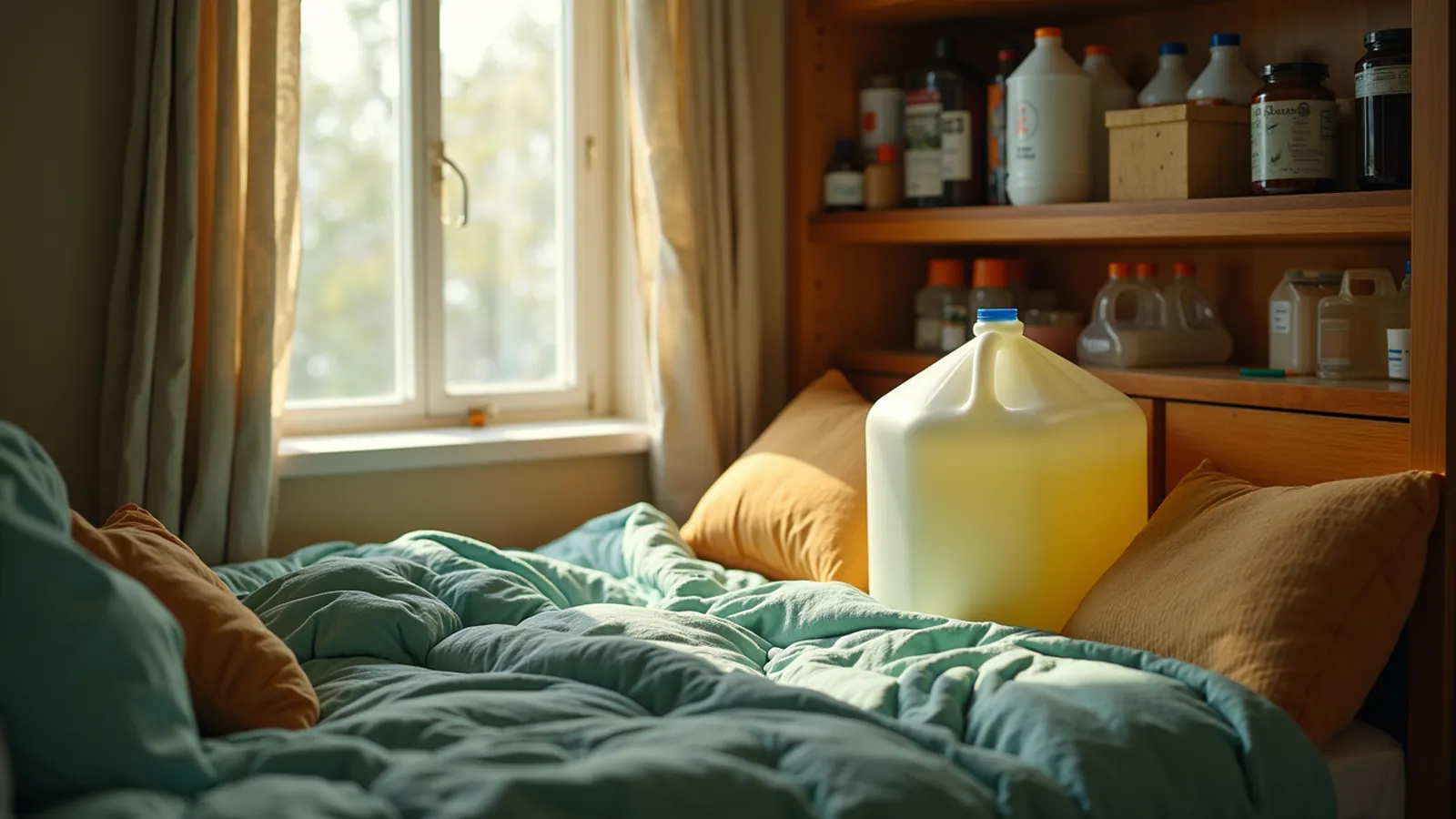
- Under a bed, in a shallow bin: a case of sealed bottled water slides under most beds and stays cool and dark.
- Hall closet floor: the gallon jugs, on a boot tray to catch a slow leak.
- A second closet on the other side of the house, so one flooded corner does not take everything.
- Not the car, not the attic, not the top shelf: heat and light are unkind to stored water, and a heavy jug at head height is an injury waiting to happen.
The house also holds water you do not have to store — the pipes and the water heater tank — covered below under using water during an outage. The emergency water storage guide goes further into quantities and rotation.
What three days of water costs a family of four
Almost nothing if you start with what you own, and the free option is also the best one.
| Option | What four people get | Cost band |
|---|---|---|
| Bottles you save over a month | Up to a dozen gallons in soda and juice bottles | Free but for the water |
| Sealed bottled water from the store | 12 gallons, ready to drink, nothing to wash | Lowest grocery cost; you pay for water and packaging |
| Two 5-gallon containers plus gallon jugs | 12 gallons you can reuse for years | One-time moderate purchase |
| Water already in the house | Pipes, water heater tank, ice bin | Free |
Notice what is not on the list: a generator, a countertop filter or a bulk food bucket. None is required for three days of drinkable water, and this page names no product and recommends no brand.
On the canning and gear question
A fair worry, and a fair test for any site: does it show its sources? The canning guides here follow tested USDA and National Center for Home Food Preservation methods, which say plainly that low-acid foods such as vegetables, meat, poultry, seafood and beans must be processed in a pressure canner to be free of botulism risks (NCHFP). Untested methods — oven canning, open-kettle, inversion, dishwasher, paraffin seals or an electric multicooker that was not tested for canning — are not safe for low-acid food. That standard, plus the linked source for every number, is the difference between a tested method and a blog opinion.
The food and water section puts the pantry and cooking jobs in order alongside this one.
Why fill the bathtub with water during a power outage
Because the toilet still needs water when the tap has none. A covered tub lets a household keep flushing, washing hands and rinsing dishes for days without touching the drinking supply.
Fill it before the storm, not after
When a warning is issued and the tap still runs, clean the tub, rinse it well and fill it. On a well, this is the last easy water you get until the pump comes back.
Done when: the tub is full and one more jug is filled for drinking.
Cover it
A clean sheet or a shower curtain liner keeps dust, hair and the cat out. A covered tub is water you could treat in an emergency; an open one is toilet water only.
Done when: the surface is covered and tucked at the edges.
Dip, don't pour
Fill a bucket with a pitcher or a clean scoop rather than draining the tub, which is heavy and splashy. Keep the bucket beside the toilet for flushing.
Done when: a bucket and a scoop live next to the tub.
Bathtub water is not drinking water
Treat it as washing and flushing water. If you ever need it for drinking, filter it through a clean cloth to clear the debris and then disinfect it as described below — and if the tub was not cleaned first, or the water sat uncovered for days, use it only for the toilet.
Can you use water during a power outage?
Yes, with one question in front of it. On public water, keep using the tap normally unless your utility issues a notice; if a notice comes, switch to bottled, boiled or disinfected water for drinking, cooking, ice and brushing teeth. On a well, the tap gives you nothing once the pressure is gone, so you move to the water already in the house.
- Water in the pipes: emergency water guidance from Cooperative Extension describes drawing the water already in the plumbing; open a faucet and catch what drains, treat it as stored water, and boil it before drinking if you are unsure of it (Oregon State University Extension Service).
- The water heater tank: turn off the power or gas first, close the valve at the top, open a hot-water faucet to let air in, rinse the drain valve, then draw water as needed — and refill the tank before turning the power or gas back on (Virginia Cooperative Extension). If you are not sure of your system, follow the manual or ask a plumber.
- The ice bin: melted ice is washing water unless the bin was clean when the power went out.
- The toilet tank: flushing only — never for drinking, cooking or dishes, even if it looks clear (Virginia Cooperative Extension).
The power outage walkthrough covers the fridge, the freezer and the heat while you work through this.
How to treat water when the power is out
Two methods, both workable with a pot on a kitchen range or a bottle of plain bleach on a shelf.
Clear the cloudiness first
If the water is cloudy, filter it through clean cloths, or let it settle and pour off the clear water (FDA). Boiling or dosing a pot of silt just makes gritty water.
Done when: the water in the pot is reasonably clear.
Boil it for one minute
Bring it to a rolling boil, hold it one minute, then let it cool and store it in clean containers with covers (FDA). Boiling kills most types of disease-causing organisms that may be present, though it does not remove chemicals. A pot on your own kitchen range is fine if the range still works. If you must cook outdoors, use a camp stove or grill outdoors only — never indoors, in a garage (even with the door open), a basement or a crawl space — and keep a generator at least 20 feet from doors, windows and vents, with battery carbon monoxide alarms inside (CDC).
Done when: the pot has boiled hard for a full minute and is cooling with a lid on.
Or disinfect with plain bleach
Use unscented liquid household bleach and check the percentage on the label before you measure. The FDA's dose for 5.25% bleach is 1/8 teaspoon (8 drops) per gallon of water: stir it well, let it stand 30 minutes, then store it in clean containers with covers. Bleach kills some, but not all, types of disease-causing organisms, so it is a fallback, not an upgrade. If your bottle is 6% or 8.25% sodium hypochlorite, use the matching dose in the bleach dose chart.
Done when: the 30 minutes have passed and the water is in a capped, labeled jug.
Bleach that isn't bleach
Plain and unscented only — never scented, color-safe or bleach with added cleaners. Disinfection is a microbe step, not a chemical filter, and if a notice says the water should not be used at all, that is a stronger instruction than "boil it".
Low water pressure after a power outage
Weak, sputtering pressure is what people notice most the day after. Work through these in order before you call anyone.
- If the taps sputter and hiss when the power returns
- Run a cold tap for a minute or two, and don't drink the first water out of a sputtering tap. If it does not settle, call your utility or well service rather than guessing.
- If you're on a well and the pressure stays low
- Check the breaker for the pump first, then look at the gauge on the pressure tank. If the pump runs but nothing moves, or the breaker trips again, stop resetting it and call a well service — a pump that lost prime or a failed pressure tank is a repair, not a household fix.
- If the whole street has low pressure
- That is the utility's system, not your plumbing. Call the utility's outage line and follow any boil water notice that comes with it.
- If your well flooded
- The FDA advises testing and disinfecting a flooded well after flood waters recede, and contacting your local or state health department or agricultural extension agent for advice. Until then, use stored or bottled water.
When to get help
Call for help if
- Anyone becomes ill after drinking water you were unsure about, or a baby, toddler or older adult shows signs of dehydration: call a health care provider, or 911 if it is serious.
- A carbon monoxide alarm sounds while you are boiling water on a camp stove or grill: get everyone outside first, then call 911 from outdoors.
- Your well flooded, the casing or pump was damaged, or the water smells of fuel or chemicals: call your local or state health department or agricultural extension agent before drinking it.
- The pump breaker keeps tripping or the pressure tank is dead: call a well or pump professional rather than working on the system yourself.
Who to ask. In an emergency, call 911. If a carbon monoxide alarm sounds or anyone feels dizzy, sick or confused, get everyone outside into fresh air first, then call 911. Report outages and downed power lines to your utility. For local hazards, shelters and alerts, contact your city or county emergency management office (start at Ready.gov).
Frequently asked questions
Does a power outage affect water if you're on city water?
Often not immediately — the tap may keep running and pressure may hold for a while. Pumping and treatment still need electricity, though, so after a storm, a flood or a broken main your utility may issue a boil water notice as a precaution. Follow that notice exactly, and keep a few days of stored water anyway, so a notice becomes an inconvenience rather than a scramble.
Why fill the bathtub with water during a power outage?
For the toilet, handwashing and rinsing — not for drinking. Every flush uses water you don't have, and a covered tub keeps the household going for days without dipping into the drinking supply. If you ever need tub water for drinking, filter it through a clean cloth to clear the debris and disinfect it first, and skip it entirely if the tub was not cleaned beforehand.
Can you use water during a power outage?
On a public system, yes, unless your utility says otherwise. On a well, the tap stops when the pump does, so you use what is already in the house: the water in the pipes, the water heater tank (check the manual or ask a plumber before draining it) and your stored jugs. Toilet tank water is for flushing only, never for drinking or dishes.
What causes low water pressure after a power outage?
On a well, start with the breaker and the pressure gauge. A pump that lost prime, a failed pressure tank or a breaker that keeps tripping needs a well service rather than a household fix. On public water, a whole-street drop belongs to the utility's system, so call the utility's outage line and follow any boil water notice that comes with it.
How much water should a family of four store for a power outage?
At least 12 gallons for three days, using the Ready.gov figure of one gallon per person per day for drinking and sanitation. That is the floor, not the ceiling — add for pets, cooking and coffee, and build toward two weeks over time. Bottles from your own recycling get you most of the way there for free.
How long does water keep in containers I fill myself?
There is no printed date on a bottle you filled at the kitchen sink, so write one. Label each container with the month and year, keep it in a cool, dark place away from cleaners and anything with a strong odor, and rinse, refill and relabel on a schedule you will actually keep. If you cannot remember when a jug was filled, treat that water before drinking it.
Sources
- Food and Water Safety During Power Outages and Floods, U.S. Food and Drug Administration (accessed October 29, 2026).
- How to Use Boiling Water and Pressure Canners, National Center for Home Food Preservation (accessed October 29, 2026).
- Water, Ready.gov, FEMA (accessed October 29, 2026).
- Emergency Disinfection of Drinking Water, U.S. Environmental Protection Agency (accessed October 29, 2026).
- Carbon Monoxide (CO) Poisoning Basics, Centers for Disease Control and Prevention (accessed October 29, 2026).
- Emergency Water Storage and Purification (EM 9285), Oregon State University Extension Service (accessed October 29, 2026).
- Emergency Water Supply and Storage (BSE-209), Virginia Cooperative Extension (accessed October 29, 2026).
Water first, then the rest of the plan
The Food and Water section puts storing, treating and rotating water in order, with the outage, boil-water and container guides beside it.