
Food & Water
Does bleach expire? How to store and rotate the bottle you keep for water
Every forum gives a different bleach ratio, and the bottle in your cupboard has been there a while. Here is the FDA's measure, restated for the strength printed on your label, plus a dated rotation card for the bottle you keep for water.
On this page (10 sections)
- Does bleach expire? Yes — and the label describes bottling day
- Does bleach expire if unopened? Slower — but a seal isn’t a pause button
- The dose, restated for the bottle in your hand
- The rotation card to tape to the shelf
- Same bottle, different dilution, for surfaces
- If something goes wrong
- When to get help
- Frequently asked questions
- Keep going
- Sources
You want to fill a few jugs with tap water and be done — except for the one line in the directions that says add bleach. Then the reading starts: 8 drops per gallon in one thread, 16 in the next, and someone’s cousin saying “just a splash.” You are not being fussy. This is the one step where measuring badly can hurt the people you are storing the water for.
Does bleach expire? Yes, and the answer decides whether the bottle already in your cupboard is the one you should dose with. The dose itself is settled: 1/8 teaspoon — 8 drops — of unscented household liquid bleach at 5.25% concentration per gallon of water, stirred well and left to stand 30 minutes (FDA). What isn’t settled is the bottle. This page is the dated rotation card for it: how long it stays useful, how to store it, and how to read the dose against the label you actually have.
Key takeaways
- Bleach is a rotating supply, not a forever supply. The sodium hypochlorite that does the disinfecting weakens as the bottle sits, faster in heat and light.
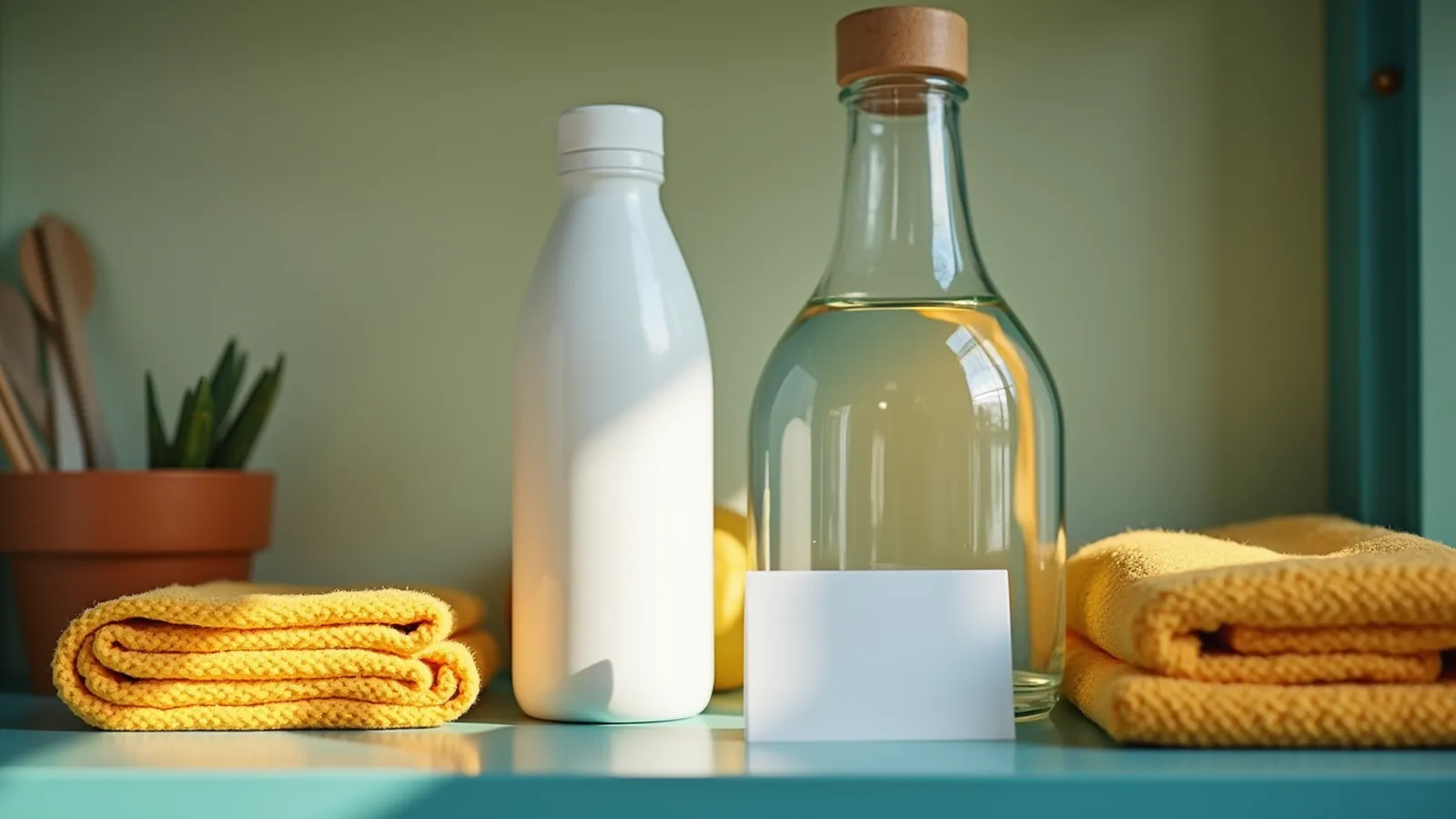
- Keep one small bottle for water — plain, unscented, sealed, dated, stored cool and dark — and a separate jug for cleaning.
- The FDA’s drinking-water dose is 8 drops (1/8 teaspoon) of unscented bleach at 5.25% per gallon, stirred, then 30 minutes before use.
- If your label prints 6% or 8.25%, use the dose chart for that strength instead of the 8-drop figure.
- Boiling for 1 minute is the other method the FDA lists: it kills most disease-causing organisms, while bleach kills some but not all.
- You can’t confirm a bottle’s strength at home, so go by the date you wrote on the cap, not by smell.
Things this guide mentions
Amazon searches, not product picks: we have not tested what they show. Check the specs and the return policy on each listing before you buy.
Does bleach expire? Yes — and the label describes bottling day
The sodium hypochlorite that does the disinfecting weakens as the bottle sits, and heat and light make the decline faster — the point the EPA makes in its emergency disinfection guidance, and the reason the percentage on a label describes the day it was bottled rather than today. A bottle that has spent a summer on a sunny windowsill or years in a garage that bakes in July is not the bottle the label describes.
Because you can’t confirm the strength at home, go by the date instead of by smell. A sharp smell doesn’t prove the number on the label still applies, and a faint one doesn’t tell you what’s left either, so the rule here is about records rather than judgment. If you know when the bottle was opened, it has stayed closed, and it has lived somewhere cool, use it and replace it on schedule. If you can’t say when it was opened, or it has been sitting somewhere hot, don’t dose drinking water from it. A fresh bottle is one of the cheapest pieces of a water plan you will ever buy.
| What the bottle is | For drinking water? | Your move |
|---|---|---|
| New, still sealed, from a store that moves stock | Yes, once you’ve read the strength on the label | Write the date you open it on the cap and store it cool and dark |
| Open, dated by you, kept in a cool cupboard | Yes, using the dose for the strength it prints | Replace it on your set day, not whenever it runs out |
| Open a long time, or stored somewhere hot or sunny | Don’t count on it | Replace it before you dose anything you’ll drink |
| No date, and no memory of buying it | No | Replace it — an unknown age isn’t something to guess around |
| Scented, splashless, color-safe or a “bleach cleaner” | Never | Bathroom duty only; it isn’t drinking-water bleach at any age |
The words on the front of the bottle matter more than the brand. The FDA’s water directions are written for unscented household liquid bleach; anything with a scent, a thickener, a color-safe claim or another cleaner built in is a different product and stays out of your water plan.
Does bleach expire if unopened? Slower — but a seal isn’t a pause button
A sealed bottle holds its strength longer than an open one, because air and the small amounts you pour out aren’t in play. That is why the bottle you buy for water should stay sealed until you actually need it.
But the seal only protects what happens after bottling. That bottle may have spent months in a warehouse, on a warm loading dock or under a shop window before it reached your shelf, and none of that shows on the cap. That is why there is no single shelf life of bleach figure to write down: it depends on the strength, how the bottle was stored before and after you bought it, and whether the seal is broken. The habit beats the number — buy the bottle, date the bottle, replace the bottle.
- Buy where stock moves. A busy grocery aisle turns over faster than a back shelf, so you are more likely to walk out with a recent bottle.
- Buy the size you’ll rotate through. The biggest jug isn’t automatically the best buy if most of it will sit in a hot garage.
- Store it cool, dark and upright. A kitchen cupboard or pantry shelf beats a garage that swings from freezing to hot.
- Keep it in its own labeled bottle — never decanted into a drinks bottle or an unmarked container — and away from other cleaners. Never mix bleach with ammonia or an acid cleaner.
Two bottles, two jobs
Keep one small bottle on the water shelf, sealed and dated, and treat the big jug under the sink as the cleaning supply. It takes the guesswork out of “which one is the good one,” and it means the bottle you dose from is the one that has been stored properly.
The dose, restated for the bottle in your hand
The 8-drop figure has a condition attached that most forum posts leave out: it is written for bleach at 5.25% sodium hypochlorite. Read your label before you measure. Many bottles now print 6% or 8.25%, and using the 5.25% dose on a stronger bottle gives you more chlorine than the directions intend, while a weaker bottle leaves you short of disinfection you think you have. If your label doesn’t say 5.25%, don’t scale the drops in your head — use the dose chart in how to disinfect water with bleach, which is built around the strength printed on the bottle.
Read the percentage on the label
5.25% is what the FDA’s 8-drop measure is written for. If your bottle prints a different number, stop here and use the dose chart for it.
Done when: you can say the percentage and match it to the dose in front of you.
Clear the water if it’s cloudy
Filter it through clean cloths, or let it settle and pour off the clear water. Cloudy water carries particles the chlorine has to work through first.
Done when: the water you are about to treat is clear enough to see through.
Measure 8 drops — 1/8 teaspoon — per gallon
Use a dropper or a measuring spoon, not a pour and a guess, and add it to the gallon rather than the gallon to it.
Done when: the drops are counted and the container is capped.
Stir it well
The bleach has to mix through the whole gallon to do anything. Shake or stir for longer than feels necessary.
Done when: there’s no unmixed layer at the bottom.
Wait 30 minutes before you use it
The contact time is part of the method, not a suggestion. Set a timer and leave the container covered while it works.
Done when: the timer has run out.
Store it covered in clean containers
Pour it into containers you’ve washed, keep them covered so nothing gets back in, and label them with the date you treated the water.
Done when: the water is covered and dated.
A dropper or dosing syringe makes drop-counting easier than hovering over an open gallon. It’s optional — a measuring spoon works too.
Search small liquid droppers for measuring bleach drops (Amazon, affiliate link) opens in a new tab
If you need bleach, search by the type rather than the brand, and read the label for the strength and the word “unscented” before it goes in your cart.
Search unscented household liquid bleach on Amazon (Amazon, affiliate link) opens in a new tab
| Method | What it does | Steps |
|---|---|---|
| Boiling | Kills most types of disease-causing organisms that may be present | Boil 1 minute, let it cool, store it in clean containers with covers |
| Bleach | Kills some, but not all, types of disease-causing organisms | 8 drops (1/8 teaspoon) of unscented 5.25% bleach per gallon, stir well, stand 30 minutes, store covered |
Notice the difference the FDA draws between the two. Boiling is the stronger method for water of genuinely unknown quality; bleach is the one you can use when boiling isn’t practical. It is not useless — it’s what you reach for when the camp stove stays in its box — but it is the convenience option, not the heavier one.
Read the front of the bottle before you dose
Scented, splashless, “color-safe,” fabric-protecting, gel and bleach-plus-cleaner products are not drinking-water bleach, and no amount of age makes them suitable. You want plain, unscented household liquid bleach whose label states its sodium hypochlorite percentage. If you can’t tell what you have, buy a fresh bottle and keep the old one for the bathroom.
The rotation card to tape to the shelf
A rotation only works if it’s written down somewhere you’ll see it. Copy this onto an index card, tape it inside the cupboard where the bottle lives, and fill in the blanks in pencil so you can update them.
- Date opened: written on the cap in marker the day the seal breaks.
- Strength on this bottle: the sodium hypochlorite percentage, copied from the label.
- Drinking-water dose: 8 drops (1/8 teaspoon) per gallon of clear water at 5.25%, stirred, then 30 minutes before use.
- If the strength is different: the dose chart in how to disinfect water with bleach. No mental math.
- Back-up method: boil 1 minute, cool, store covered.
- Surfaces only, never drinking water: 1 tablespoon of unscented bleach per gallon — a 15-minute soak for utensils, dishes and can openers, and on countertops apply it and let it air dry.
- Never: scented, splashless, color-safe or cleaner-added bleach in drinking water.
- Replace on: the day you test smoke alarms, or the day the clocks change.
Pick the replacement day now, while it’s in front of you. The trick isn’t remembering how long bleach lasts; it’s making the decision once and letting a date you already keep carry it for you. On that day the old bottle moves to the laundry shelf and a new sealed one takes its place.
A household keeps one 32-ounce bottle of unscented 5.25% bleach on the pantry shelf for water and one jug under the sink for cleaning. The pantry bottle gets a date on the cap the day it’s opened and is swapped on the same weekend each year that the smoke alarms are tested. Nothing is measured from memory, because the dose, the strength and the swap date are all on the card taped inside the cupboard door.
How much water the bottle is treating is a separate question from how long the bottle lasts. Ready.gov’s starting point for stored water is at least one gallon per person per day for several days — which is a lot of gallons over a season, so a single bottle is doing real work. If you’re still working out how much to keep, emergency water storage covers amounts and rotation, and how to choose water storage containers covers what to put it in.
Same bottle, different dilution, for surfaces
Bleach does two jobs in a preparedness cupboard, and they use very different amounts. For utensils, dishes and can openers, the FDA’s figure is 1 tablespoon of unscented household bleach per gallon of water, for a 15-minute soak. For countertops, you apply the same solution and let it air dry. That is a sanitizing solution for things — far stronger than the drinking-water dose, and it never goes into water you plan to drink.
Bleach is also not a rescue for a suspect jar of home-canned food. The National Center for Home Food Preservation’s guidance for a jar you think may be contaminated is to discard the food and the containers, and to treat work surfaces and equipment with 1 part unscented household chlorine bleach (5 to 6% sodium hypochlorite) to 5 parts clean water, left to stand for 30 minutes. No tasting, no sniffing to decide. For what keeps canned food safe in the first place, pressure canning for beginners and water bath canning vs pressure canning walk through the tested methods and altitude adjustments.
Why this page names no “best bleach”
We don’t pick a brand, because we haven’t bought or tested one, and a guide that pretends otherwise is a sales page. This site earns, if at all, from labeled Amazon search links like the ones above and clearly marked affiliate links on review pages. Where a number appears here — 8 drops per gallon, 30 minutes, 1 minute at a boil, 1 tablespoon per gallon for surfaces — it comes from the FDA or the National Center for Home Food Preservation and is listed in the sources so you can open it yourself. The canning guides follow tested USDA and National Center for Home Food Preservation methods only: pressure canning for low-acid foods at the pressures and times those sources publish, adjusted for altitude, and no oven canning, open-kettle processing, inversion seals or other untested shortcuts. No food-safety professional reviews these guides, as how we write explains.
If something goes wrong
- If you can’t say when the bottle was opened
- Replace it before it doses drinking water, even if it still smells strong. Go by the date, not the smell.
- If you used a scented, splashless or cleaner-added bleach by mistake
- Don’t drink that batch. Dump it, wash the container, and remix with plain unscented bleach of a known strength.
- If the water was cloudy when you dosed it
- Filter it through clean cloths, or let it settle and pour off the clear water, then treat it. That step is why a dose that looked right can underperform.
- If your label prints 6% or 8.25% instead of 5.25%
- Don’t double or halve anything by eye. Use the dose chart built around your bottle’s strength in how to disinfect water with bleach.
- If a boil-water notice covers your tap
- Switch drinking, ice, brushing teeth and dishes to stored or boiled water, and follow the notice until it’s lifted. What to boil, bottle and skip covers what changes.
- If the bottle has been sitting in a hot garage
- Retire it to the cleaning shelf and start fresh. Heat is what you were storing it away from in the first place.
When to get help
Call for help if
- Anyone swallows bleach or a bleach solution, or gets it in their eyes or on their skin: call Poison Control or 911. This page can’t help with that, and it isn’t the moment to search.
- A carbon monoxide alarm sounds while you’re boiling water on a camp stove or grill: get everyone outside first, then call 911 from outdoors. Boil outdoors only — never in a kitchen, garage (even with the door open), basement or crawl space — keep generators at least 20 feet from doors, windows and vents, and never connect one to home wiring without a transfer switch installed by a licensed electrician (CDC).
- Someone gets stomach cramps, vomiting or diarrhea after drinking stored water: contact a health care provider, and 911 if it is serious.
- Your well was flooded or the pump or casing was damaged: contact your local or state health department or agricultural extension agent for advice on testing and disinfecting after the water recedes (FDA).
Who to ask. In an emergency, call 911. If a carbon monoxide alarm sounds or anyone feels dizzy, sick or confused, get everyone outside into fresh air first, then call 911. Report outages and downed power lines to your utility. For local hazards, shelters and alerts, contact your city or county emergency management office (start at Ready.gov).
Frequently asked questions
Does bleach expire?
Yes. The sodium hypochlorite that disinfects weakens as the bottle sits, and heat and light speed that up, so the percentage on the label describes bottling day rather than today. You can’t confirm the strength at home, so go by the date instead of by smell: write the date you open the bottle on the cap, store it cool and dark, and replace it on a day you already remember.
Does bleach expire if unopened, and what is the shelf life of bleach?
A sealed bottle holds its strength longer than an open one, but the seal only covers the time after bottling — the bottle may have spent months in a warehouse or a warm shop window first. That is why there is no single shelf life figure that fits every bottle. Rather than guess a number, buy from a store that moves stock, date the bottle when you open it, and replace it on a set day such as the one you test smoke alarms.
Does Clorox bleach expire?
The brand on the label doesn’t change the answer: household bleach is water and sodium hypochlorite, and it weakens as it sits, faster in heat and light. We don’t treat a brand’s own marketing as evidence here. What matters for your water plan is the percentage printed on that bottle and how it has been stored since you bought it.
How much bleach per gallon of water should I store?
The FDA’s measure is 1/8 teaspoon — 8 drops — of unscented household liquid bleach at 5.25% concentration per gallon of water, stirred well and left to stand 30 minutes before use, then stored in clean containers with covers. If your bottle prints 6% or 8.25%, use the dose chart for that strength instead of the 8-drop figure.
Can I use old bleach to disinfect water?
Only if you know when it was opened and it has been kept cool and closed since. If the bottle is undated, has been sitting somewhere hot, or you can’t say how old it is, replace it first. You can’t measure the remaining strength at home, so the date is the only reliable thing you have to go on.
Ready to compare?
The same searches, in one place. Use the checklist in this guide when you compare listings, and buy only what fills a gap in what you already have.
Sources
- Food and Water Safety During Power Outages and Floods, U.S. Food and Drug Administration (accessed November 1, 2026).
- Emergency Disinfection of Drinking Water, U.S. Environmental Protection Agency (accessed November 1, 2026).
- Water, Ready.gov, FEMA (accessed November 1, 2026).
- Storing Home Canned Foods, National Center for Home Food Preservation (accessed November 1, 2026).
- Carbon Monoxide (CO) Poisoning Basics, Centers for Disease Control and Prevention (accessed November 1, 2026).
Water: store it, treat it, rotate it
The Food and Water section puts storing, disinfecting and rotating water in order, with the bleach dose chart and the boil-water guide next to it.