
Food & Water
Bottled water shelf life: what to label and when to check it
You want water stored before the next outage, but every page gives a different bleach ratio and none of them say what to write on the jug. Here is bottled water shelf life in plain terms, the label to put on every container, and a twice-a-year check you can keep.
On this page (13 sections)
- What the shelf life of water actually means
- Bottled water shelf life: the schedule in one table
- Shelf life of water in plastic bottles: read the number on the bottom
- The label to write on every container
- Shelf life of treated tap water: one dose, one source, one label
- The twice-a-year check, in four steps
- Long shelf life water: what actually makes it last
- The budget version, and the honest answer
- If something goes wrong
- When to get help
- Frequently asked questions
- Keep going
- Sources
You want a few days of water put away before the next outage, and the instructions will not sit still. One page says eight drops of bleach per gallon, another says sixteen, and neither one tells you what to write on the jug once it is full. Underneath the annoyance is the real worry: you are not going to hand your kids water you guessed at.
The fix is smaller than it feels. Pick one place for the dose, write one label on every container, and set one date to look at it again. That is what this page covers — bottled water shelf life in plain terms, the shelf life of water you bottle yourself, water bottle shelf life for the containers already in your kitchen, and the label that still tells you what is inside six months from now.
Key takeaways
- Water does not go bad on a date the way food does: the container, the source and the seal decide how long it stays good to drink.
- Ready.gov recommends replacing stored water every six months if it is not commercially bottled. Treat that as a rotation reminder, not a point where the water turns unsafe.
- Write the same six lines on every container: what it is, fill date, treatment, check date, drink or not, and initials.
- Use one dose chart and read the sodium hypochlorite percentage printed on your own bleach bottle instead of averaging forum posts.
- Plastic matters: bottled water is #1 PET, reusable 3- and 5-gallon water jugs are commonly #7, and used milk jugs are hard to sanitize and break down over time (Utah State University Extension).
- A label plus a twice-a-year reminder is the whole system — a short job you can finish in one sitting.
What the shelf life of water actually means
Water does not go bad on a date the way food does. When someone searches for the shelf life of water, what they are usually asking is how long the container and the fill stay clean enough to drink — and that is decided by three things, none of them a calendar.
- What went in. Municipal tap water that is not under a notice, commercially bottled water, or a well you have had tested.
- How clean the container was. Including the lid, the rim and the threads, which is where people stop washing.
- Whether anything can get in afterward. A cap that stays on, and a cup you pour into rather than dip.
That is why the same water can be fine in one container and a mistake in another, and why no honest page can give you one number that covers every bottle in your house.
The container material is part of the answer too, and extension guidance is direct about reusing whatever is already in the kitchen. Used milk jugs are considered food grade, but they are difficult to sanitize properly and the plastic breaks down over time (Utah State University Extension). So the practical version of “how long does water last” is: as long as the container, the source and the seal hold up — and you are the one keeping track.
Bottled water shelf life: the schedule in one table
Ready.gov recommends replacing stored water every six months if it is not commercially bottled (Ready.gov), which is where the six-month column below comes from. Treat those dates as check dates — a reminder to look at the container and rotate it — rather than a point where the water turns unsafe.
| What is in the container | What to write on the label | When to check | Why |
|---|---|---|---|
| Sealed store-bought bottled water | Date stored plus your check date | Six-month check, or sooner if the printed date comes first | Sealed at the plant; the printed date is your rotation reminder |
| Reusable 3- or 5-gallon jug (commonly #7) | Fill date, source, treatment, check date | Every six months | Only as clean as its last wash and rinse |
| Treated tap water in a food-grade container | Fill date, source, bleach strength and dose, check date | Every six months | The label is the only record of what you did |
| Juice or milk jug (#2 HDPE) | Fill date and UTILITY ONLY | Use it up in kitchen rotation, not as outage supply | Hard to sanitize; plastic breaks down over time (Utah State University Extension) |
| Bottles frozen to hold freezer space | Freeze date plus “drinking” or “keep cold” | When you rotate the freezer, oldest first | Freeze and store at 0 °F (−18 °C) or lower and use the oldest first (National Center for Home Food Preservation) |
| Unknown water, or tap water after a flood | NOT FOR DRINKING plus the date | Not a swap — treat it or retire it | A warning label beats memory |
If a bottle carries a printed date, treat it as a reminder to rotate on your own schedule rather than a safety deadline you can look up. Nothing printed on plastic replaces the look you give the container when its check date comes around.
Shelf life of water in plastic bottles: read the number on the bottom
The number inside the recycling triangle is the fastest way to know what you are holding. It tells you the plastic family, not whether the container is safe to drink from — and that distinction is the whole answer to water bottle shelf life.
- #1 PET is used for soft drinks, juices and bottled water. It is the bottle in a case of store-bought water (Utah State University Extension).
- #7 is the code commonly found on 3- and 5-gallon reusable water bottles and jugs (Utah State University Extension).
- #2 HDPE is milk-jug plastic. It is considered food grade, but used milk jugs are difficult to sanitize properly and the plastic breaks down over time (Utah State University Extension).
- Bleach bottles hold up somewhat better than milk jugs, but water stored in one should be used for laundry or dishes, not drinking (Utah State University Extension).
What the code does not tell you is anything about a bottle you have refilled yourself. The plastic family is a starting point; the history of the container — what it held, how it was washed, whether the cap has stayed on — is what decides whether the water inside is still drinking water. That is why every container in your house gets a label, whether it came from the store or the tap.
If you are buying containers to refill, the comparison points are in how to choose water storage containers.
The label to write on every container
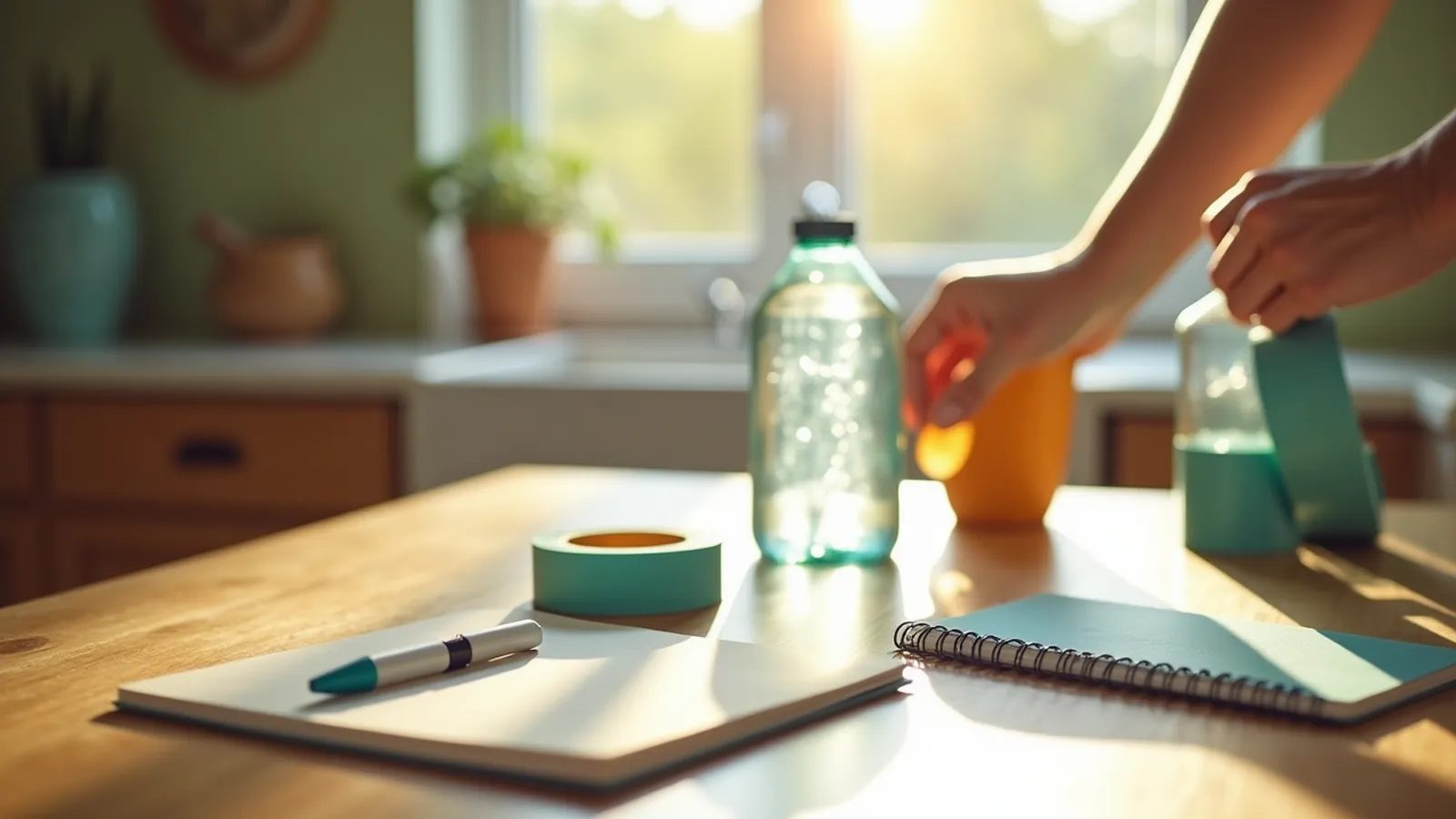
This is the card worth taping inside the cupboard door. The site does not offer downloads, so it is written out here: copy it onto masking tape with a permanent marker, or onto an index card you keep with the water.
| Line on the label | Example | Why it earns its space |
|---|---|---|
| 1. What it is | Tap water / Store-bought / Well water | Separates drinking water from utility water |
| 2. Filled on | Filled 3/14 | Starts the clock |
| 3. Treated with | Bleach, strength and dose from the chart — or untreated | Records what you cannot see later |
| 4. Check by | Check by 9/14 | Six months out, the Ready.gov replacement interval |
| 5. Drinking or not | DRINK or NOT FOR DRINKING | Protects the household from a container you are unsure about |
| 6. Who filled it | Initials | Lets you ask the person who knows |
Line five does the most work. If you cannot remember what happened to a container — whether it was treated, whether the lid came off in the garage, whether it held something else first — write NOT FOR DRINKING on it and move it to the garden, the laundry or the toilet tank.
Shelf life of treated tap water: one dose, one source, one label
If the conflicting forum numbers are what is stopping you, the fix is to pick a single source for the dose and never blend it with anything else. Charts disagree because they assume different bleach strengths, and the strength is printed on your own bottle, in small type near the back label. Write the strength down next to the dose you used, and the argument ends there.
Pick containers made for water
Food-grade containers sold for drinking water, or commercially bottled water in its own bottle. Skip old milk jugs, anything that held cleaner or fuel, and anything marked industrial use only.
Done when: every container is one you would fill from the kitchen tap without hesitating.
Wash, then sanitize
Warm soapy water on the inside walls, lid and threads, then a full rinse. How to choose water storage containers walks through the wash-and-sanitize sequence so you are not inventing a ratio at the sink.
Done when: the rinse runs clear and the inside is dry.
Fill from a source you can name
Municipal tap water that is not under a notice, commercially bottled water, or a well you have had tested. If your water is under an advisory, read what to boil, bottle and skip before you fill anything.
Done when: you can say where the water came from and when.
Treat with one chart, matched to your bottle
Use the chart in how to disinfect water with bleach, which states the bleach strength for each row. Read the sodium hypochlorite percentage printed on your own bottle and use the row that matches it, rather than adjusting a dose by eye or splitting the difference between two forum posts.
Done when: the strength and the dose are written on the label in your handwriting.
Cap it, label it, store it somewhere boring
Cool, dark and out of the way: a closet floor or a basement shelf, not a sunny windowsill or a shed that bakes in July. Write all six label lines before you walk away.
Done when: the label is on the container, not in your head.
Set the check date six months out
Put it in your phone calendar in words you will recognize: check the water jugs. That reminder, plus the label, is the entire rotation system.
Done when: the reminder exists and matches the label.
Bleach is not a place to improvise
Use plain, unscented household liquid bleach — never scented, splashless, color-safe or cleaner-added products — and never mix bleach with other cleaners. If the percentage on your bottle does not match the chart row you were reading, use the row that matches your bottle, not the row that matches the page you happened to open first.
If your tap water is in doubt after a flood or an outage, the FDA's food and water safety guidance points to commercially bottled water for drinking, cooking and brushing teeth (U.S. Food and Drug Administration). That is exactly the case your labeled supply is meant to cover.
The twice-a-year check, in four steps
Six months is the interval Ready.gov gives for replacing stored water that is not commercially bottled, and it lands roughly when you are already changing smoke-alarm batteries. It is not a line where water turns unsafe; it is the habit that gets the water looked at.
Find the oldest label
Look for the check date that has passed rather than grabbing the nearest container. Oldest out first is the same first-in, first-out habit the National Center for Home Food Preservation gives for frozen food.
Done when: the container in your hand has the earliest date.
Look at it before you decide anything
Cloudiness, floating bits, a smell you cannot name, or a lid that was loose: use that water for plants, laundry or flushing and start over in a clean container. Do not drink it to find out.
Done when: the container is either poured out or passed for drinking, not left undecided.
Use the old water instead of dumping it
Houseplants, the garden, mopping, rinsing the driveway. Water you rotate out is still water; it just is not drinking water anymore.
Done when: nothing has gone down the drain that the yard could have used.
Wash, refill, relabel
Same steps as the first fill: wash, sanitize, fill from a source you can name, treat if you are treating, and write all six lines with the new date. Then set the next reminder.
Done when: the label is new, the reminder is new, and the old date is gone.
A household keeping two 5-gallon jugs and a case of store-bought bottles checks on the first weekend of April and October. April's job is to empty the jugs onto the garden, wash and refill them, and write October on the labels. October's job is the same in reverse, plus checking the case of bottles against its printed date. Written out like this, the check is a short list of jobs rather than a vague worry.
Long shelf life water: what actually makes it last
A sealed commercial bottle is the low-effort answer. Buy it sealed, keep it out of the sun, and note the date you stored it so your own check date exists even when the printed one does not.
When you want more than a case of bottles, the things that stretch shelf life are unglamorous. A container washed and sanitized before its first fill beats a clever container every time. Fill from a source you can name. Cap it and leave it capped, and pour into a cup instead of dipping one in. Store it cool and dark. Then label it, because the container with a date on it is the one that gets rotated.
How much to keep is a separate question. Ready.gov's starting point is at least one gallon per person per day for several days, for drinking and sanitation, and more if you have room to store it (Ready.gov). Emergency water storage works out the quantities; this page is about keeping what you have clean and knowable.
The budget version, and the honest answer
You do not need special equipment to start. A case of store-bought water on sale arrives sealed and needs nothing but a marker and a closet floor. After that, the money worth spending goes into one or two containers made for storing water, because those are the ones you will keep washing and refilling.
Which brings up the fair question: is this just another gear site wearing a preparedness costume? There are no product picks, ratings or prices in this guide and no best-water list, because we have not bought or tested any of these containers. The site earns, if at all, from clearly labeled Amazon search links on gear pages and labeled affiliate links on review pages, and a review says plainly when a product has not been bought or used.
How you can check us
Every safety figure on this page is attached to a source in the list at the bottom, so you can open it yourself and read the same page. The canning guides follow tested USDA and National Center for Home Food Preservation methods — pressure canning for low-acid foods at the pressures and times those sources publish, adjusted for altitude — and nothing here recommends oven canning, open-kettle processing, inversion seals or other untested shortcuts. The site is written with AI-assisted drafting and fact-checked against the cited sources; how we write explains what that does and does not mean, including that no food-safety professional reviews these guides.
If you want the wider order — storing, treating, rotating — the Food and Water section puts those in sequence.
If something goes wrong
- If you cannot remember whether a container was treated
- Write NOT FOR DRINKING on it and move it to utility use — plants, laundry, flushing. Start a fresh container instead of guessing.
- If the bottle has gone soft, dented or cracked
- Retire it. A container that has lost its shape or its seal is one you cannot verify at home, and water you are counting on is not the place to hope.
- If your tap water goes under a boil water advisory after you filled
- Your labeled stored water is still your drinking supply. Switch drinking, ice and dishes to it and follow the notice for the tap.
- If the check date passed months ago
- Use it for plants or refill the container, then reset the reminder six months out and write the new label.
- If you are storing water because your well pump quits with the power
- Plan the first three days first; does a power outage affect water walks through that window.
When to get help
Call for help if
- Anyone has stomach cramps, vomiting or diarrhea after drinking stored water, or shows signs of dehydration: contact a health care provider, or call 911 if it is serious.
- A carbon monoxide alarm sounds while you are boiling water on a camp stove or grill: get everyone outside first, then call 911 from outdoors. Never use a grill, camp stove or generator indoors, in a garage even with the door open, or in a basement or crawl space; keep generators at least 20 feet from doors, windows and vents and install battery carbon monoxide alarms (CDC). Never connect a generator to home wiring without a transfer switch installed by a licensed electrician.
- Your well was flooded, or the casing or pump was damaged: contact your local or state health department or your Cooperative Extension office for advice on testing and disinfecting after the water recedes.
- Your water system's notice says not to use the water for anything: follow it exactly and call the number on the notice before you use a drop.
Who to ask. In an emergency, call 911. If a carbon monoxide alarm sounds or anyone feels dizzy, sick or confused, get everyone outside into fresh air first, then call 911. Report outages and downed power lines to your utility. For local hazards, shelters and alerts, contact your city or county emergency management office (start at Ready.gov).
Frequently asked questions
What is the shelf life of bottled water from the store?
There is no single number that fits every bottle, because what changes is the container and the seal, not the water itself. Keep sealed bottles cool and dark, write the date you stored them, and check at six months or when the printed date comes first. Once a bottle is opened, treat it as an open container rather than part of your stored supply.
Does water have a shelf life?
Water does not spoil on a date the way food does — what changes is what the container was washed with, where the water came from, and whether anything got in afterward. That is why a written label and a twice-yearly check tell you more than any number printed on plastic.
What is the shelf life of water in plastic bottles I refill myself?
It depends on the container and what you put in it. Store-bought water comes in #1 PET, the plastic used for soft drinks, juices and bottled water, and #7 is the code commonly found on 3- and 5-gallon reusable water bottles and jugs (Utah State University Extension). Reused milk jugs (#2) are considered food grade but are difficult to sanitize properly and the plastic breaks down over time, so they are not a good drinking-water container. Whatever you refill, wash and sanitize it, label it, and check it on the schedule above.
Is there such a thing as long shelf life water?
Commercially sealed bottled water is the closest thing to a set-and-forget supply: it arrives clean and sealed, and all you have to do is store it cool and dark and keep a check date on it. For water you bottle yourself, long storage comes from three things — a container washed and sanitized first, a trusted source, and a cap that stays on.
How do I know the bleach dose I am using is right?
Use one source and one chart, not the average of three forum posts. Doses differ because they assume different bleach strengths, and your own bottle prints its percentage. The bleach dose chart states the strength for each row — write both the strength and the dose on the container's label so the next person knows exactly what you did.
Can I store water in old juice or soda bottles?
Plastic absorbs what it held, and the extension guidance is direct: containers that originally stored food with strong odors keep a remaining scent (Utah State University Extension). A rinsed soda bottle can hold utility water for the garden. For drinking water you are counting on during an outage, start with a container made for it.
Sources
- Water, Ready.gov, FEMA (accessed October 30, 2026).
- Food and Water Safety During Power Outages and Floods, U.S. Food and Drug Administration (accessed October 30, 2026).
- Plastics for Storage, Utah State University Extension (accessed October 30, 2026).
- How Long Can I Store Frozen Foods?, National Center for Home Food Preservation (accessed October 30, 2026).
- Carbon Monoxide (CO) Poisoning Basics, Centers for Disease Control and Prevention (accessed October 30, 2026).
Water storage, in the right order
The Food and Water section puts storing, treating and rotating water in sequence, with the container and boil-water guides next to it.