
Kits & Plans
Seasonal emergency kit update: the twice-a-year swap that keeps your kit usable
Two dates a year, pinned to the weekends the clocks change, keep a family kit from turning into a box of outgrown coats and expired food.
On this page (13 sections)
- Why two small updates beat one big clean-out
- The daylight saving emergency kit calendar: two dates a year
- The five-minute walkthrough you can do at either clock change
- Spring swap list: sun gear in, cold gear out
- Fall swap list: cold gear in, heat and light checked
- Food dates: what to read, rotate and throw out
- Doing the swap on a budget
- How the canning and safety advice here is checked
- Emergency kit update troubleshooting
- When to get help
- Frequently asked questions
- Next in the manual
- Sources
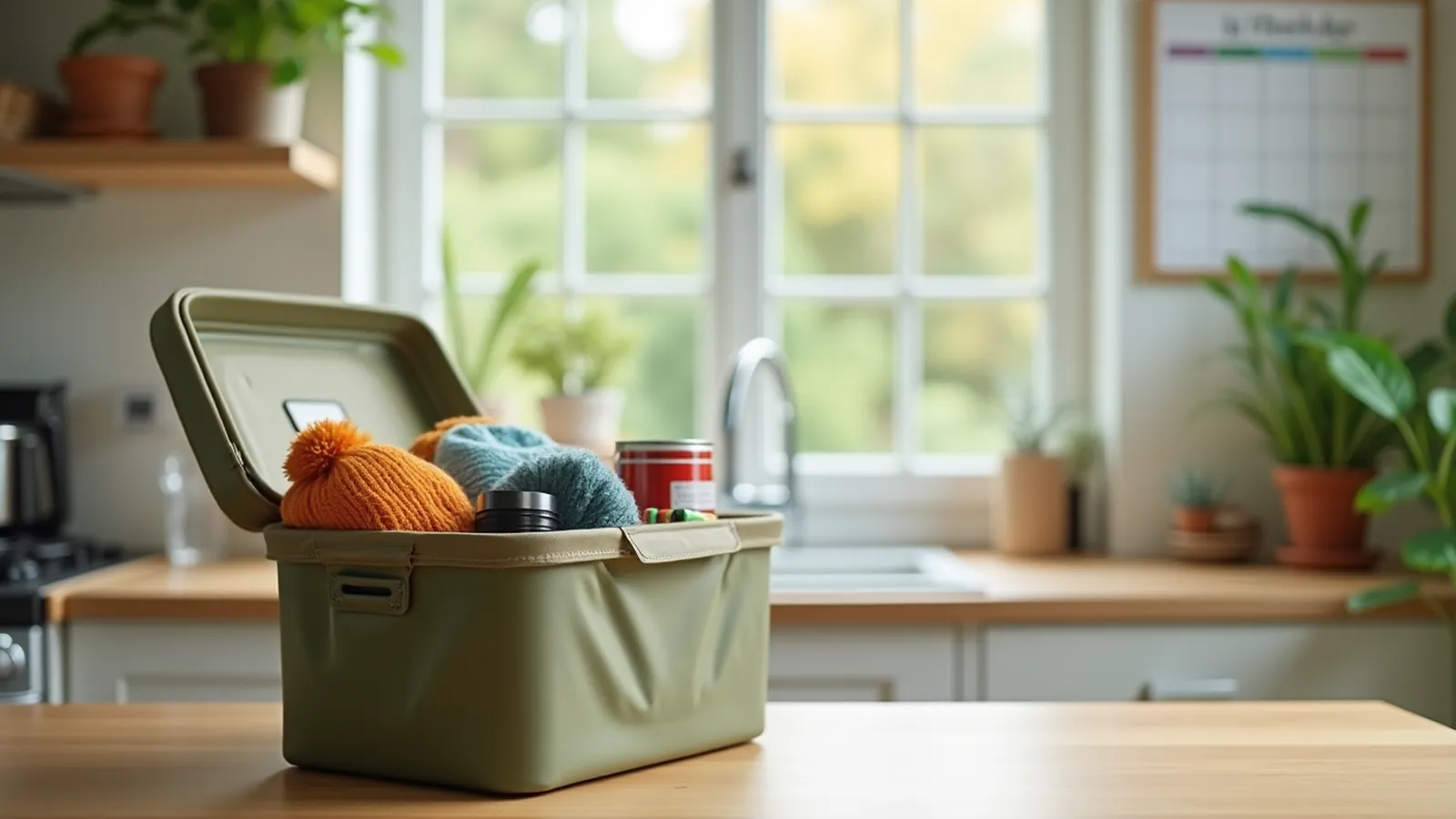
It is June, and the tote in the hall closet still holds winter coats, wool hats and a half-used pack of hand warmers. The sun hats and light clothes you meant to swap in are still folded in a drawer upstairs. You remember all of it the moment the power goes out, never on the weekend you meant to deal with it.
A seasonal emergency kit update is a calendar, not a personality trait: two dates a year tied to the weekends the clocks change, one short walkthrough, and the kit stays usable. Below are the spring and fall swap lists, the five-minute check, and the food and jar dates worth reading.
Key takeaways
- Two small updates a year beat one big annual clean-out, and the weekend the clocks change is a reminder you do not have to remember.
- Spring: cold gear out, light clothes, sun hats and a battery fan in, and home-canned jars out of any space that bakes in summer (NCHFP).
- Fall: coats and blankets back in, then test the lights, the radio, the chargers and your carbon monoxide alarms before the dark evenings (CDC).
- The five-minute check is dates, water, batteries, medicines and one seasonal swap. Everything else can wait for the full list.
- Store home-canned food in a clean, cool, dark, dry place, ideally 50 to 70 °F [10 to 21 °C], and never above 95 °F [35 °C] (NCHFP).
- Never run a generator, grill, camp stove or fuel-burning heater indoors, in a garage even with the door open, in a basement or in a crawl space (CDC).
Do this tonight
- Put two repeating reminders in your phone: the weekend the clocks go forward and the weekend they go back.
- Write the last-checked date on a strip of tape on the kit lid, where you can read it from the hallway.
- Tell the kids where the tote and the water live, so they are not asking you in the dark.
Things this guide mentions
Amazon searches, not product picks: we have not tested what they show. Check the specs and the return policy on each listing before you buy.
Why two small updates beat one big clean-out
Emergency kits fail quietly. Food passes its date, batteries leak inside a flashlight, kids outgrow the clothes you packed, a prescription changes. None of that announces itself. You find out during the outage, which is the worst possible time.
A once-a-year clean-out has the same problem the gym does: one large job with no fixed date, so it slides. Two small jobs attached to an event you already notice, the clock change, get done. Ready.gov's Build A Kit page says to keep the kit in a designated place and make sure all household members know where it is kept. It also says to rethink your needs every year and update the kit as your family's needs change. Splitting that into a spring pass and a fall pass is how it happens in a house with two kids, a dog and a full calendar.
The American Red Cross frames the amounts the same way: a 3-day supply of food and water for evacuation, and a 2-week supply at home. Both of those supplies are only worth what their condition is on the day you open the tote.
The daylight saving emergency kit calendar: two dates a year
The daylight saving emergency kit routine has one rule: the weekend the clocks change is kit weekend. Spring, when the clocks move forward, is the light-gear pass. Fall, when they move back, is the cold-gear and light pass. Neither should take more than an hour, and if you only have five minutes, skip to the walkthrough.
| Job | Spring (clocks forward) | Fall (clocks back) |
|---|---|---|
| Water | Check containers for cracks and leaks; mark the oldest to use and refill | Check containers again; keep the supply cool and dark, and replace any damaged container |
| Home-canned jars | Move jars out of any garage, shed or attic shelf that gets hot (NCHFP) | Check seals; label and date any new jars (NCHFP) |
| Documents and medicines | Update the medication list and the document copies | Update again after any insurance or school-year change |
| Pets and kids | Check collar and harness fit; swap kids' clothes sizes | Add a warm blanket for the dog; check boot sizes |
The clothing, gear, food-date and light jobs live in the spring and fall swap lists below.
The five-minute walkthrough you can do at either clock change
Open the tote, set a timer, work from the top down. If a step turns into a bigger job, write it on the list and finish it within the week rather than dragging the tote around the house for a month.
Minute 1: read the label on the lid
Write today's date on a strip of tape on the outside of the lid, not on a card inside, so you can read it from the hallway. Ready.gov suggests keeping the kit in a designated place that every household member knows about.
Done when: today's date is on the lid and the previous check date is crossed off.
Minute 2: check the water
Look for cracks, leaks and cloudy jugs. The emergency water storage guide covers how much to keep and how to rotate it; today, what matters is that the containers are sound and easy to reach.
Done when: every container is intact and the oldest one is marked to be used and refilled.
Minute 3: read the dates on food and medicines
Pull the front row of food and read the dates. Then check the medication list against what is actually in the cupboard: new prescriptions, stopped medicines, new allergies. Ask your pharmacist how to keep an emergency supply of anything you take daily rather than guessing at quantities.
Done when: expired food is out and the medication list matches the shelf.
Minute 4: switch things on
Click the flashlight on, turn the radio on, and plug a phone into the battery pack for a few seconds to watch the light. Replace what fails, not what might fail. This is the step that catches the dead batteries you would otherwise discover in the dark. In the fall pass, press the test button on every carbon monoxide alarm in the house (CDC).
Done when: every light, the radio, the charger and the alarms have been tested today.
Minute 5: make one seasonal swap
Pick the single most wrong thing in the tote, a parka in July or sunscreen in December, and fix that one thing before you close the lid. The rest can wait for the full spring or fall list.
Done when: the most out-of-season item is out and its replacement is in.
A household of four keeps its kit in a hall closet and its water on the floor of the same closet. The spring pass takes about 25 minutes: coats and hand warmers out to the coat rack, light clothes and sun hats in, jars off the garage shelf and into the pantry, two expired snack packs eaten that week and replaced on the next grocery run.
Spring swap list: sun gear in, cold gear out
Spring is the update most households skip, and it is the one that matters in a summer storm outage, when the house is warm and the kit is full of wool.
- One full change of light clothes and sturdy shoes per person, in the size they wear now
- A sun hat and sunscreen per person, plus a spare pair of sunglasses
- Light blankets or a sheet per person instead of the heavy ones
- A battery fan and spare batteries, because a closed house on a July evening gets hot fast
- Food that needs no cooking, from the emergency food supply list
- Melty foods out, including chocolate and anything that turns to liquid in a warm closet
- Home-canned jars moved to the coolest, darkest place you have (NCHFP)
- Pet gear checked for fit and food checked against its date; the pet emergency kit guide has the full list
If a line on this list is empty, note it on the lid tape and fill it at the next grocery run rather than making a special trip. Search links if you are short of a piece: battery fans (Amazon, affiliate link) opens in a new tab and wide-brim sun hats (Amazon, affiliate link) opens in a new tab.
Fall swap list: cold gear in, heat and light checked
The fall pass is the bigger one, because it runs into the season of ice storms, early darkness and heating mistakes. Do the clothing swap first, while the tote is open, then work through the checks.
- Coat, hat, gloves and warm socks per person, in current sizes, plus boots that fit over winter socks
- A warm blanket or sleeping bag per person, and hand warmers back in
- A flashlight or lantern per floor, plus a headlamp for whoever checks the breaker panel
- A battery or hand-crank radio, and a NOAA Weather Radio if you have one
- Carbon monoxide alarms tested on every level of the home, with fresh batteries where needed (CDC)
- A one-page outage plan taped inside a cupboard door: where the flashlights are, who gets the blankets, what the kids do first. The power outage kit guide covers what to add for staying home without power
- Pet gear: a warm blanket, food, and a leash kept by the door
If the fall check turns up missing pieces, write them on the same list you keep on the lid and work through the power outage kit guide before you buy anything. A kit built from what your household will actually use beats a cart full of gear.
Heat and generators: the rule that never changes with the season
Never run a generator, grill, camp stove or fuel-burning heater indoors, in a garage even with the door open, in a basement or in a crawl space (CDC). Keep generators at least 20 feet from doors, windows and vents, and keep battery carbon monoxide alarms on every level of the home (CDC). If an alarm sounds, get everyone outside into fresh air and call 911 (CDC). Never connect a generator to your home's wiring without a transfer switch installed by a licensed electrician (Ready.gov, Power Outages).
Food dates: what to read, rotate and throw out
Two kinds of date live in an emergency kit: the printed date on packaged food and the date you wrote on a jar or jug yourself. Both expire quietly, and both are cheap to fix at a clock-change weekend.
For home-canned food, NCHFP's storage rules are specific. Label and date the jars and store them in a clean, cool, dark, dry place, with best quality between 50 and 70 °F [10 and 21 °C]. Do not store jars above 95 °F [35 °C] or near hot pipes, a range, a furnace, an uninsulated attic or in direct sunlight; under those conditions food loses quality in weeks or months and may spoil. That is exactly why the spring pass matters for anyone who keeps jars on a garage shelf.
NCHFP also suggests removing ring bands before storage so lids stay dry and a broken seal is easy to see, and not stacking jars too high; one manufacturer recommends no more than two layers, with something firm between them. Can no more food than you will use within a year.
If a jar did not seal, the fix depends on the clock. NCHFP says reprocessing is not recommended for quality reasons, but if you do it, you must have followed an up-to-date, research-tested recipe on the first attempt and you must reprocess within 24 hours. Within that window, unsealed jars can also be refrigerated and eaten within a week, or frozen for up to a year with headspace adjusted to 1 inch. If you did not follow a tested recipe the first time, every jar in that load, sealed or not, may be unsafe and should be thrown out. Do not taste food from a jar with an unsealed lid or any sign of spoilage.
If something thawed
Food has to stay at a safe temperature while it defrosts. Never thaw food at room temperature or in warm water: the outside can sit in the danger zone between 40 and 140 °F [4 and 60 °C] while the middle is still frozen. Thaw in the refrigerator at 40 °F [4 °C] or less, in cold running water below 70 °F [21 °C], or in the microwave if you are cooking or serving it right away (NCHFP).
The food storage can rotation guide takes this further: a first-in, first-out shelf makes the spring and fall date check a five-minute job instead of an afternoon. If this is your first pass through the jars, the comparison of water bath and pressure canning explains which foods each method is tested for.
Doing the swap on a budget
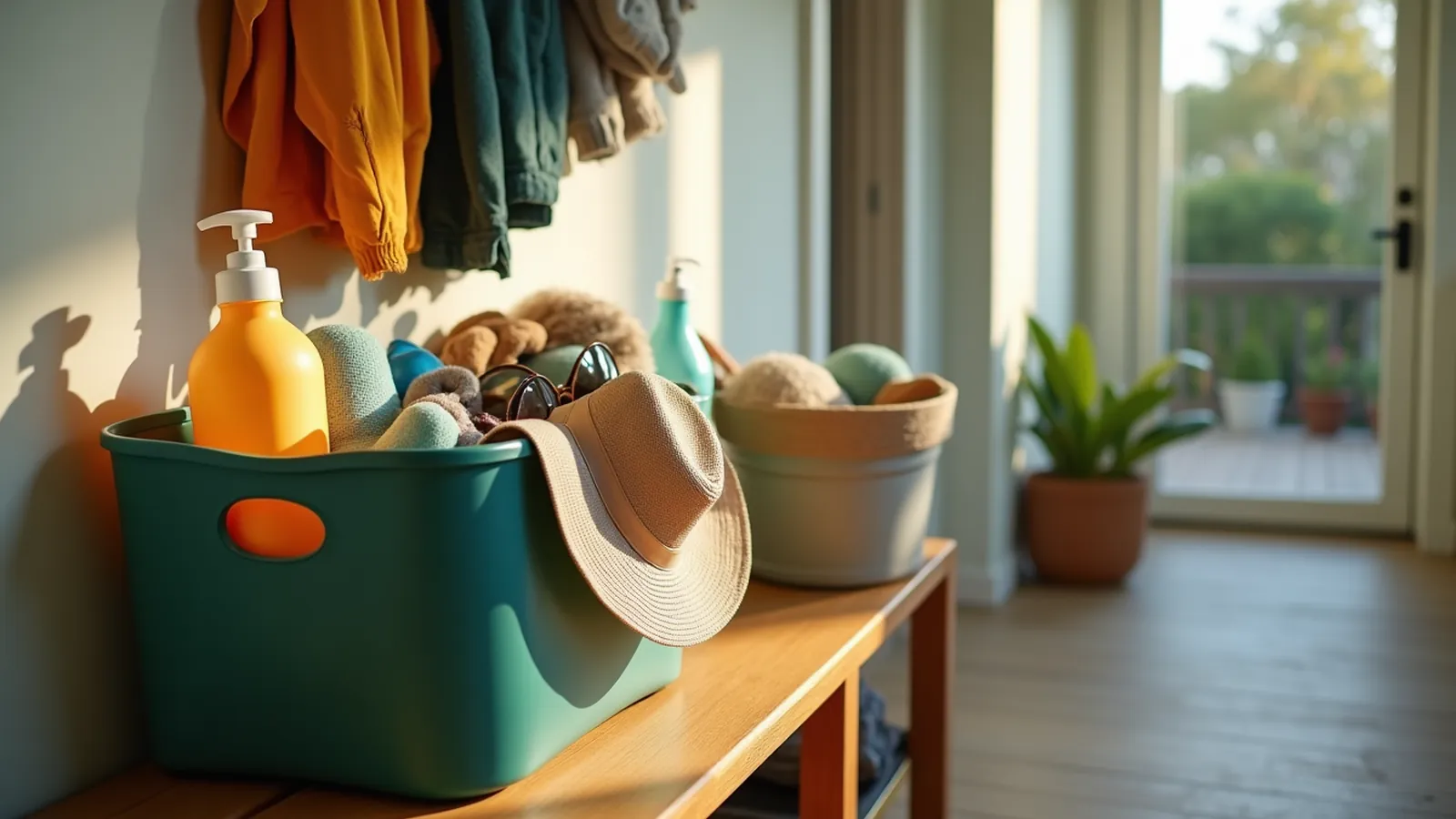
Most of a seasonal update is not shopping. It is moving things: the kids' outgrown layers out, their current size in, the heavy blankets to the closet and the light ones to the tote. Spring is a good time to buy sun hats and light layers on clearance from the previous summer; fall is a good time to pick up warm layers and hand warmers as they appear on sale.
- Swap clothes your children have outgrown into the kit, and pass the smallest set on
- Move the kit's least-liked snacks into regular lunches before their dates, then restock with food your family already eats
- Replace only what failed the switch-on test, not the whole flashlight drawer
- Write what is missing on the lid tape and pick it up on a normal grocery trip
If you have never built the tote in the first place, start with the 72-hour kit checklist and come back here twice a year.
How the canning and safety advice here is checked
You should not take any website's word for a food-safety rule, including this one. The canning and storage numbers on this page come from the National Center for Home Food Preservation, and the outage, generator and carbon monoxide rules come from Ready.gov and the CDC, each listed with its link in the Sources section at the bottom of the page. This site uses USDA and NCHFP tested canning methods only, and it does not test or rate products. How we write explains the drafting and fact-checking in plain terms, and how we review covers the money side, including how affiliate links are labeled.
Emergency kit update troubleshooting
- If you missed the clock-change weekend
- Do the five-minute walkthrough today and set the next reminder. The calendar is a prompt, not a deadline, and a kit checked in June is still better than one checked never.
- If the tote lives in a garage, shed or attic
- Check the temperature there in July and in January. Home-canned jars should not sit above 95 °F [35 °C] (NCHFP); if the space gets hotter, move the jars inside.
- If you find a jar with a broken seal or signs of spoilage
- Do not taste it. Throw it out and check the rest of that load against NCHFP's guidance before you use any of it.
- If the batteries leaked inside a flashlight
- Replace the flashlight instead of scraping out a corroded tube, and keep spare batteries in their packaging so the terminals cannot touch.
- If the kids' clothes no longer fit
- Swap in one full change in their current size and pass the old set down or donate it. A kit with clothes two sizes small is a placeholder, not a plan.
- If you cannot remember what is already in the tote
- Tape an index card to the inside of the lid and write each item as it goes in. The next check becomes a reading job instead of an unpacking job.
When to get help
Call for help if
- A carbon monoxide alarm sounds, or anyone has a headache, dizziness or nausea while a fuel-burning appliance is running: get everyone outside into fresh air and call 911 (CDC).
- You need help evacuating, or you need a shelter that accepts your dog: contact your local emergency management office before the storm, not during it.
- A jar, a water supply or a medicine question could affect someone's health: ask your county Cooperative Extension office, NCHFP or your pharmacist rather than a general page online.
Who to ask. In an emergency, call 911. If a carbon monoxide alarm sounds or anyone feels dizzy, sick or confused, get everyone outside into fresh air first, then call 911. Report outages and downed power lines to your utility. For local hazards, shelters and alerts, contact your city or county emergency management office (start at Ready.gov).
Frequently asked questions
What is a seasonal emergency kit?
A seasonal emergency kit is the same household kit you already keep, packed and checked for the season you are actually in: light clothes, sun hats and a battery fan in summer; coats, blankets and hand warmers in winter. The kit does not change; the contents rotate twice a year, which is why the update matters more than the shopping.
How often should I do an emergency kit update?
Twice a year is enough for most households, and the weekends the clocks change are an easy pair of dates. Ready.gov's Build A Kit page also suggests rethinking your needs every year and updating the kit as your family's needs change. Add a quick check after any time you actually use the kit, so nothing is left half-empty for the next outage.
How does the 72-hour kit checklist fit in?
The 72-hour kit checklist is the build list: what goes in the tote in the first place. The seasonal update is the maintenance list: what comes out, what gets replaced and what gets dated. Build once, then update twice a year.
What is a daylight saving emergency kit routine?
It is simply wiring the kit check to a date you already notice. When you change the clocks, you change the kit: spring for light gear and summer heat, fall for cold gear, lights, batteries and carbon monoxide alarms. Ten minutes at each change keeps the kit usable without a separate reminder system.
Should the kit's water get replaced at every clock change?
Check the containers at both passes for cracks, leaks and cloudiness, and rotate the oldest water first. Keep the supply cool and dark, and replace any container that is damaged. The emergency water storage guide covers quantities and container choices in detail.
Ready to compare?
The same searches, in one place. Use the checklist in this guide when you compare listings, and buy only what fills a gap in what you already have.
Sources
- Storing Home Canned Foods, National Center for Home Food Preservation (accessed October 30, 2026).
- Thawing and Preparing Foods for Serving, National Center for Home Food Preservation (accessed October 30, 2026).
- Build A Kit, Ready.gov, FEMA (accessed October 30, 2026).
- Power Outages, Ready.gov, FEMA (accessed October 30, 2026).
- Survival Kit Supplies, American Red Cross (accessed October 30, 2026).
Kits, plans and pets, in field order
The kits and plans section puts the 72-hour kit, the family emergency plan and the pet kit in the order you will actually reach for them.